In the modern industrial landscape, the demand for high-precision sealing and cushioning components has surged, making the role of a specialized silicone ring manufacturer critical for maintaining equipment longevity. These components are no longer viewed as simple accessories but as engineered solutions that prevent leakage, absorb mechanical shock, and ensure the structural integrity of complex assemblies across various high-tech sectors.
Across global supply chains, the integration of advanced elastomers allows for greater efficiency in energy storage and power tool design. By focusing on material purity and geometric precision, a professional silicone ring manufacturer provides the necessary safeguards against environmental degradation and mechanical wear, which is essential for reducing downtime in industrial operations.
Whether it is for electrical isolation in battery packs or thermal buffering in high-power environments, partnering with an experienced silicone ring manufacturer ensures that your products meet stringent international safety standards while optimizing overall performance.

The Role of EPDM and Composite Materials in Battery Padding
The foundation of a high-performance battery pad lies in its material composition. By utilizing a composite formula of EPDM (Ethylene Propylene Diene Monomer) combined with halogen-free flame retardants, manufacturers can create a product that balances flexibility with extreme safety. This specific blend ensures that the pads provide the necessary grip to fix battery cells firmly within plastic housings without compromising the chemistry of the cells.
Choosing a reputable silicone ring manufacturer often means gaining access to these advanced composite formulations. The use of halogen-free materials is particularly critical for modern electronics, as it prevents the release of toxic gases during high-heat events, thereby aligning the product with global environmental and safety regulations like UL94 V0 and EN45545-2.
Mechanical Stability and Vibration Control for Battery Cells
Mechanical stability is the primary defense against structural failure in portable power systems. In electric tools or automotive battery modules, continuous vibration can lead to the loosening of contacts or the abrasion of cell casings. High-resilience battery pads act as shock absorbers, effectively offsetting the impact forces generated by drops or high-frequency oscillations during operation.
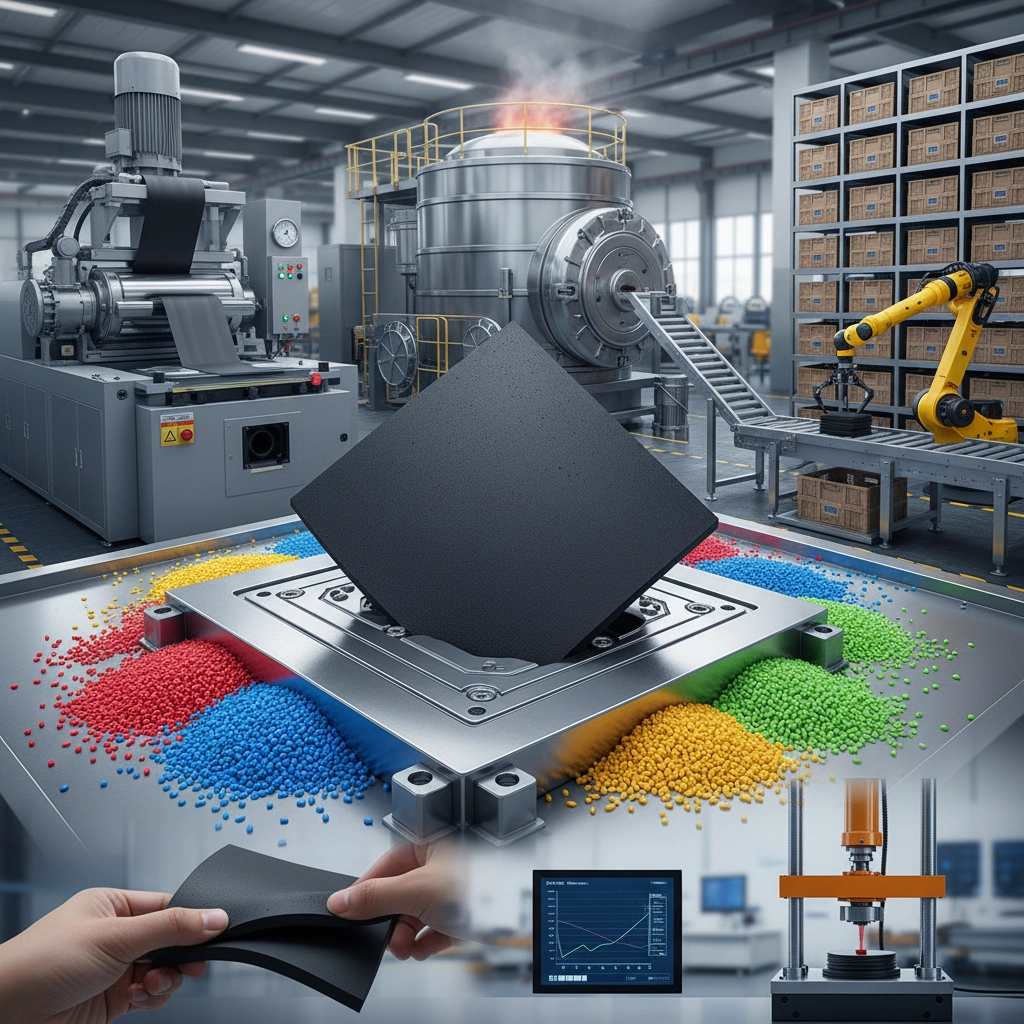
The precision of the extrusion process allows these pads to fit snugly within battery compartments, ensuring that cells are positioned accurately and held securely for their entire service life. This prevents the "shaking" effect that typically degrades lithium-ion battery connections, thereby extending the overall lifespan of the battery pack.
By maintaining a low compression set, these components ensure that the cushioning effect does not diminish over time. Even after years of use, the pads retain their original shape and tension, providing a consistent level of protection that is hallmark of a high-quality silicone ring manufacturer approach to engineering.
Electrical Insulation and Flame Retardancy Standards
Electrical safety is non-negotiable when dealing with high-capacity battery modules. A professional silicone ring manufacturer focuses on providing materials with high surface resistance—up to 10¹⁴ Ω—to ensure complete electrical isolation between battery casings and terminals, effectively eliminating the risk of accidental short circuits.
Flame retardancy is the second pillar of safety. Utilizing UL94 V0 certified materials (at 0.5mm thickness) and meeting EN45545-2 HL3 grades, these pads act as a critical fire barrier. This prevents a single cell's thermal failure from rapidly propagating to adjacent cells, which is a vital requirement for new energy vehicles and rail transit energy storage.
Furthermore, the non-leaching formula design ensures that no chemical residues migrate from the pad to the battery cells or plastic housings. This chemical stability is a key indicator of quality that separates a premium silicone ring manufacturer from generic producers, ensuring that the insulation properties remain intact under various temperature cycles.
Thermal Management and Buffer Performance Analysis
Thermal buffering is essential in high-power environments where batteries generate significant heat during rapid discharge or charging cycles. Advanced battery pads are engineered to dissipate heat and protect surrounding plastic components from thermal transfer, which reduces the risk of housing deformation and prevents thermal runaway.
The efficiency of these thermal buffers is measured by their ability to maintain structural stability without leaching or degrading at temperatures up to 80°C. By integrating these pads, designers can ensure that the battery remains within its optimal operating temperature range, which directly correlates to improved charging efficiency and a longer cycle life.
Comparison of Buffer Material Efficiency by silicone ring manufacturer
Application Scenarios in New Energy and Power Tools
The versatility of these pads makes them indispensable in several high-growth industries. In the realm of new energy vehicle (NEV) power batteries, they are used for the precise positioning and flameproofing of large-scale cell modules. This ensures that the battery pack can withstand the rigors of road vibration while remaining safe under extreme conditions.
Additionally, for power tool battery packs and energy storage modules, these pads serve as critical gaskets that protect the unit from internal shifts during transportation and storage. By providing a reliable cushion, they ensure that the product reaches the end-user without internal structural damage, reinforcing the reputation of the brand for quality and reliability.
Long-Term Durability and Compression Set Resistance
One of the most challenging aspects of elastomeric components is "compression set"—the permanent deformation that occurs after a material has been compressed for a long period. A high-tier silicone ring manufacturer utilizes advanced cross-linking processes to ensure that battery pads maintain their elasticity for up to 8 years, even under constant pressure.
Weather resistance is another critical factor. Products are subjected to rigorous high-low temperature cycle tests to ensure that no leaching occurs and that the material does not become brittle in freezing temperatures or overly soft in extreme heat. This stability is what ensures a consistent fit and function over the product's lifecycle.
Furthermore, the mechanical strength, characterized by a tensile strength of ≥ 7 MPa, prevents the pads from tearing or cracking during the assembly process or due to the expansion and contraction of battery cells during charging cycles. This robust mechanical profile is a direct result of superior material engineering.
Performance Metrics for Industrial Battery Pads
To validate the quality of a battery pad, a series of standardized performance indices are employed. These metrics provide a quantitative basis for comparing different materials and ensuring that the final product meets the specific requirements of the application, whether it be for a small drone battery or a massive industrial energy storage unit.
The water extraction test, conducted at 80°C for 24 hours, is particularly telling. A weight change rate of less than 1% indicates that the material is highly stable and will not absorb moisture or lose essential components, which is vital for maintaining electrical insulation in humid environments.
By adhering to these strict benchmarks, a professional silicone ring manufacturer can provide customized solutions based on drawings and samples, ensuring that every pad is optimized for its specific geometric and functional role within the battery assembly.
Core Performance Specifications of High-Performance Battery Pads
| Performance Dimension |
Test Condition |
Standard Value |
Industrial Benefit |
| Electrical Insulation |
Surface Resistance |
up to 10¹⁴ Ω |
Prevents Short Circuits |
| Flame Retardancy |
UL94 (0.5mm) |
V0 Grade |
Fire Safety/Containment |
| Mechanical Strength |
Tensile Test |
≥ 7 MPa |
Anti-Tearing/Durability |
| Hydrothermal Stability |
80°C × 24h |
Weight Change < 1% |
Anti-Corrosion/Leaching |
| Service Longevity |
Compression Set |
Up to 8 Years |
Stable Positioning |
| Environmental Safety |
Formula Composition |
Halogen-Free |
Eco-Friendly/Non-Toxic |
FAQS
EPDM offers superior weather and heat resistance, particularly when blended with halogen-free flame retardants for industrial use. While standard silicone is excellent for temperature extremes, the EPDM composite used by a specialized silicone ring manufacturer is often optimized for lower compression set and higher mechanical durability in battery positioning, ensuring cells don't loosen over an 8-year lifespan.
Yes, by utilizing materials that meet UL94 V0 and EN45545-2 HL3 grades, these pads act as thermal buffers and flame barriers. They are designed to resist ignition and slow down the spread of fire between cells, significantly enhancing the safety of NEV power batteries and energy storage systems.
A low compression set means the material returns to its original shape after being squeezed. For batteries, this ensures the pad continues to exert the necessary pressure to hold cells firmly in place. If a pad had a high compression set, it would flatten over time, leading to cell movement, vibration, and eventual electrical connection failure.
Absolutely. The non-leaching formula is specifically engineered to be chemically inert. This ensures that the pad does not react with or contaminate the plastic casings or the battery cells themselves, maintaining the purity of the housing and the integrity of the electrical components.
When sourced from a professional silicone ring manufacturer utilizing EPDM composites, these pads can provide supporting life for up to 8 years. This is achieved through rigorous testing for tensile strength and weather resistance, ensuring they withstand thousands of thermal and vibration cycles.
Yes, customization is a core service. By providing technical drawings or physical samples, manufacturers can extrude or mold battery pads to exact specifications, ensuring a perfect fit for unique battery compartment geometries in drones, electric tools, or EV modules.
Conclusion
In summary, the integration of high-performance battery pads—engineered from EPDM and halogen-free flame retardants—is essential for the safety and stability of modern energy systems. By providing a combination of superior electrical insulation (10¹⁴ Ω), rigorous flame retardancy (UL94 V0), and exceptional mechanical resilience, these components protect critical battery cells from vibration, thermal stress, and structural shifting over a long-term operational life.
As the world shifts toward higher-capacity power tools and electric vehicles, the precision offered by a dedicated silicone ring manufacturer will become even more pivotal. Investing in high-grade cushioning and insulation not only extends the life of the battery pack but also ensures the highest levels of user safety and environmental compliance. For those seeking industrial-grade protection, visiting our website at www.sunlitetek.com is the first step toward optimizing your battery system's reliability.

 Select Language