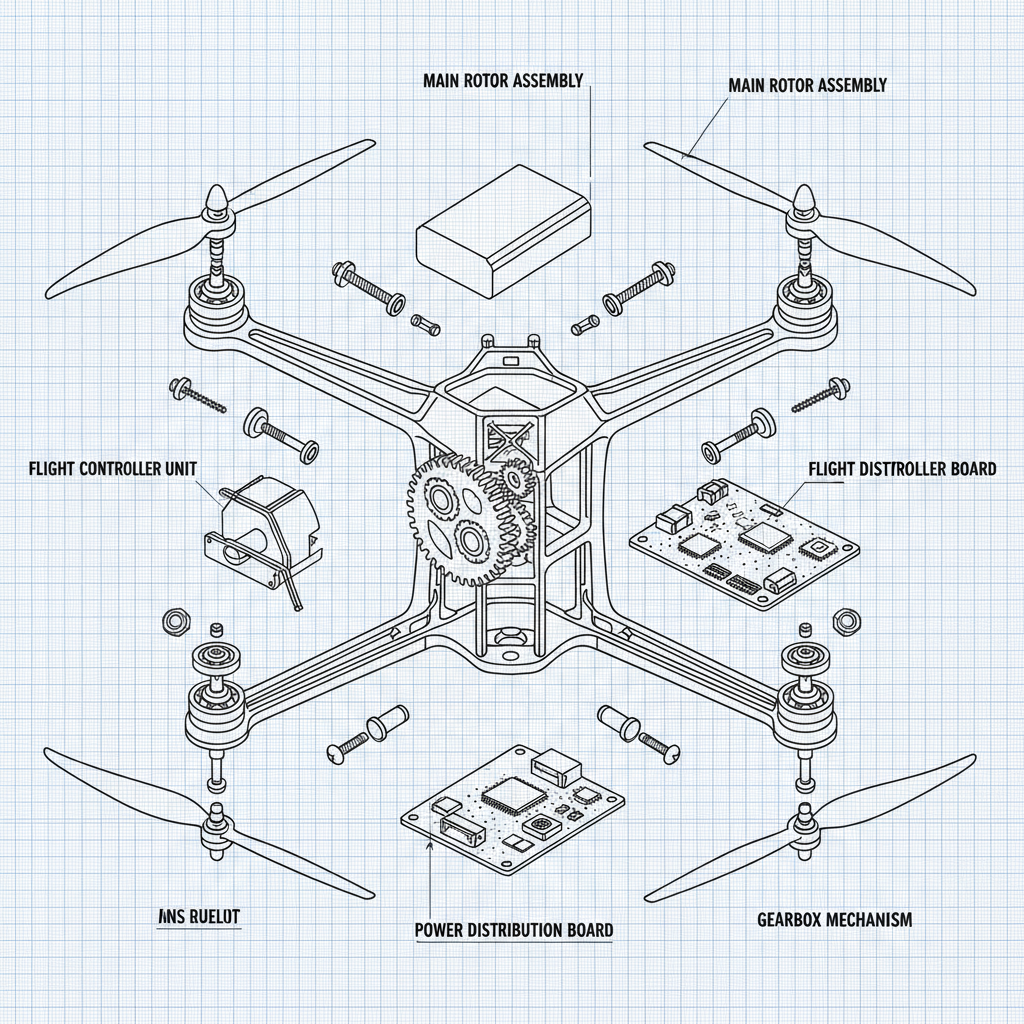
You know, these days everyone's talking about "smart" drone parts for sale. It’s all the rage. But honestly, after years of traipsing around construction sites, breathing in dust and dealing with engineers, I've learned ‘smart’ doesn’t always mean ‘better’. What's really trending is reliability, simplicity. Folks are tired of bells and whistles breaking down mid-flight. They want drone parts for sale that just work.
Have you noticed the obsession with carbon fiber lately? Everyone wants it, thinks it makes everything lighter, stronger. And it does, to a point. But I encountered a batch at a factory in Dongguan last time that just… flaked. Like, touched it and it left dust on your gloves. Beautiful looking stuff, sure, but if it can’t take a knock, what's the point? It smelled faintly of resin, too, a cheap one at that. Reminded me of those knock-off helmets you see online.
The thing is, most people designing these drone parts for sale have never actually used them in the field. They sit in their offices, running simulations. Simulations! I tell you what, a simulation can’t replicate the feeling of trying to screw a tiny bolt onto a vibrating frame in a windstorm.
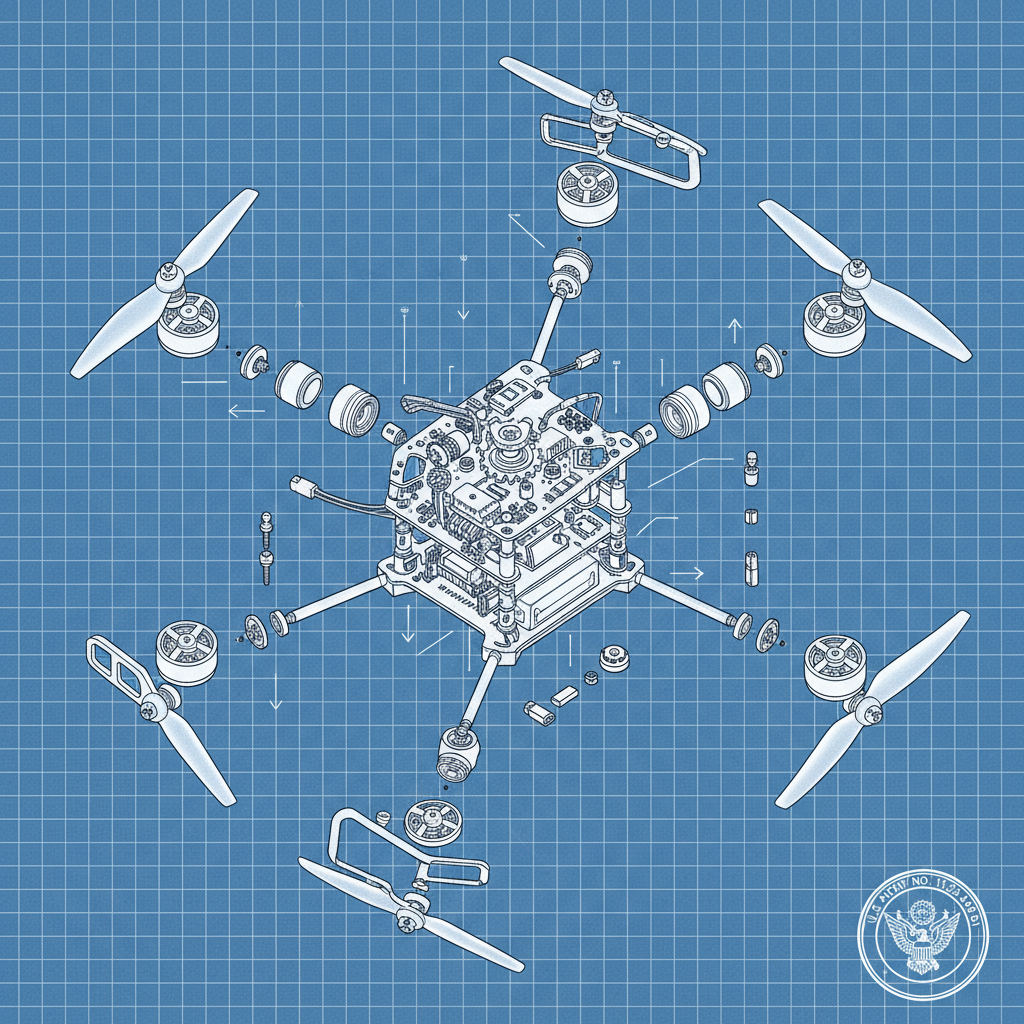
The Current Landscape of drone parts for sale
Honestly, it's a bit of a Wild West out there. You've got the big manufacturers pushing out high-end, feature-packed stuff, and then you've got a million little guys churning out cheaper alternatives. The quality control varies wildly. Strangely, the cheaper stuff sometimes lasts longer – because there's less to break. I’ve seen some seriously flimsy carbon fiber housings, and some surprisingly robust plastic ones. It really depends.
There’s a lot of focus on longer flight times, of course. Everyone wants more airtime. But longer flight times usually mean more complex battery systems, and more complex systems mean more things that can go wrong. The demand for drone parts for sale is huge, spurred on by everything from hobbyists to industrial inspections.
Common Design Pitfalls in drone parts for sale
You see it all the time: over-engineered solutions to simple problems. Like, why put a microscopic accelerometer on a landing strut? Does anyone really need to know the exact angle of the strut in milliseconds? No. It's just adding cost and complexity. And then there’s the connector issue. Tiny, fragile connectors that break the moment you look at them wrong. Seriously, they need to design these things with sweaty, clumsy hands in mind.
Another one? Proprietary screws. Why? Just… why? Makes repairs a nightmare. I swear, some companies intentionally make it difficult to fix their products. I think it’s planned obsolescence.
And the modularity… often it’s not truly modular. You can’t just swap out a component; you need special tools, special software, and a PhD in engineering.
Materials: Beyond the Spec Sheet
Like I was saying, carbon fiber. It’s good, but it’s not magic. Aluminum alloys are still king for a lot of structural components. Feels solid in your hand, doesn't shatter like glass. And then there’s the rubber – the O-rings, the dampeners. That stuff matters. A cheap O-ring can ruin an entire system. It smells like… well, rubber. But a good rubber smells clean, you know?
Polycarbonate is also making a comeback. It’s tough, relatively lightweight, and doesn’t crack as easily as some of the other plastics. The newer grades even have UV resistance, which is crucial if you’re flying in direct sunlight. I remember one batch of drone parts for sale made with a cheap plastic that turned brittle after just a few weeks in the sun. A disaster.
And don’t underestimate the importance of proper coatings. A good anodizing or powder coat can protect against corrosion and abrasion, extending the life of the parts significantly.
Real-World Testing of drone parts for sale
Look, lab tests are fine, but they don't tell the whole story. I want to see these things dropped, bumped, splashed with mud, and left out in the rain. I want to see them vibrate for hours on end. Anyway, I think that’s a more realistic assessment.
We do a lot of “abuse testing” at the site. It's not pretty, but it's effective. Basically, we simulate the worst-case scenarios we can think of, and see what breaks. One time, we had a drone parts for sale undergo a 30-foot drop onto concrete. It survived, surprisingly. But the landing gear was bent to hell.
Testing Durability of Various drone parts for sale
How Users Actually Utilize drone parts for sale
It’s never what you expect, is it? You design something to be used in a specific way, and then users come along and find ten other ways to use it. I've seen guys using drone parts for sale as makeshift supports for their phone cameras, attaching them to tripods, even using the motors for small robotics projects. They're resourceful, that's for sure.
A lot of them are doing their own repairs, too. There's a whole community of DIY drone enthusiasts out there. They're surprisingly skilled.
Advantages and Disadvantages of drone parts for sale
The advantages are obvious: accessibility, cost, customization. You can build exactly what you need. But the disadvantages? The learning curve can be steep. Troubleshooting can be a pain. And the sheer number of options can be overwhelming. Later... Forget it, I won't mention the support issues.
The quality varies massively, as I’ve already said. You really get what you pay for. And sometimes, even when you pay a lot, you still don't get what you expect.
But when it works, when you've built something reliable and capable, it's a good feeling. A really good feeling.
Customization Options for drone parts for sale
That's where things get interesting. A guy in Shenzhen, last month, running a small smart home device outfit, insisted on switching the standard connector to . Said it was "more modern." I tried to tell him it was overkill, that the micro-USB connector was perfectly adequate. He wouldn’t listen. The result? Delayed production, increased costs, and a connector that was even more prone to damage. He learned the hard way.
But customization can be a good thing. We had a client who needed a specific motor with a higher torque rating for a heavy-lift application. We worked with a manufacturer to develop a custom motor that met their exact requirements. It wasn’t cheap, but it solved their problem.
The key is knowing what you're doing, and understanding the trade-offs.
Summary of Drone Part Customization Trade-offs
| Customization Type |
Cost Impact |
Lead Time |
Complexity Level |
| Connector Type (e.g., Micro-USB to ) |
Low - Moderate |
1-2 weeks |
Low |
| Motor Torque Rating |
Moderate - High |
4-8 weeks |
Moderate |
| Frame Material (e.g., Carbon Fiber Grade) |
Moderate |
2-4 weeks |
Moderate |
| ESC Programming (Electronic Speed Controller) |
Low |
1 week |
High |
| Custom Antenna Design |
High |
6-10 weeks |
High |
| Propeller Pitch & Diameter |
Low - Moderate |
2-3 weeks |
Low-Moderate |
FAQS
Honestly? They focus too much on specs and not enough on real-world usability. A motor with a high RPM rating is useless if it vibrates so much it shakes the camera apart. People often get caught up in the numbers and forget about the practicalities of building and flying a drone. It's about finding a balance between performance and reliability, and knowing your application. Don’t always believe the hype.
Crucially important. I’ve seen too many knock-offs that look the part but fall apart after a few flights. A reputable supplier will have quality control processes in place, and they’ll stand behind their products. It might cost a little more upfront, but it will save you headaches – and potentially a crashed drone – in the long run. Look for certifications and read reviews before you buy.
A good set of hex keys is a must. A soldering iron, if you're doing any wiring. A multimeter for testing voltages. And a lot of patience! Seriously, you'll need patience. Also, a magnetic parts tray – those tiny screws are masters of disguise. And a decent workspace, well lit, with plenty of room to spread out. Organization is key.
Check the specifications carefully. Voltage ratings, connector types, dimensions – everything needs to match. It's easy to accidentally buy a motor that’s incompatible with your ESC, or a battery that doesn’t fit your frame. If you’re unsure, ask the supplier. Most reputable suppliers will be happy to help you figure things out. And research online forums – there’s a ton of information available.
Keep them in a dry, cool place, away from direct sunlight. Static electricity can be a problem, so anti-static bags are a good idea. For sensitive components like ESCs and flight controllers, a padded case is recommended. And label everything clearly! Trust me, you’ll thank yourself later when you’re trying to find that one specific screw.
Graphene is getting a lot of attention for battery technology – potentially offering higher energy density and faster charging times. We’re also seeing more use of advanced polymers and composite materials, offering improved strength and weight savings. And there’s a lot of research going into self-healing materials, which could drastically reduce the need for repairs. It's all evolving fast!
Conclusion
So, where does all this leave us? Well, the world of drone parts for sale is complex, constantly evolving, and often frustrating. But at the end of the day, it’s about building something reliable, something that can get the job done. It's about balancing performance with practicality, and understanding the limitations of the materials and technologies we're using.
Ultimately, whether this thing works or not, the worker will know the moment he tightens the screw. And that's the bottom line. If you’re looking for quality drone parts for sale, visit our website at Sunlite Tek. We’ve spent years on the ground, getting our hands dirty, and we know what works.