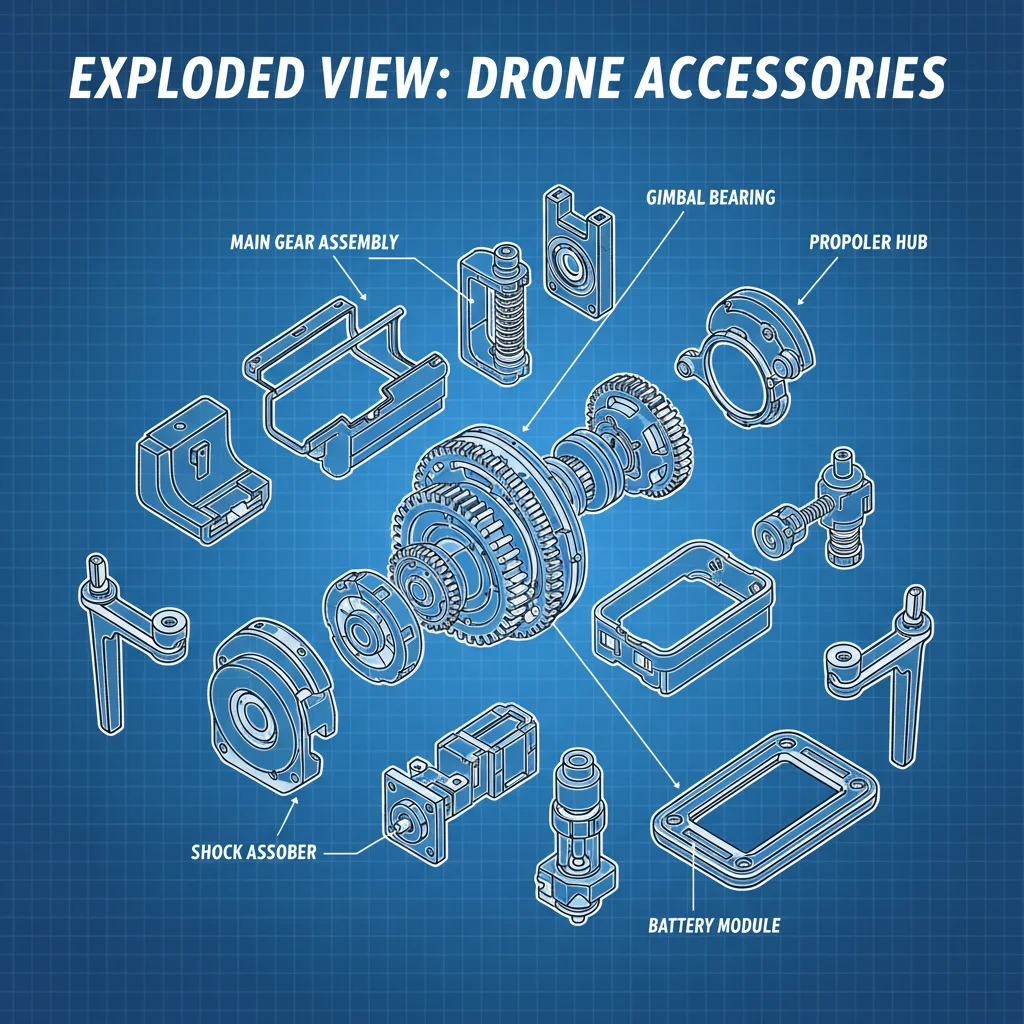
The global demand for high-performance equipment protection has seen a significant surge as industries transition toward more automated and precise mechanical systems. Whether it is for industrial machinery or specialized robotics, the integration of high-durability buffering components is essential to ensure operational longevity and safety. Understanding the role of vibration isolation and impact resistance is key to maintaining peak efficiency in any high-frequency working environment.
From the construction site to the electronics assembly line, the need for specialized rubber components that can withstand extreme stress is universal. These components prevent premature fatigue and structural failure, reducing downtime and maintenance costs for operators worldwide. By absorbing sudden shocks and continuous micro-vibrations, these buffers protect the most sensitive internal components of a device.
For those searching for high-quality drone accessories for sale or specialized industrial buffers, the priority always remains on material science and structural stability. Selecting the right elastomer ensures that equipment can perform under high-temperature and oil-containing conditions without losing its mechanical properties.

The Core Role of High-Resilience Bumpers
High-resilience bumpers serve as the primary line of defense for mechanical equipment, designed specifically to absorb shock and buffer external impacts. These components are critical for maintaining the integrity of device housings and internal circuitry, preventing cracks and deformations during accidental collisions or drops. By utilizing advanced materials like TPE, TPU, and microcellular polyurethane, these buffers provide a controlled rebound that protects the entire system.
Beyond simple impact protection, these components are indispensable for ergonomic improvement in handheld tools. By absorbing micro-vibrations generated during motor operation, they significantly reduce user hand fatigue and improve operational precision. This makes them an essential consideration for anyone sourcing drone accessories for sale or power tool components where stability and comfort are paramount.
Technical Specifications for Impact Resistance
The effectiveness of a bumper is measured by its ability to withstand repeated stress cycles without permanent deformation. In professional-grade equipment, such as pneumatic and electric nail guns, the bumper must handle high-energy impacts ranging from 15J to 100J. A high-quality buffer is engineered to maintain its shape and function even after 200,000 impacts, ensuring that the equipment remains stable over years of heavy use.
Material strength is another critical factor, with tensile strength for conventional products typically starting at 35 MPa and special varieties reaching up to 50 MPa. This ensures that the bumper does not tear or fracture under extreme shear force. Additionally, a tear strength of ≥80 N/mm provides the necessary durability to resist splitting when exposed to sharp edges or high-pressure contact.
Environmental resistance is equally important, as many industrial tools operate in oil-rich or high-temperature environments. The ability to maintain a mechanical property retention rate of over 80% in these conditions, with long-term operating temperatures reaching up to 120°C, distinguishes industrial-grade buffers from consumer-grade plastics.
Vibration Isolation in High-Frequency Systems
Vibration isolation is the process of decoupling a vibration source from the rest of the structure to prevent noise and mechanical wear. In high-frequency systems, constant micro-vibrations can lead to the loosening of fasteners and the fatigue of electronic solder joints. By implementing a buffer made from engineered rubber, the vibration path is interrupted, significantly reducing the energy transmitted to the user or the chassis.
When looking for drone accessories for sale, specifically those focused on motor mounts or landing gear, vibration isolation is the most critical feature. High-frequency oscillations from motors can interfere with gimbal stability and sensor accuracy, making the use of specialized rubber buffers essential for high-quality aerial cinematography and data collection.
The design of these isolation systems often involves adjusting the stiffness and elasticity of the material to match the resonant frequency of the equipment. By tailoring the 100% modulus (often ≥18 MPa for high-rigidity types), engineers can ensure that the bumper provides sufficient support while still absorbing the majority of the kinetic energy.
Material Performance and Durability Metrics
The selection of the correct elastomer is based on the specific needs of the application, whether it requires maximum energy absorption or high structural rigidity. Compression set is a key metric here; for instance, a compression set of ≤25% at 100°C for 24 hours indicates a material that recovers its original shape efficiently, preventing the "bottoming out" effect during repeated impacts.
For equipment that undergoes frequent assembly and disassembly, such as battery-powered tools, buffers at the connection area prevent damage to internal terminals. These specialized components ensure a secure electrical connection by reducing the stress caused by vibration, thereby extending both the battery and the tool's operational lifespan.
Performance Rating of Buffer Materials for Equipment Protection
Application Scenarios in Modern Industry
In the construction and woodworking industries, high-energy absorption buffers are vital for piston systems in pneumatic nail guns. These tools generate intense impact forces that, if not buffered, would lead to rapid structural failure of the gun body and cause significant operator fatigue. The use of custom-formula rubber ensures that the stability of the nailing process is maintained even during high-frequency operation.
Beyond heavy machinery, these components are critical in the logistics sector. During packaging and transportation, specialized bumpers protect sensitive electronics and robotic components from shipping shocks. This prevents "dead on arrival" scenarios and reduces the cost of insurance and replacements for high-value industrial shipments.
Enhancing Structural Stability and Life Cycle
Integrating high-performance buffers into a design doesn't just protect the device; it actively enhances its operational life cycle. By reducing the amplitude of vibrations, internal gears and motors experience less wear and tear, which translates to a lower frequency of replacement parts. This shift from reactive to proactive protection is a hallmark of modern industrial design.
Furthermore, the use of materials that maintain stability in high-low temperature swings ensures that equipment can be deployed in diverse climates. Whether in the freezing conditions of a northern construction site or the heat of a tropical industrial zone, the bumper retains its elasticity and damping properties, preventing the material from becoming too brittle or too soft.
For those investing in drone accessories for sale, the long-term value lies in this reliability. A drone equipped with professional-grade vibration isolation can fly longer, capture steadier footage, and survive harder landings, providing a much higher return on investment compared to budget alternatives.
Comparative Analysis of Rubber Buffer Materials
Choosing the right material requires a balance between hardness, elasticity, and environmental resistance. While silicone offers excellent heat resistance, it may lack the tear strength required for heavy-duty industrial nailing tools. Conversely, high-resilience rubber provides the necessary impact life for millions of cycles but may require specific formulas to resist certain industrial oils.
The evolution of microcellular polyurethane has introduced a "best of both worlds" scenario, offering the damping properties of rubber with the structural stability of hard plastics. This makes it ideal for high-precision robotics where both shock absorption and exact positioning are required.
Ultimately, the selection depends on the specific impact energy and frequency of the application. By analyzing the load-deflection curve and the fatigue limit of the material, engineers can specify a bumper that maximizes the equipment's lifespan while minimizing the overall weight and footprint.
Comparison of Rubber Buffer Materials for Industrial and UAV Applications
| Material Type |
Impact Resistance |
Oil/Heat Stability |
Typical Use Case |
| Specialty Rubber |
Very High |
High |
Pneumatic Nail Guns |
| TPU (Thermoplastic) |
High |
Medium |
Tool Grips/Housing |
| Silicone |
Medium |
Very High |
Electronic Buffers |
| Microcellular PU |
Very High |
High |
Robot Arm Joints |
| Standard TPE |
Medium |
Medium |
Consumer Packaging |
| High-Rigidity Rubber |
High |
High |
Motor Mounts |
FAQS
High-resilience rubber is engineered for energy absorption and rapid recovery, whereas standard plastic often undergoes permanent deformation after a few heavy impacts. Rubber buffers provide a "spring" effect that protects internal components from the full force of a shock, significantly extending the tool's life.
If you notice "jello effect" in your video footage or if your flight controller is experiencing excessive noise, you likely need better vibration isolation. High-quality drone accessories for sale often include specialized rubber mounts to isolate the camera and sensors from motor vibrations.
Yes, provided you select the correct material. Our industrial-grade rubber bumpers are designed for high-oil environments and maintain a mechanical property retention rate of ≥80%, ensuring they don't swell or degrade when exposed to industrial lubricants.
For professional-grade buffers used in nail guns, the design target is typically 200,000 impacts without failure at energy levels between 15J and 100J. The actual lifespan depends on the frequency of use and the environmental conditions.
Absolutely. We support custom formulas and structural designs. By adjusting the 100% modulus and material composition, we can create buffers that are either very soft for micro-vibration damping or highly rigid for heavy-duty structural support.
Extreme cold can make some rubbers brittle, while extreme heat can make them too soft. Our high-performance buffers are rated for long-term operation up to 120°C and are engineered to maintain stability across wide temperature ranges to prevent failure in the field.
Conclusion
In summary, the integration of high-performance rubber bumpers and vibration isolation systems is not merely an additive feature but a fundamental necessity for modern industrial equipment. By focusing on critical metrics such as tensile strength, compression set, and impact life, operators can drastically reduce equipment failure and improve user ergonomics. From the precision required in drone accessories for sale to the rugged demands of construction tools, the right material choice ensures safety and efficiency.
Looking forward, the trend toward smarter, more automated machinery will only increase the reliance on advanced elastomers that can handle higher frequencies and more extreme environments. Investing in high-quality, custom-engineered buffering solutions today is the most effective way to ensure the long-term reliability and sustainability of your mechanical assets. For professional-grade solutions, visit our website: www.sunlitetek.com.

 Select Language