In the demanding world of precision engineering and structural stability, the role of vibration isolation is paramount. Whether it is protecting sensitive electronics or enhancing the ride quality of a modern vehicle, the implementation of high-performance damping solutions is essential to prevent mechanical failure and noise pollution. Among these specialized components, the concept of Drone Plugs serves as a metaphor for the precision and secure fitting required in advanced rubber-to-metal bonding and vibration control.
The global shift toward electric vehicles and high-precision medical imaging has accelerated the need for materials that can withstand millions of fatigue cycles without losing their structural integrity. Engineers are now looking beyond standard rubber pads toward scientifically optimized components that utilize finite element analysis to distribute stress evenly. This evolution ensures that critical infrastructure, from rail transit depots to MRI rooms, remains stable and silent despite constant dynamic loads.
Understanding the technical specifications of these advanced damping systems is crucial for any industry where micro-vibrations can lead to catastrophic precision loss. By integrating Drone Plugs and similar precision-engineered rubber components, manufacturers can achieve a 30% increase in resonance suppression efficiency, ensuring long-term durability and safety compliance under the most extreme operational environments.

Engineering Precision in Drone Plugs Design
The design philosophy behind high-precision vibration dampers, similar to the tight tolerances found in Drone Plugs, relies heavily on finite element computational mechanics. By simulating over 100,000 different working condition loads, engineers can optimize the stress distribution within the rubber matrix, effectively eliminating the risk of local failure and ensuring that the component performs consistently under variable pressure.
This scientific approach allows for the creation of customized stiffness curves that precisely match the vibration spectrum of the equipment being protected. When the damping characteristics are perfectly aligned with the external forces, the system can achieve a significant increase in resonance suppression, preventing the harmful amplification of vibrations that often leads to premature wear in industrial machinery.
Global Industry Standards for Vibration Isolation
In the modern industrial landscape, compliance with international safety and environmental standards is non-negotiable. For components acting as Drone Plugs in critical systems, adherence to the EN45545-2 HL3 fire protection standard is essential, especially for rail transit and public infrastructure. This ensures that in the event of a fire, the materials do not release toxic smoke or contribute to rapid flame spread, safeguarding human life.
Beyond fire safety, environmental certifications such as REACH, RoHS 3.0, and TB3139 heavy metal-free requirements have become the benchmark for global trade. These standards ensure that the chemical composition of the rubber and metal inserts is sustainable and safe for use in medical facilities and high-end buildings, reducing the ecological footprint of the manufacturing process.
The integration of these standards allows for a seamless transition of technology across borders, enabling a uniform level of quality in the construction of everything from electric vehicle battery trays to floating floors in concert halls. By following ISO 604 for compressive strength, manufacturers provide a verifiable guarantee of performance that builds trust with global procurement agencies.
Core Material Science of Drone Plugs
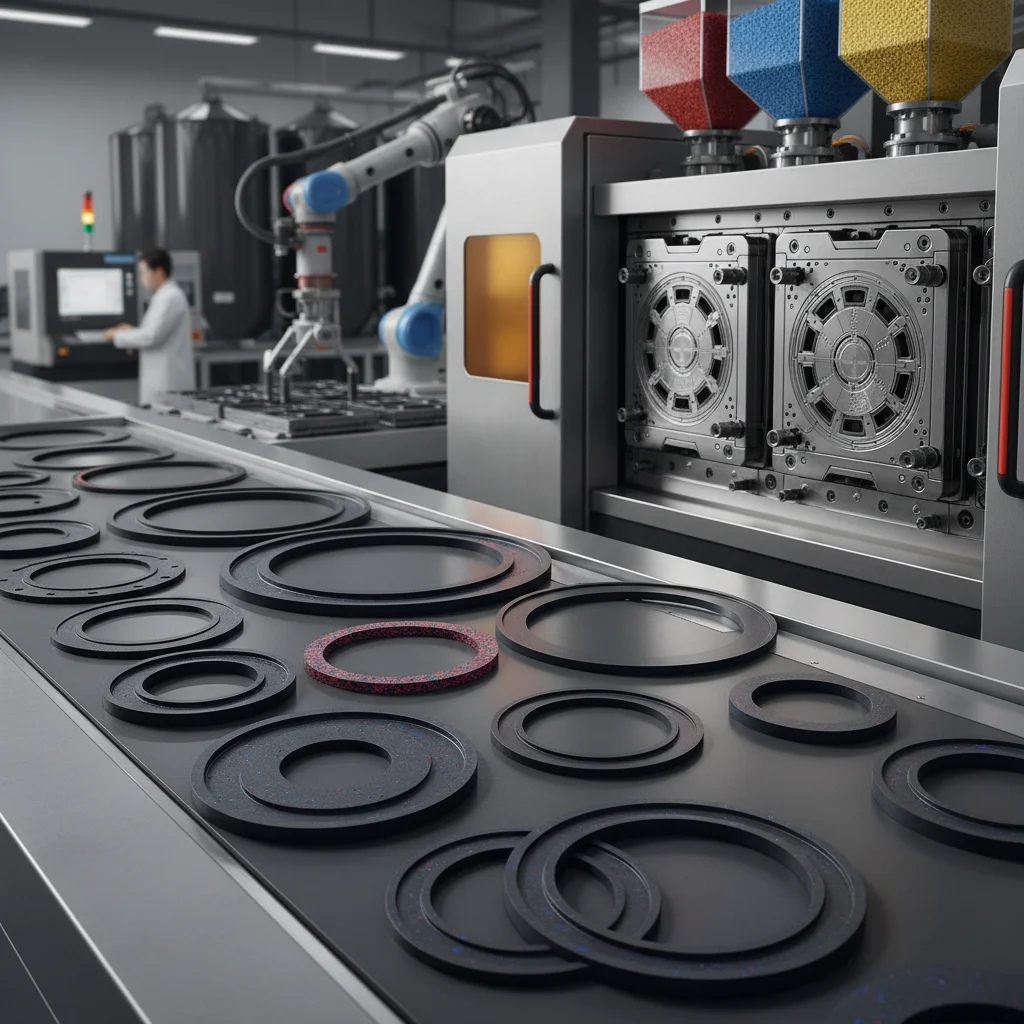
The effectiveness of any vibration isolation system depends on the purity and processing of its core materials. For specialized components like Drone Plugs, the use of high-precision injection molding with clamping forces exceeding 800T ensures that the rubber is densely packed and free of internal voids, which are the primary cause of structural fatigue.
The synergy between rubber and metal is where the real strength lies. By achieving an adhesion strength of over 8MPa, the risk of delamination—a common failure in lower-quality damping pads—is virtually eliminated. This bond ensures that the Drone Plugs act as a single monolithic unit, transferring loads efficiently while absorbing high-frequency energy.
Furthermore, the material must maintain a stable dynamic modulus across a wide temperature range, typically from -40℃ to 80℃. When the fluctuation in the modulus is kept below 5%, the equipment remains protected whether it is operating in a freezing outdoor rail depot or a high-temperature industrial engine bay, providing unmatched reliability.
Performance Metrics and Dynamic Loading
When evaluating the efficiency of vibration dampers, the focus shifts to long-term stability under cyclic stress. A primary metric for high-end Drone Plugs is the performance retention rate; a world-class product should maintain over 95% of its original characteristics even after 5 million dynamic fatigue cycles. This prevents the "bottoming out" effect often seen in inferior rubber components.
Another critical factor is the permanent deformation rate, which must remain ≤1% to ensure that the structural height of the assembly does not change over time. If a damper loses its height, it can lead to misalignment in precision machinery, which in turn creates new sources of vibration and noise, defeating the purpose of the isolation system.
Comparison of Performance Retention in Vibration Dampers
Real-World Application Scenarios
The versatility of these damping solutions allows them to be deployed across vastly different sectors. In the automotive industry, components similar to Drone Plugs are used in passenger car floor structures and electric vehicle battery trays. By absorbing impacts from the road surface, they protect sensitive battery cells and enhance the overall quietness of the cabin, which is a key selling point for luxury EVs.
Beyond transport, the precision manufacturing sector utilizes these dampers for lithography machines and electron microscopes. In these environments, micro-vibration control must be ≤1μm. By creating a decoupled platform using customized stiffness rubber pads, the equipment is isolated from the building's structural vibrations, ensuring that nanometer-scale manufacturing remains accurate and error-free.
Durability and Fatigue Resistance Analysis
Long-term durability is the true test of a vibration damper. When subjected to high dynamic loads—such as those found in rail transit maintenance trenches or heavy industrial gas turbine foundations—the material must resist fatigue. High-performance Drone Plugs are engineered to maintain a compressive strength of ≥12MPa, ensuring they do not collapse under the weight of heavy machinery.
The secret to this longevity lies in the fully automatic injection molding process, which achieves a dimensional accuracy of ±0.1mm. This precision prevents "stress risers"—small imperfections where cracks can start. When the batch consistency reaches 99%, engineers can predict the failure point of a system with extreme accuracy, allowing for scheduled maintenance rather than reactive repairs.
Furthermore, the ability to withstand millions of cycles without significant height change (less than 3%) means that the alignment of the equipment remains perfect over years of service. This is particularly critical for medical MRI rooms, where any shift in the vibration-damping base could introduce artifacts into the imaging, compromising patient diagnosis.
Future Innovations in Damping Technology
The future of vibration isolation is moving toward "smart" materials and adaptive damping. We are seeing the emergence of rubber compounds that can change their stiffness in response to electrical stimuli, allowing Drone Plugs and other dampers to adjust their resonance suppression in real-time based on the frequency of the incoming vibration.
Sustainability is also driving innovation, with a move toward bio-based elastomers that offer the same 12MPa compressive strength as synthetic rubbers but with a lower carbon footprint. The integration of digital twins—virtual models of the damping system—allows engineers to predict wear and tear before it happens, transitioning from traditional maintenance to a predictive AI-driven model.
As we move toward more autonomous systems, from self-driving cars to robotic factories, the demand for extreme micro-vibration control will only grow. The convergence of material science and digital simulation will ensure that the next generation of damping components provides even higher stability and longer service lives.
Technical Analysis of Advanced Damping Components
| Component Type |
Max Compressive Strength |
Fatigue Life (Cycles) |
Safety Certification |
| Standard Industrial Plug |
8 MPa |
1 Million |
RoHS |
| Precision Rail Damper |
12 MPa |
5 Million |
EN45545-2 HL3 |
| Medical Grade Base |
15 MPa |
10 Million |
REACH / RoHS |
| EV Battery Tray Pad |
12 MPa |
5 Million |
TB3139 |
| Nano-Composite Plug |
20 MPa |
20 Million |
Custom High-Spec |
| Acoustic Floating Pad |
10 MPa |
3 Million |
EN45545-2 |
FAQS
The primary advantage is the combination of a higher compressive strength (≥12MPa) and a superior performance retention rate. While standard dampers may deform or lose elasticity after a few hundred thousand cycles, precision-engineered solutions like these maintain 95% of their properties after 5 million cycles, ensuring consistent vibration isolation and structural stability over the product's entire lifespan.
Safety is guaranteed through strict adherence to the EN45545-2 HL3 standard. This certification covers critical factors such as flame retardancy, smoke toxicity, and heat release. By using materials that meet these stringent requirements, the dampers ensure that in emergency scenarios, the components do not contribute to the toxicity of the air or the speed of fire spread within train compartments or stations.
Yes, one of the core strengths of this technology is the ability to customize stiffness curves. By using finite element simulation, engineers can analyze the specific vibration spectrum of your equipment and design a rubber compound and structure that maximizes resonance suppression efficiency, often increasing it by up to 30% compared to off-the-shelf solutions.
In high-load environments, such as vehicle chassis or industrial foundations, these pads are designed for a dynamic service life of at least 5 million fatigue cycles. With a permanent deformation rate of ≤1%, the components maintain their geometric and functional integrity for several years, depending on the actual load frequency and environmental conditions.
The bond is achieved through advanced chemical priming and high-pressure injection molding. By ensuring an adhesion strength of >8MPa, the manufacturer eliminates the risk of delamination. This means the rubber will not peel away from the metal insert even when subjected to intense shear forces or extreme temperature fluctuations between -40℃ and 80℃.
Absolutely. The components are fully compliant with TB3139, REACH, and RoHS 3.0. This means they are free from hazardous heavy metals and restricted chemicals, making them safe for use in sensitive environments like hospitals and residential buildings, while also meeting the global requirements for sustainable manufacturing.
Conclusion
The pursuit of absolute stability in modern engineering requires a sophisticated understanding of vibration dynamics and material science. From the integration of Drone Plugs and precision damping pads in luxury EVs to the critical micro-vibration control in MRI rooms and lithography platforms, the ability to isolate structural noise and mechanical shock is a cornerstone of technological progress. By combining finite element analysis with high-precision injection molding and strict international safety certifications, these components provide a reliable barrier against the forces of fatigue and resonance.
Looking ahead, the synergy between adaptive materials and digital twins will further refine the efficiency of vibration isolation, allowing for smarter, more sustainable infrastructure. For industries seeking to enhance the longevity of their equipment and the comfort of their users, investing in scientifically optimized damping solutions is not just a technical upgrade—it is a strategic necessity for long-term reliability. Visit our website for more professional solutions: www.sunlitetek.com

 Select Language