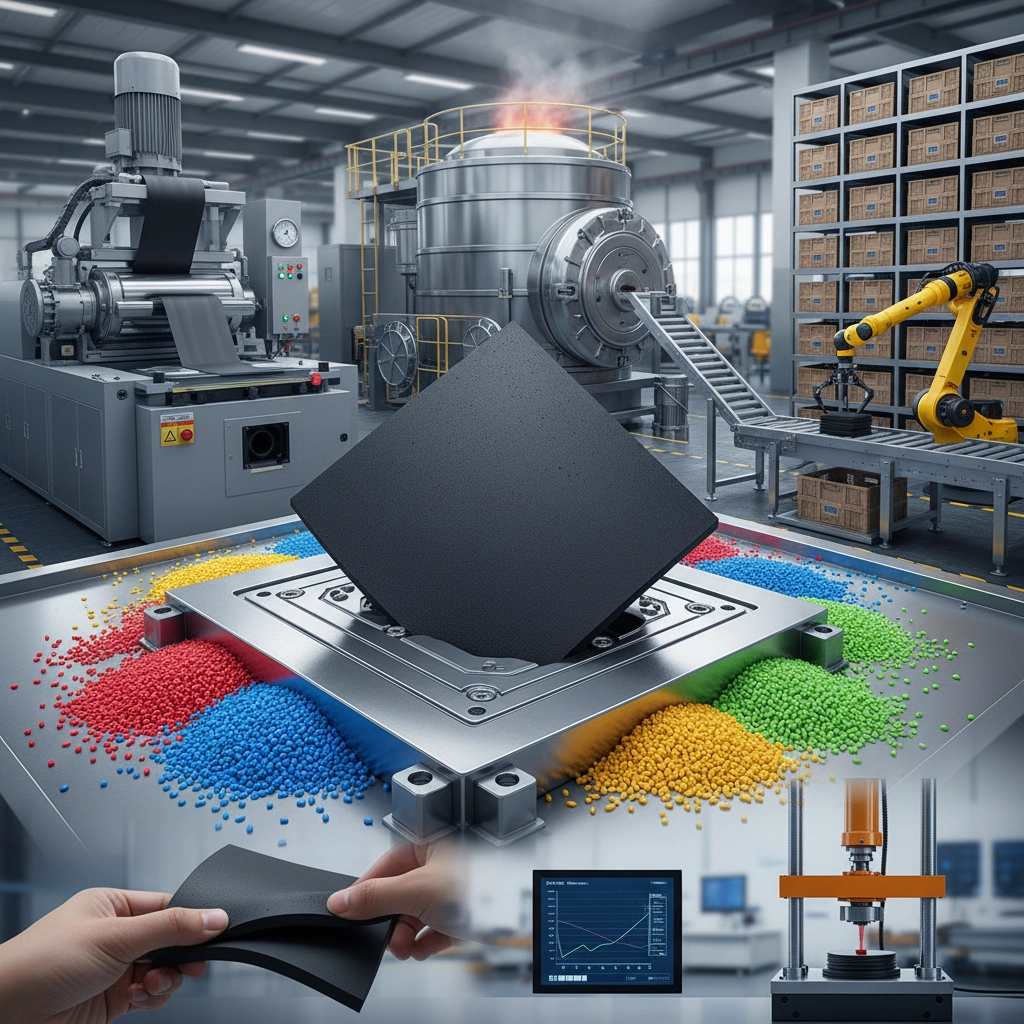
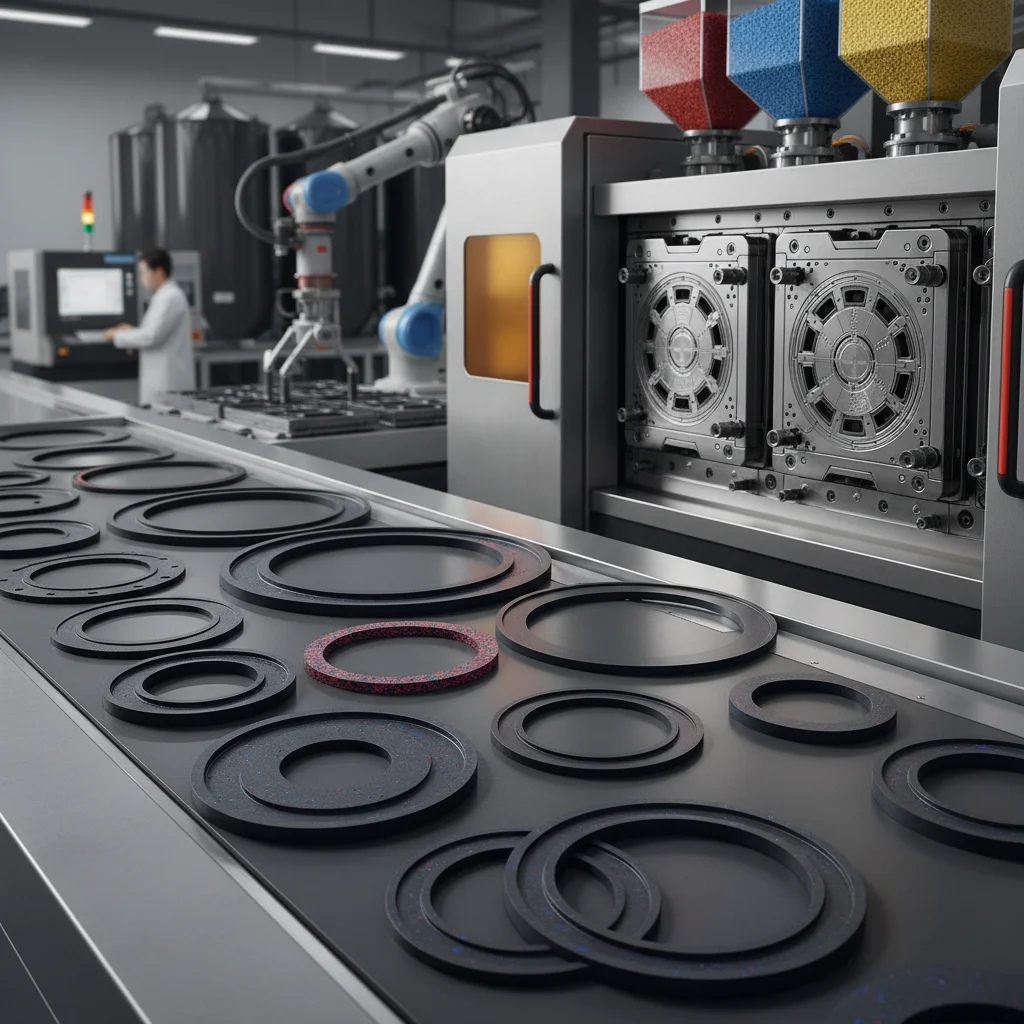
In the demanding world of underwater robotics and precision engineering, the integrity of locomotion and sealing systems is paramount. While many engineers focus on the electronics, the physical interface—often involving specialized components like a rubber o ring or heavy-duty tracks—determines whether a robot can successfully navigate a hazardous environment or fail due to material degradation. Understanding the synergy between high-performance elastomers and mechanical design is the key to unlocking operational stability in the deep sea.
Globally, the transition toward automated underwater inspection and maintenance has surged, driven by the need to monitor aging submarine pipelines and nuclear facilities without risking human lives. However, the chemical hostility of saltwater, combined with the presence of chlorine, acids, and extreme pressure, creates a volatile environment that can rapidly destroy standard rubber components. The industry now demands materials that offer more than just a basic seal; they require advanced NBR nitrile rubber formulations that provide chemical resilience and high-friction traction.
By integrating cutting-edge material science into rubber tracks and sealing solutions, manufacturers are now enabling robots to climb pool walls, traverse sludge zones, and inspect cables with unprecedented reliability. This article explores the critical role of specialized rubber components, from the microscopic precision of a rubber o ring to the macro-scale durability of robot tracks, ensuring that intelligent equipment can thrive in the most challenging aqueous environments on Earth.

Global Importance of Rubber Component Precision
The global industrial landscape increasingly relies on the precision of elastomeric seals and tracks to maintain the continuity of critical infrastructure. In sectors ranging from nuclear energy to submarine telecommunications, a single failure in a rubber o ring or a degraded track tread can lead to catastrophic equipment loss or environmental leakage. According to ISO standards for material durability, the ability of a polymer to resist volume change when exposed to aggressive chemicals is a primary benchmark for operational safety.
For underwater robots, this precision manifests as the ability to maintain grip on slippery pool walls or concrete surfaces. The use of NBR nitrile rubber is not merely a choice of convenience but a technical necessity, as it provides the chemical corrosion resistance required to withstand residual chlorine and copper sulfate. This global shift toward specialized rubber solutions ensures that the "eyes and ears" of our underwater infrastructure—the robots—can operate without the constant fear of material failure.
Defining High-Performance NBR Rubber Systems
High-performance NBR rubber systems are engineered materials designed to act as both a structural interface and a protective barrier. In the context of underwater robotics, this involves the creation of tracks and seals that can withstand high-pressure environments while maintaining an exceptional coefficient of friction. Whether it is the sealing power of a rubber o ring or the traction of a crawler track, the core goal is to prevent the ingress of water and chemicals while maximizing mechanical output.
These systems are characterized by their ability to maintain structural integrity under extreme temperature cycling, typically ranging from -20℃ to 60℃. Unlike standard rubber, NBR (Nitrile Butadiene Rubber) is specifically formulated to resist oils and non-polar solvents, making it ideal for robots that may encounter leaked lubricants or industrial pollutants in submarine pipeline inspections. This molecular stability ensures that the material does not swell or soften, which would otherwise compromise the robot's movement.
Furthermore, modern NBR systems integrate UV and ozone resistance to ensure that equipment remains viable during the transition from the deep ocean to the surface. The interaction between the material's hardness and its elasticity allows these rubber components to absorb impact and distribute weight effectively across soft substrates, such as sediment or sludge, preventing the robot from becoming bogged down during critical missions.
Core Performance Factors for Underwater Mobility
The first critical factor is traction and friction performance. For a robot to perform pool wall climbing or surface inspection, the rubber interface must maximize grip on slick, wet surfaces. This is achieved through a combination of precise tread patterns and a material composition that resists hydroplaning, ensuring that every movement of the rubber robot tracks translates into forward or vertical motion.
Chemical stability is equally vital, often mirroring the strict tolerances required for a rubber o ring used in high-pressure valves. Our NBR tracks maintain ≥75% performance retention and ≤15% volume change even after 30 days of immersion in aggressive agents like sodium hypochlorite or flocculants, preventing the material degradation that typically leads to slippage and mechanical failure.
Finally, environmental aging resistance—specifically UV and ozone protection—guarantees long-term reliability. By ensuring no surface cracks appear after 72 hours of ozone exposure, these components maintain their flexibility. This durability is essential for robots deployed in nuclear industries or high-radiation environments, where material fatigue is accelerated by ionizing radiation and extreme chemical stress.
Analytical Comparison of Material Resilience
When analyzing the efficacy of rubber components, we must look at how different formulations handle specific underwater stressors. The resilience of NBR compared to standard elastomers is most evident when measuring the retention of physical properties after prolonged chemical exposure. While standard rubber may swell and lose its grip, high-grade NBR remains dimensionally stable, much like a precision-engineered rubber o ring maintains its seal under pressure.
The following data illustrates the performance ratings of various rubber application methods in underwater scenarios, focusing on how they balance friction, corrosion resistance, and lifespan.
Material Performance Ratings for Rubber Components
Real-World Applications in Hazardous Environments
In sediment and sludge zone operations, the requirement for "heavy-duty" rubber tracks becomes absolute. These environments are characterized by viscous, unstable substrates where a robot can easily sink. By utilizing NBR rubber that distributes weight effectively and maximizes shear strength, robots can navigate polluted sediment layers without losing traction, ensuring that critical environmental monitoring and hazardous waste inspections are completed.
Similarly, in the nuclear industry and high-radiation zones, the stability of the locomotion system is a safety requirement. The resistance to ozone and temperature cycling ensures that the rubber components do not become brittle or crack, which would otherwise lead to robot immobilization in a contaminated area. Just as a high-spec rubber o ring prevents leaks in radioactive cooling systems, these tracks prevent operational failure in high-risk zones.
Long-Term Value of Chemical Resistance
The long-term economic value of investing in high-grade NBR rubber lies in the drastic reduction of equipment downtime. When a robot is deployed for submarine pipeline or cable inspection, the cost of retrieval and repair far outweighs the initial cost of the components. Tracks that resist corrosion from salts, sulfides, and organic acids maintain their tread depth and physical integrity over hundreds of mission hours, ensuring consistent data acquisition.
From a sustainability perspective, durable rubber components reduce the frequency of replacement, thereby lowering the volume of industrial waste. The ability to customize these tracks based on specific drawings or samples allows for the optimization of material use, ensuring that the robot has exactly the amount of friction and durability needed for its specific environment—whether it is a chlorinated swimming pool or a deep-sea trench.
Ultimately, this reliability builds trust between the technology provider and the end-user. When an inspection robot can reliably climb a pool wall or traverse a hazardous sludge zone without slipping, it validates the engineering integrity of the entire system. This trust is anchored in the microscopic performance of the elastomers, where the precision of a rubber o ring and the toughness of a track work in tandem.
Future Trends in Elastomeric Robot Tracks
The future of underwater mobility is moving toward "smart elastomers"—materials that can adapt their friction coefficients based on the surface they encounter. We anticipate the integration of conductive polymers into NBR formulations, allowing tracks to sense surface texture or chemical composition in real-time. This evolution will transform rubber tracks from passive components into active sensors, enhancing the autonomy of submersible robots.
Furthermore, the drive toward green energy is pushing the development of bio-based nitriles that maintain the same chemical resistance as petroleum-based NBR but with a significantly lower carbon footprint. As automation expands into more delicate ecosystems for scientific research, the need for non-leaching, eco-friendly rubber components will become a primary design constraint.
Digital twin technology is also revolutionizing how we design these components. By simulating the wear and tear of a rubber o ring or a robot track in a virtual underwater environment, engineers can optimize tread patterns and material thickness before a single mold is cast. This ensures maximum efficiency and lifespan for the next generation of underwater exploration vehicles.
Comparative Analysis of NBR Rubber Performance Across Environments
| Environment Type |
Chemical Stressor |
Friction Requirement |
Durability Score (1-10) |
| Chlorinated Pools |
Sodium Hypochlorite |
High (Wall Climbing) |
9 |
| Submarine Pipelines |
Saltwater/Sulfides |
Medium (Steady Crawl) |
8 |
| Sludge Zones |
Organic Acids |
Extreme (Anti-Sinking) |
7 |
| Nuclear Facilities |
Radiation/Ozone |
Medium (Stable Grip) |
9 |
| Deep Sea Cables |
High Pressure/Salts |
High (Cable Grip) |
8 |
| Industrial Tanks |
Alkalis/Acids |
Medium (Surface Walk) |
7 |
FAQS
NBR is specifically engineered for oil and chemical resistance, which natural rubber lacks. In underwater environments containing oils, chlorine, or industrial pollutants, natural rubber would swell and degrade rapidly. NBR maintains its volume and hardness, ensuring the robot's traction remains consistent and the material doesn't disintegrate.
Both are critical elastomeric components. While tracks provide locomotion and external grip, rubber o ring seals protect the internal electronics and motors from water ingress. They share the same requirement for chemical resilience and dimensional stability to prevent leaks and mechanical failure under pressure.
Yes, our specialized NBR tracks are tested for temperature cycling resistance between -20℃ and 60℃. This ensures that the material does not become brittle in cold deep-sea currents nor overly soft in heated industrial pools, maintaining a stable dimensional profile across 6 or more thermal cycles.
Thanks to a performance retention rate of ≥75% after 30 days of intense chemical immersion, these tracks offer a significantly extended service life compared to standard rubber. Exact lifespan depends on usage intensity, but the resistance to oxidation and UV prevents the premature cracking common in lower-grade materials.
Absolutely. We provide customization based on provided drawings or samples. This allows us to tailor the tread pattern for specific tasks—such as maximizing friction for wall climbing or increasing surface area for sludge zone mobility—while maintaining the core chemical resistance of the NBR material.
We incorporate advanced ozone aging resistance into the formulation. By ensuring no surface cracks appear after 72 hours of ozone exposure, the tracks remain flexible and robust during retrieval, transport, and storage, which are the phases where rubber is most exposed to atmospheric degradation.
Conclusion
The operational success of underwater robotics depends on a seamless integration of mechanical power and material science. From the high-friction traction of NBR robot tracks to the airtight precision of a rubber o ring, every elastomeric component serves as a critical line of defense against the hostile nature of aqueous environments. By prioritizing chemical resistance, UV stability, and dimensional integrity, we can ensure that robots exploring our oceans and maintaining our infrastructure do so with maximum reliability and minimum downtime.
Looking forward, the synergy between custom-engineered rubber components and autonomous systems will only deepen. As we push into more hazardous zones—such as nuclear waste sites and deep-sea trenches—the demand for "intelligent" and ultra-durable elastomers will grow. We encourage engineers and procurement specialists to look beyond standard specifications and invest in tailored NBR solutions to guarantee the longevity of their underwater assets. Visit our website for more technical insights: www.sunlitetek.com

 Select Language