Select Language

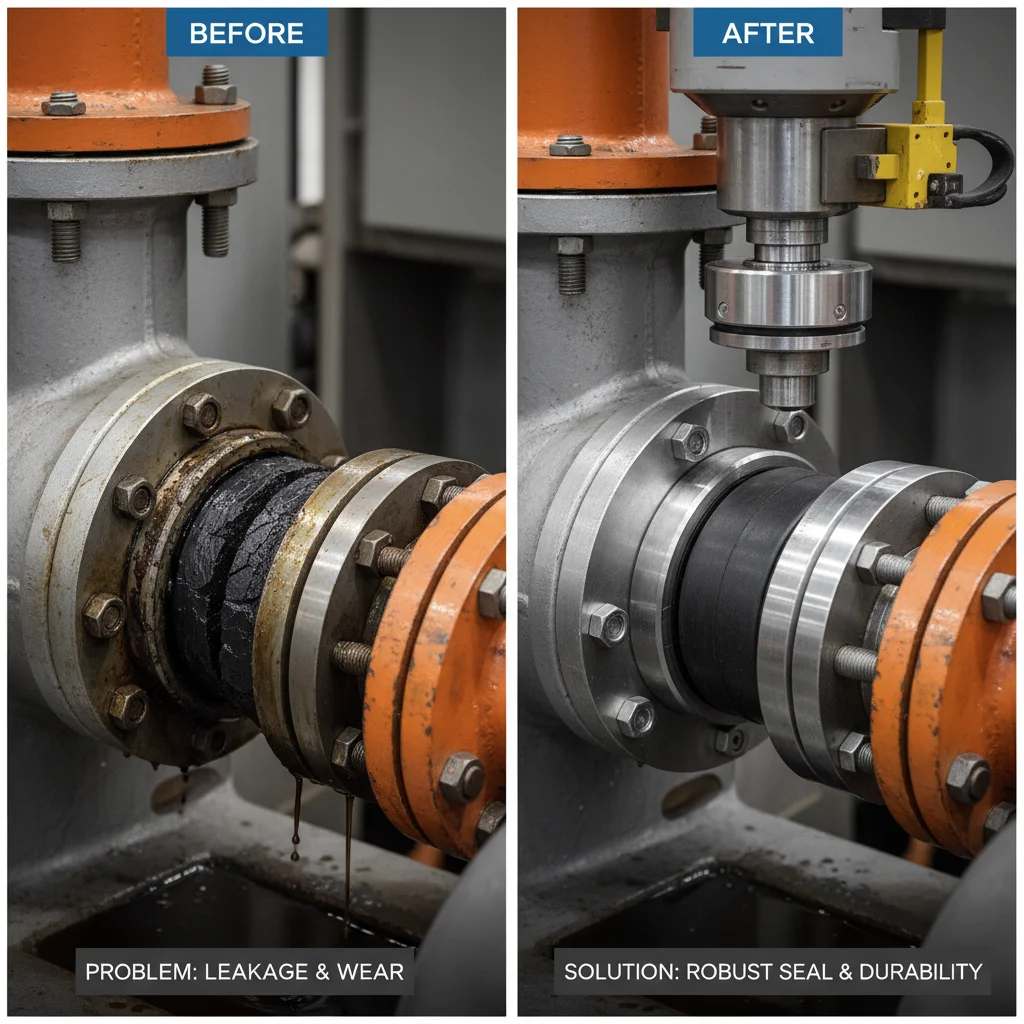
Selecting the right custom o ring manufacturer is often the difference between a system that operates flawlessly for years and one that suffers from premature seal failure and costly unplanned downtime. In high-precision industrial environments, a standard off-the-shelf seal rarely meets the specific thermal, chemical, and mechanical demands of specialized machinery.
The challenge for engineers lies in balancing material compatibility with dimensional precision. When working with mission-critical components in robotics, UAVs, or automotive systems, the requirements for friction reduction and leak prevention become exponentially more stringent, necessitating a partner capable of advanced composite engineering.
This guide examines the technical criteria for evaluating sealing solutions, specifically focusing on how self-lubricating composites are redefining maintenance cycles and operational efficiency in modern manufacturing.

The Critical Role of Material Science in Precision Sealing

Industrial sealing is no longer just about preventing leaks; it is about optimizing the interface between moving parts to reduce energy loss. A professional custom o ring manufacturer must navigate the complex intersection of polymer chemistry and mechanical engineering to ensure that the seal maintains its integrity under extreme pressure and temperature gradients.
The integration of functional materials, such as PTFE or graphite, into the rubber matrix allows for the creation of seals that provide their own lubrication. This shift from external greasing to internal lubrication is essential for environments where contamination is unacceptable, such as medical devices or precision electronics.
Understanding the nuances of tensile strength and compression set is vital. For instance, a seal with a high compression set will fail to return to its original shape after deformation, leading to inevitable leakage. Therefore, the precision of the molding process and the purity of the raw materials are the primary determinants of seal longevity.
Technical Advantages of Self-Lubricating Elastomer Composites
The primary innovation in modern sealing rings is the elimination of repeated external lubrication. By embedding solid lubricants directly into the elastomer, manufacturers can achieve a significantly lower friction coefficient, which reduces heat accumulation during high-speed reciprocating motion.
These composite seals provide superior stability across a temperature range from -40℃ to 120℃. The use of oil-resistant rubber composites ensures that the ring does not swell or degrade when exposed to corrosive industrial chemicals or fuels, maintaining a stable seal even in volatile environments.
Furthermore, the reduction in friction leads to a noticeable decrease in mechanical noise and vibration. In precision robotics and power tools, this translates to smoother motion control and higher response speeds, as the operating resistance of moving components is minimized.
Industrial Application Scenarios for High-Performance Rings
High-performance seals are indispensable in sectors where equipment failure leads to catastrophic losses. In the UAV and underwater robotics industries, seals must withstand extreme pressure changes and water ingress while remaining lightweight and durable.
In the power tool sector, specifically for impact drills and torque wrenches, self-lubricating rings are utilized in precision pistons. These components experience high-frequency vibration and rapid movement, where traditional oil-based lubrication would either be expelled or attract abrasive dust, causing rapid wear.
Additionally, rail transit and automotive components require seals that can handle long-term thermal aging. By employing materials with an aging retention rate of ≥90% after 120 hours at 100℃, manufacturers ensure that critical safety components remain operational without requiring frequent replacement cycles.
Analyzing Mechanical Property Retention and Cycle Life
The reliability of a seal is quantified through rigorous lifecycle testing. A standard benchmark for high-end custom seals involves reciprocating motion tests, where the seal must maintain its leak-proof status over hundreds of thousands of cycles without significant material loss.
When comparing standard seals to self-lubricating variants, the most dramatic difference is seen in the wear rate during dry-running conditions. Standard rings degrade rapidly without grease, whereas composite rings leverage embedded PTFE to maintain a protective film.
custom o ring manufacturer Performance Metrics
As illustrated in the performance data, the transition to specialized composite materials results in a significant increase in cycle life and a decrease in the frequency of maintenance-related downtime. This efficiency gain is particularly evident in high-speed industrial automation.
Strategic Procurement Factors for Custom Sealing Components
Procuring custom seals requires a shift from price-per-unit thinking to Total Cost of Ownership (TCO) analysis. While composite seals may have a higher initial cost, the reduction in downtime and the elimination of lubrication labor often result in a lower long-term expense.
Engineers should evaluate suppliers based on their DFM (Design for Manufacturing) capabilities. A manufacturer that utilizes CAE simulation to optimize the seal structure at the conceptual stage can reduce the R&D verification cycle and ensure the final product meets tight dimensional tolerances (±0.005mm).
Verification of international standards, such as ISO 9001, IATF 16949, and RoHS compliance, is mandatory for automotive and aerospace applications to ensure consistency across batches and adherence to environmental safety regulations.
Future Directions in Polymer Sealing Technology
The next evolution in sealing technology is likely to involve the integration of "smart" materials that can signal wear or leakage before a failure occurs. While still in the development phase, embedded sensors in polymer matrices could revolutionize predictive maintenance.
There is also a growing trend toward bio-compatible and biodegradable elastomers to meet the increasing demands of the medical and environmental sectors. These materials must maintain the same tensile strength (≥20 MPa) as traditional rubbers while being safe for human contact or environmental decomposition.
Furthermore, the adoption of AI-powered visual inspection during the molding process is expected to virtually eliminate defective batches, ensuring that every custom ring delivered meets the exact specifications required for mission-critical hardware.
Comparative Analysis of Sealing Solution Architectures
Choosing between standard and specialized sealing solutions depends entirely on the operating environment and the cost of failure. The following comparison highlights the trade-offs between different sealing approaches.
For most low-stress applications, standard rings are sufficient. However, for high-speed reciprocating systems, the transition to self-lubricating composites is the only way to ensure longevity without continuous manual intervention.
| Solution Type | Lubrication Req. | Typical Lifecycle | Best Use Case |
|---|---|---|---|
| Standard Rubber Ring | Frequent Greasing | Standard | Static Low-Pressure Seals |
| PTFE-Coated Ring | Low to Moderate | Extended | Chemical Resistance Needs |
| Self-Lubricating Composite | Zero-Maintenance | Ultra-Long (250k+) | High-Speed Robotics |
| Viton High-Temp Seal | Periodic Oiling | High Thermal Life | Aerospace Engines |
| Hybrid Elastomer Seal | Minimal | Extended | Underwater Robots |
| Custom-Engineered Ring | Tailored/None | Optimized | Mission-Critical Tooling |
Ultimately, the decision should be based on a rigorous assessment of the mechanical properties, such as tear strength and thermal aging, relative to the specific challenges of the application.
Frequently Asked Questions
Conclusion
The transition toward zero-maintenance sealing solutions represents a significant leap in industrial efficiency. By shifting from standard rubber rings to advanced self-lubricating composites, manufacturers can drastically reduce downtime and improve the reliability of high-speed machinery.
For those evaluating their current sealing architecture or developing new hardware, reviewing the technical capabilities and material options available through www.sunlitetek.com can provide the necessary insights to optimize equipment performance and lifespan.