In the complex world of industrial machinery and consumer electronics, the humble bottom rubber piece often serves as the unsung hero of structural stability. These specialized components are engineered to absorb vibrations, prevent slippage, and protect surfaces from mechanical wear, ensuring that everything from heavy-duty industrial robots to delicate household appliances operates safely and efficiently.
Globally, the demand for high-performance vibration damping solutions has surged as precision engineering becomes the standard across the automotive and aerospace sectors. The integration of a high-quality bottom rubber piece is no longer just an afterthought but a critical design requirement to meet ISO standards for noise reduction and structural longevity in demanding environments.
Understanding the material science behind these components allows engineers to optimize the lifespan of their products and reduce maintenance costs. By selecting the right elastomer—whether it be EPDM, Nitrile, or Silicone—companies can significantly enhance the reliability of their equipment, ensuring that their products withstand extreme temperatures and chemical exposure without failing.
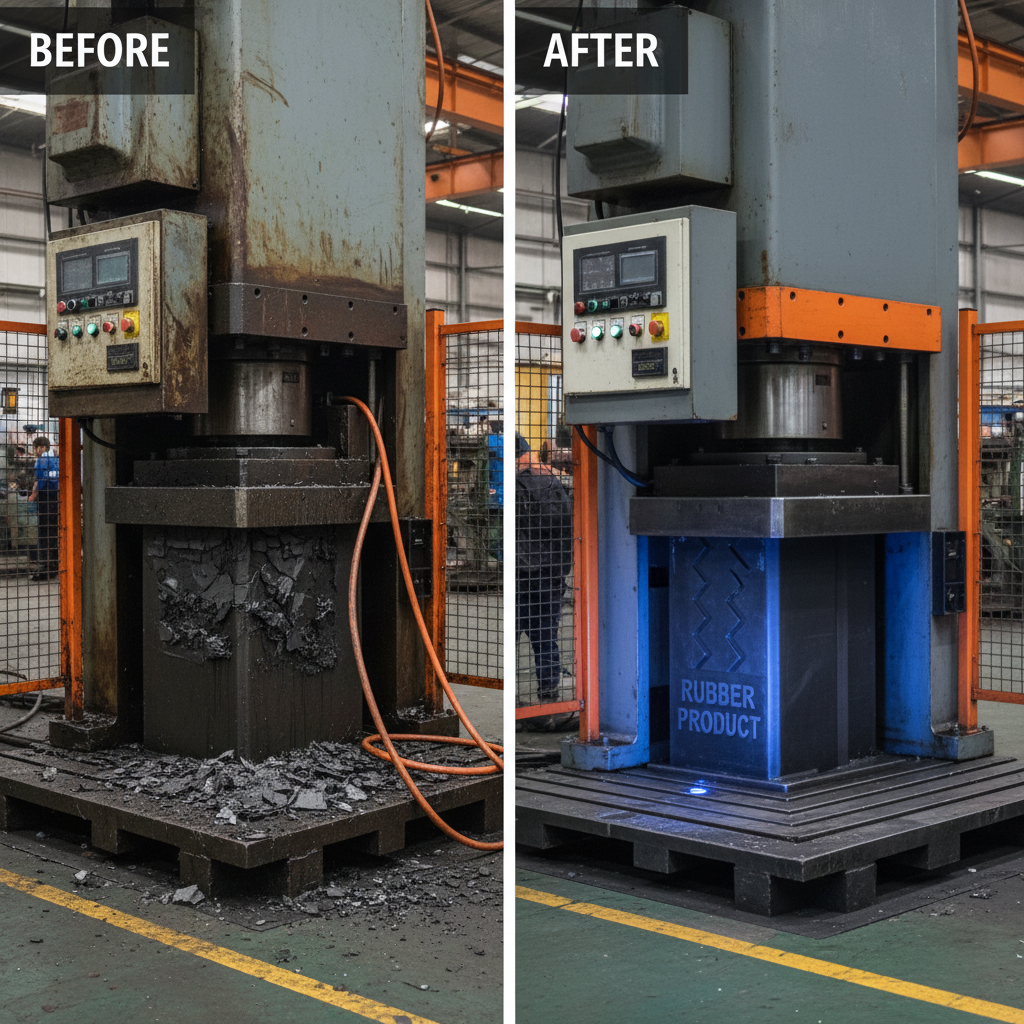
Global Industrial Relevance of Bottom Rubber Piece
The global manufacturing landscape is currently shifting toward "Silent Engineering," where the reduction of acoustic pollution and mechanical vibration is paramount. A precision-engineered bottom rubber piece is central to this movement, as it acts as the primary interface between a moving machine and its static foundation, preventing the transmission of harmful frequencies that can lead to structural fatigue.
From the perspective of international standards, such as those set by the ISO, the use of specialized elastomers in the form of a bottom rubber piece ensures that equipment remains compliant with safety and environmental regulations. This is particularly critical in high-growth regions like Southeast Asia and Europe, where urban density requires industrial machinery to operate with minimal noise leakage to surrounding areas.
Defining the Bottom Rubber Piece and Its Core Purpose
At its most basic level, a bottom rubber piece is a customized elastomeric component designed to be mounted at the base of an object. Its primary function is to provide a non-slip grip, absorb kinetic energy (shocks), and create a protective barrier that prevents the equipment from scratching or damaging the floor surface.
In modern industry, these components have evolved from simple rubber pads into complex engineered parts. They are now designed with specific durometers (hardness levels) to balance the need for support with the need for cushioning, making them indispensable in everything from UAV landing gear to heavy-duty rail transit supports.
Beyond mere stability, the bottom rubber piece plays a humanitarian role in accessibility and safety. By providing slip-resistant foundations for medical equipment and furniture in healthcare facilities, these small components prevent accidents and ensure that critical life-saving machinery remains stationary during operation.
Key Engineering Factors for Performance
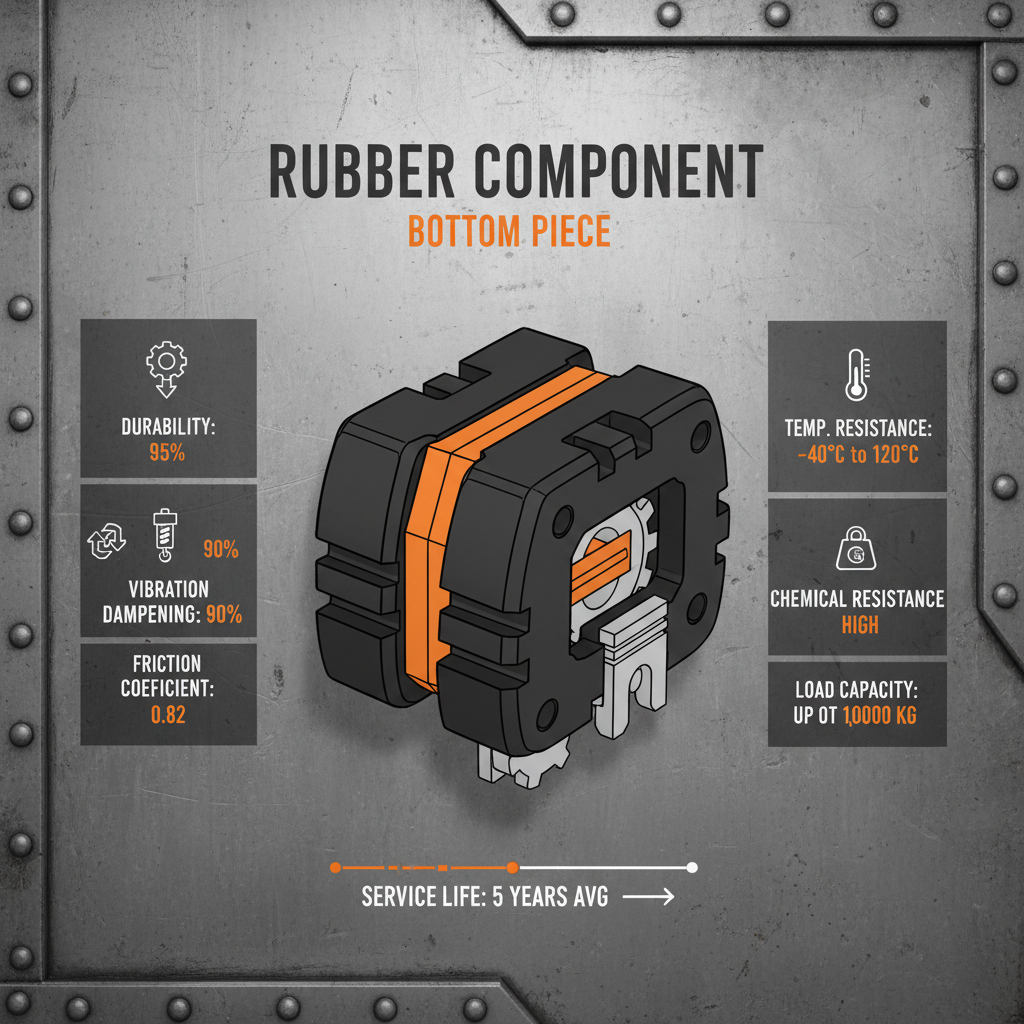
When specifying a bottom rubber piece, durability is the first critical factor. The material must resist "compression set," which is the permanent deformation that occurs after a long period of loading. High-grade synthetic rubbers are employed to ensure the piece returns to its original shape, maintaining the level of the equipment over years of use.
Chemical resistance and environmental scalability are equally vital. A bottom rubber piece used in a sanitary ware environment must withstand harsh cleaning agents, while one used in an automotive engine bay must survive extreme heat cycles. This necessitates the use of specialized compounds like Viton or Silicone to prevent degradation and cracking.
Finally, cost-efficiency is achieved through the optimization of the molding process. By utilizing advanced injection molding or compression molding, manufacturers can produce a bottom rubber piece that meets tight tolerances with minimal waste, ensuring that high-performance damping is accessible for mass-market consumer electronics.
Diverse Global Applications and Use Cases
The versatility of the bottom rubber piece allows it to be integrated into an incredibly wide array of sectors. In the realm of robotics and UAVs, these pieces are essential for absorbing the impact of landing, protecting sensitive internal sensors from the shock of contact with the ground, and preventing the drone from sliding on smooth surfaces.
In heavy civil engineering and rail transit, larger-scale versions of these rubber components are used to isolate track vibrations from nearby building foundations. Similarly, in the automotive industry, specialized bottom rubber pieces are utilized in sound insulation systems to decouple cabin components from the chassis, enhancing passenger comfort and luxury.
Comparative Performance of Bottom Rubber Piece Materials
Long-Term Value and Strategic Advantages
Investing in a premium bottom rubber piece provides a tangible return on investment by extending the mean time between failures (MTBF) for expensive machinery. When vibrations are properly managed, the wear and tear on internal gears, screws, and electrical connections are drastically reduced, lowering the total cost of ownership for the end-user.
Beyond the logical cost savings, there is an emotional component of trust and safety. A product that feels stable and doesn't rattle or slide conveys a sense of quality and reliability to the consumer. In professional settings, this stability translates to dignity and safety for operators, ensuring that tools remain exactly where they are placed, reducing workplace accidents.
Future Trends in Rubber Damping Technology
The future of the bottom rubber piece is being shaped by the rise of sustainable chemistry. We are seeing a shift toward bio-based elastomers and recyclable thermoplastic elastomers (TPEs) that provide the same damping properties as traditional rubber but with a significantly lower carbon footprint, aligning with global green energy policies.
Digital transformation is also entering the field through "Smart Damping." Researchers are developing conductive rubber composites that can act as sensors. In the future, a bottom rubber piece may not only absorb shock but also alert a maintenance team via IoT when the material has compressed beyond its limit and needs replacement.
Furthermore, automation in additive manufacturing (3D printing) is allowing for the creation of complex internal lattices within a rubber piece. These lattice structures can be tuned to absorb specific frequencies of vibration, providing a level of precision in noise control that was previously impossible with traditional molding.
Overcoming Common Implementation Challenges
One of the most common challenges in implementing a bottom rubber piece is the "bonding failure" between the rubber and the substrate (metal or plastic). To solve this, expert manufacturers utilize advanced priming agents and vulcanization processes that create a chemical bond, ensuring the rubber piece does not peel off under high shear stress.
Another limitation is the degradation of rubber due to UV exposure and ozone in outdoor environments. The solution lies in the integration of anti-ozonants and carbon black stabilizers during the compounding phase, which protects the polymer chains from breaking down when exposed to sunlight and harsh weather.
Finally, balancing hardness (Shore A) with grip can be difficult. If a piece is too hard, it slides; if it is too soft, it bottoms out. The innovative approach here is the use of "dual-durometer" molding, where a hard core provides structural support and a softer outer skin provides the necessary grip and vibration absorption.
Material Analysis and Suitability for Bottom Rubber Piece Applications
| Material Type |
Vibration Absorption |
Temp Resistance |
Best Use Case |
| Natural Rubber |
Excellent (9/10) |
Low (4/10) |
General Furniture Pads |
| EPDM |
Good (7/10) |
High (9/10) |
Outdoor Equipment |
| Nitrile (NBR) |
Moderate (6/10) |
Moderate (6/10) |
Oil-Rich Industrial Zones |
| Silicone |
Good (8/10) |
Extreme (10/10) |
Medical/Food Grade Tools |
| Neoprene |
Very Good (8/10) |
Good (7/10) |
Marine/Underwater Robots |
| Viton (FKM) |
Moderate (5/10) |
Extreme (10/10) |
Aerospace/Chemical Plants |
FAQS
For high-temperature applications, Silicone or Viton (FKM) are the superior choices. Silicone offers excellent thermal stability and flexibility across a wide range of temperatures, making it ideal for medical or food-grade tools. Viton, while more expensive, is engineered for extreme heat and aggressive chemical exposure, which is why it is frequently used in aerospace and automotive engine components to prevent melting or hardening.
Peeling usually occurs due to poor surface preparation or incompatible adhesives. To prevent this, the metal surface should be degreased and lightly abraded to create a mechanical key. Using an industrial-grade primer specifically designed for the rubber type (e.g., an EPDM primer) and employing a vulcanization process during molding creates a chemical bond that is far stronger than simple gluing, ensuring the piece stays attached under heavy load.
Yes, significantly. Noise in machinery is often the result of structure-borne vibration. A high-quality rubber piece acts as a mechanical filter, absorbing the kinetic energy before it reaches the floor or chassis. By selecting the correct durometer (hardness), you can tune the rubber to absorb the specific frequency of your machine's vibration, effectively decoupling the equipment from its environment and reducing decibel levels.
Replacement intervals depend on the load and environment, but a general rule is to inspect them every 6-12 months. Look for signs of "compression set" (where the rubber doesn't bounce back), deep cracks (ozone degradation), or thinning of the material. In high-stress environments like rail transit or heavy robotics, replacing the bottom rubber piece proactively prevents catastrophic failure of the primary machine components.
Yes, Thermoplastic Elastomers (TPE) and bio-based rubbers derived from sustainable sources are becoming popular. TPEs are particularly advantageous because they are 100% recyclable, unlike thermoset rubbers which cannot be melted down. Many companies are now switching to these materials to meet ESG (Environmental, Social, and Governance) goals without sacrificing the damping and anti-slip performance of their products.
Shore A is used for softer, more flexible rubbers (like eraser or shoe soles), which are ideal for grip and shock absorption in a bottom rubber piece. Shore D is used for hard plastics and very rigid rubbers (like bowling balls), which are used when the primary goal is structural support with minimal compression. Most bottom rubber pieces fall within the Shore 40A to 80A range to balance stability and cushioning.
Conclusion
In summary, the bottom rubber piece is far more than a simple accessory; it is a critical engineering component that ensures the stability, safety, and longevity of industrial and consumer products. By carefully selecting materials based on environmental stressors—such as heat, oil, or UV exposure—and focusing on precise durometer levels, manufacturers can drastically reduce mechanical wear and improve the user experience through noise and vibration reduction.
Looking ahead, the integration of sustainable materials and smart-sensing technology will transform these components into active participants in predictive maintenance. We encourage engineers and procurement specialists to prioritize high-grade elastomeric solutions to future-proof their equipment and enhance operational reliability. Visit our website for expert guidance and custom solutions: www.sunlitetek.com

 Select Language