In the demanding environment of modern power systems, the stability and longevity of energy storage units depend heavily on their physical support. A high-quality rubber battery pad serves as a critical interface, absorbing kinetic energy and isolating sensitive cells from chassis vibrations. By mitigating mechanical stress, these specialized components prevent premature wear and enhance the overall reliability of the electrical system.
Across global industries—from automotive manufacturing to renewable energy grids—the integration of advanced elastomer materials has become a standard for safety. The challenge lies in balancing chemical resistance with damping efficiency, as battery compartments often expose materials to corrosive acids and extreme thermal fluctuations. Without a robust rubber battery pad, the risk of casing rupture or terminal fatigue increases significantly.
Understanding the technical nuances of these pads allows engineers to optimize system design for durability and safety. This guide explores the engineering principles, material science, and industrial applications of the rubber battery pad, providing a comprehensive overview of why this seemingly simple component is indispensable for high-performance power management.
Global Relevance of Rubber Battery Pad Engineering
The global transition toward electrification, accelerated by ISO standards for automotive safety and the rise of EV adoption, has placed an unprecedented spotlight on the rubber battery pad. As battery packs become heavier and energy densities increase, the mechanical load on supporting structures grows. Industry data suggests that vibration-induced fatigue is one of the leading causes of internal battery cell degradation in heavy-duty transport and industrial robotics.
Consequently, the demand for precision-engineered rubber solutions has shifted from simple padding to complex vibration-isolation systems. By utilizing specialized polymers, manufacturers can ensure that batteries remain secure even in the most hostile environments, ranging from Arctic exploration vehicles to high-heat desert industrial sites, effectively reducing the total cost of ownership through extended battery lifespans.
Defining the Technical Role of Battery Isolators
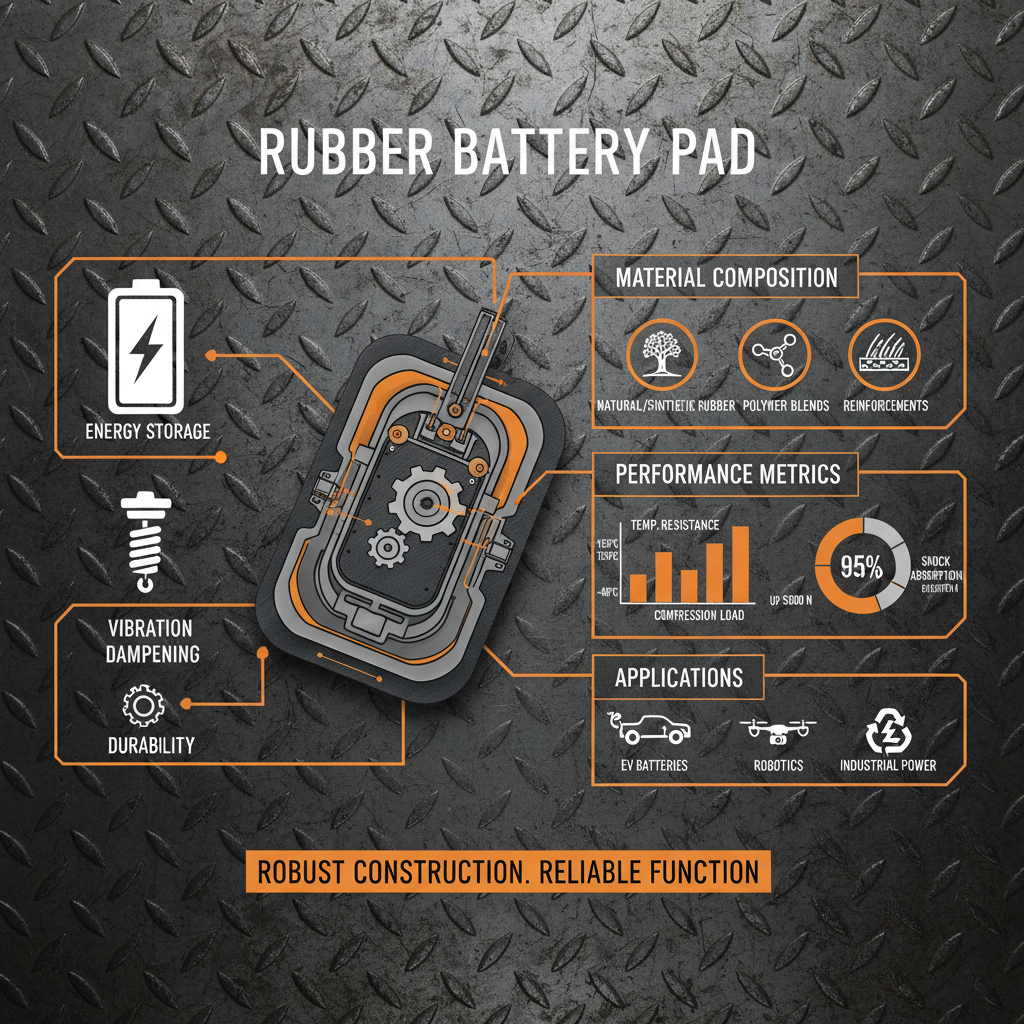
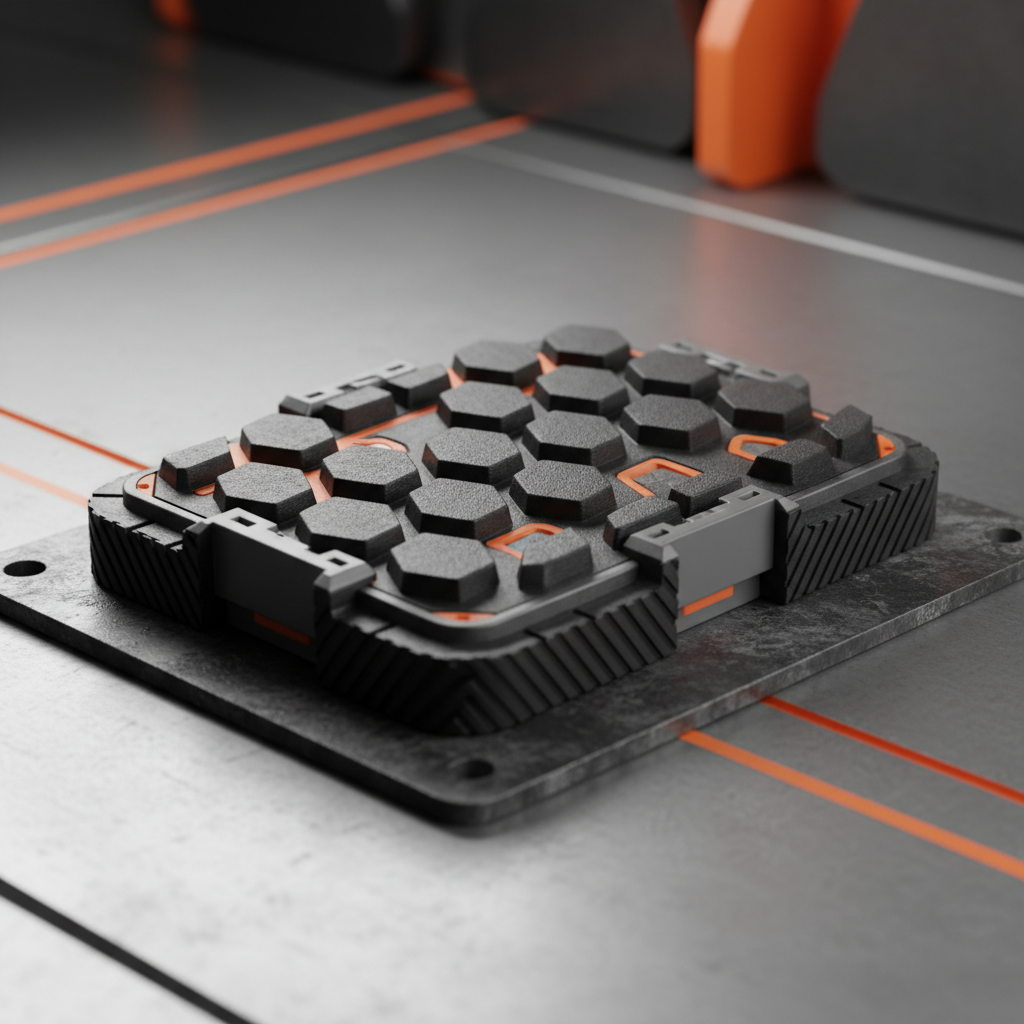
At its core, a rubber battery pad is a precision-molded elastomeric component designed to sit between a battery casing and its mounting surface. Unlike standard rubber mats, these pads are engineered with specific durometers (hardness levels) to provide the exact balance of support and shock absorption required for specific battery chemistries and weights.
Beyond simple cushioning, these pads act as a chemical barrier. In lead-acid and some lithium-based systems, electrolyte leakage can lead to rapid corrosion of the metal chassis. A specialized rubber battery pad is formulated to be acid-resistant, protecting the structural integrity of the vehicle or machine and preventing dangerous electrical shorts.
In the context of modern humanitarian and industrial needs, these components ensure that critical power backups—such as those used in remote medical clinics or emergency communication hubs—remain operational despite rough transport over unpaved terrain. The reliability of the power source is directly linked to the quality of its mechanical isolation.
Core Components of High-Performance Pads
The efficacy of a rubber battery pad is determined by its material composition. EPDM (Ethylene Propylene Diene Monomer) is frequently used for its exceptional weather and heat resistance, ensuring that the pad does not crack or harden when exposed to engine heat or outdoor ultraviolet radiation.
Another critical factor is the damping coefficient. A high-quality rubber battery pad must convert kinetic energy from vibrations into low-level heat, preventing the resonance that can loosen battery terminals. This requires precise control over the cross-linking density of the rubber during the vulcanization process.
Finally, scalability and geometric design play a role. Whether it is a thin shim for a small UAV battery or a thick, ribbed slab for a rail transit power bank, the surface texture of the rubber battery pad is often engineered with anti-slip grooves to ensure the battery remains stationary under high G-forces.
Comparative Performance Analysis
When evaluating different material options for a rubber battery pad, engineers typically look at vibration attenuation and chemical durability. For instance, Natural Rubber offers superior elasticity but fails in acid-heavy environments, whereas Nitrile rubber provides excellent oil resistance but may struggle with extreme temperature swings.
The following data illustrates how different formulation methods for the rubber battery pad perform across key industrial metrics, highlighting the trade-offs between cost-efficiency and extreme-environment reliability.
Efficiency Comparison of Rubber Battery Pad Materials
Global Applications and Industrial Use Cases
The application of the rubber battery pad spans across diverse sectors. In the automotive industry, these pads are essential for both ICE and EV vehicles to prevent battery shifting during sudden braking or collisions. In rail transit, where constant low-frequency vibration is a constant, heavy-duty reinforced pads are used to protect massive onboard energy storage systems.
Furthermore, in the field of UAVs and robotics, lightweight yet high-damping rubber battery pad solutions are critical. Because drone batteries are subject to high-frequency motor vibrations, the pad must prevent these oscillations from reaching the flight controller, ensuring stable flight dynamics and protecting the battery's internal chemistry from mechanical shock.
Long-Term Value and Safety Advantages
Investing in a premium rubber battery pad yields significant long-term economic benefits. By reducing the frequency of battery replacements caused by vibration-induced internal failure, companies can lower their maintenance overhead and reduce hazardous waste. The reliability provided by professional-grade elastomers translates directly into increased uptime for critical machinery.
From a safety perspective, the value is even more profound. A degraded pad can lead to a battery shifting, which in a worst-case scenario, could cause a short circuit or a thermal runaway event. The use of fire-retardant rubber compounds in the rubber battery pad adds an extra layer of protection, containing potential sparks and preventing the spread of fire within the battery compartment.
Ultimately, the trust a customer places in a power system is built on these invisible details. When a rubber battery pad performs its job silently and effectively, it ensures the dignity of the operator and the safety of the environment, proving that engineering excellence is often found in the smallest components.
Future Trends in Elastomeric Battery Support
The future of the rubber battery pad is moving toward "smart" materials. We are seeing the emergence of piezo-electric rubber composites that can not only dampen vibration but also sense the amount of pressure or shifting occurring in the battery tray, sending real-time health data to the vehicle's onboard diagnostic system.
Sustainability is also driving innovation. There is a significant push toward using bio-based elastomers and recycled rubber to create an eco-friendly rubber battery pad. This aligns with the global goal of making the entire EV lifecycle green, from the minerals in the battery to the rubber pads that support them.
Additionally, 3D printing of elastomers is allowing for the creation of lattice-structured pads. These non-uniform geometries can be tuned to block specific vibration frequencies more effectively than traditional solid rubber, marking a new era of customized vibration isolation for the rubber battery pad.
Analysis of Material Performance for Battery Support Solutions
|
Material Type
|
Vibration Damping
|
Chemical Resistance
|
Temperature Range
|
| EPDM Rubber Pad |
High |
Excellent |
-40°C to 150°C |
| Nitrile (NBR) Pad |
Medium |
Superior (Oil) |
-30°C to 120°C |
| Silicone Pad |
Very High |
Good |
-60°C to 230°C |
| Neoprene Pad |
High |
Medium |
-20°C to 100°C |
| Natural Rubber Pad |
Superior |
Low |
-50°C to 80°C |
| Fluorocarbon Pad |
Medium |
Extreme |
-20°C to 250°C |
FAQS
A rubber battery pad is essential because vehicles are subject to constant vibrations and sudden shocks. These pads absorb the kinetic energy that would otherwise cause the battery to rub against the chassis, which can lead to casing wear, terminal loosening, and potentially dangerous leaks. Additionally, they provide an insulating layer that protects the vehicle's frame from corrosive battery acid.
No, not all rubber is created equal. A proper rubber battery pad must be chemically compatible with the battery type. For example, natural rubber degrades quickly when exposed to battery acid. EPDM or specialized synthetic elastomers are preferred for their resistance to acids, oils, and extreme temperature fluctuations found in engine bays.
Check for signs of "dry rot" such as visible cracking, hardening of the material, or extreme compression (where the pad no longer bounces back). If the battery feels loose in its tray or if you see acid stains on the pad, it has likely lost its protective properties and should be replaced to prevent damage to the battery casing.
No, they are designed to be electrical insulators. The primary goal of a rubber battery pad is mechanical isolation. By preventing the battery casing from making direct metal-to-metal contact with the chassis, the pad actually helps prevent accidental grounding or short circuits, enhancing the overall safety of the electrical system.
Yes. A generic mat is often just a piece of recycled rubber with low consistency. A professional rubber battery pad is engineered with a specific durometer and material blend (like EPDM or Nitrile) to meet industrial standards for vibration damping and chemical resistance, ensuring long-term performance under load.
By minimizing mechanical stress, a high-quality pad prevents internal cell damage and terminal fatigue. Vibration can cause internal plates in traditional batteries to warp or shed material, leading to premature failure. A rubber battery pad stabilizes the unit, effectively extending the operational life of the battery.
Conclusion
The rubber battery pad is far more than a simple accessory; it is a fundamental engineering component that ensures the safety, stability, and longevity of power systems across global industries. From the selection of acid-resistant EPDM to the precision of vibration-damping geometry, every detail contributes to the prevention of system failures and the reduction of long-term maintenance costs.
As we move toward a future of smarter, greener energy storage, the role of elastomeric supports will only grow in importance. We recommend that engineers and fleet managers prioritize high-grade, certified materials over generic alternatives to maximize the ROI of their energy investments. For professional-grade solutions, visit our website: www.sunlitetek.com

 Select Language