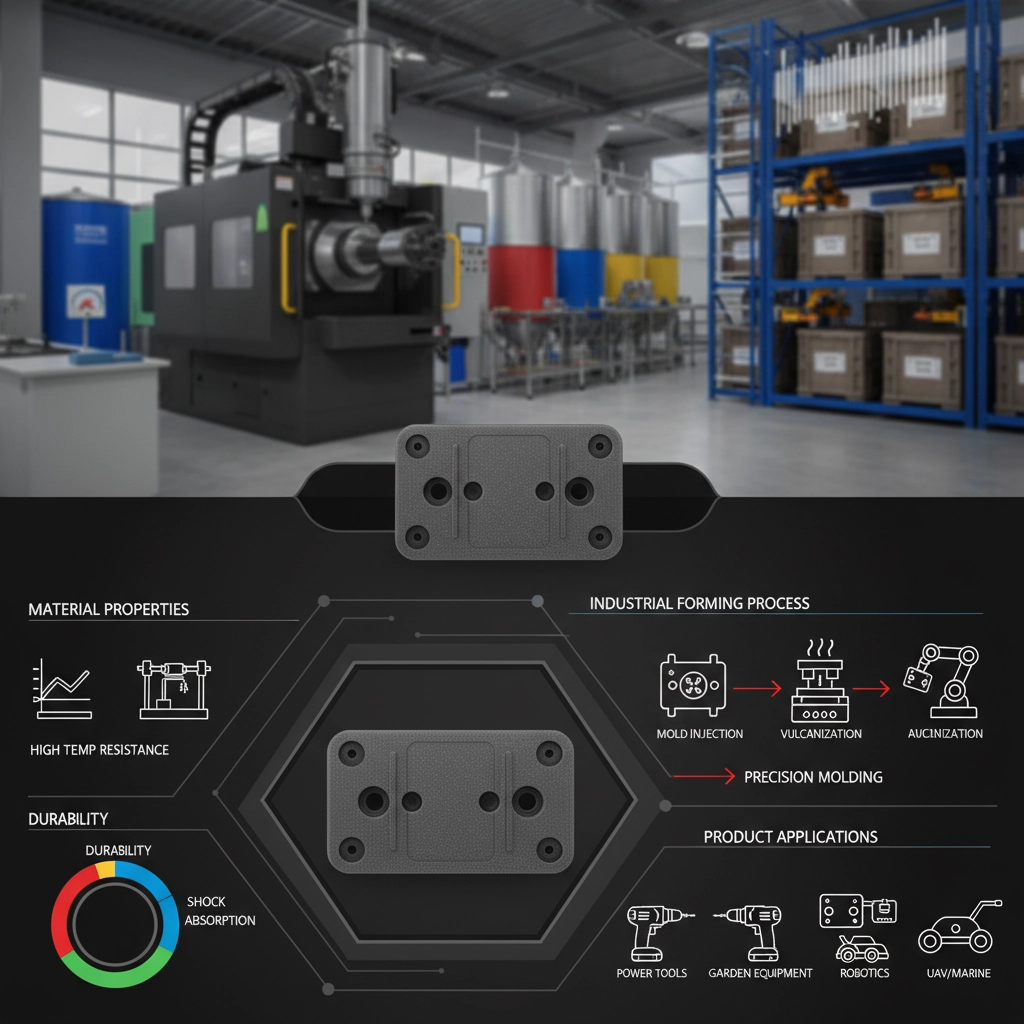
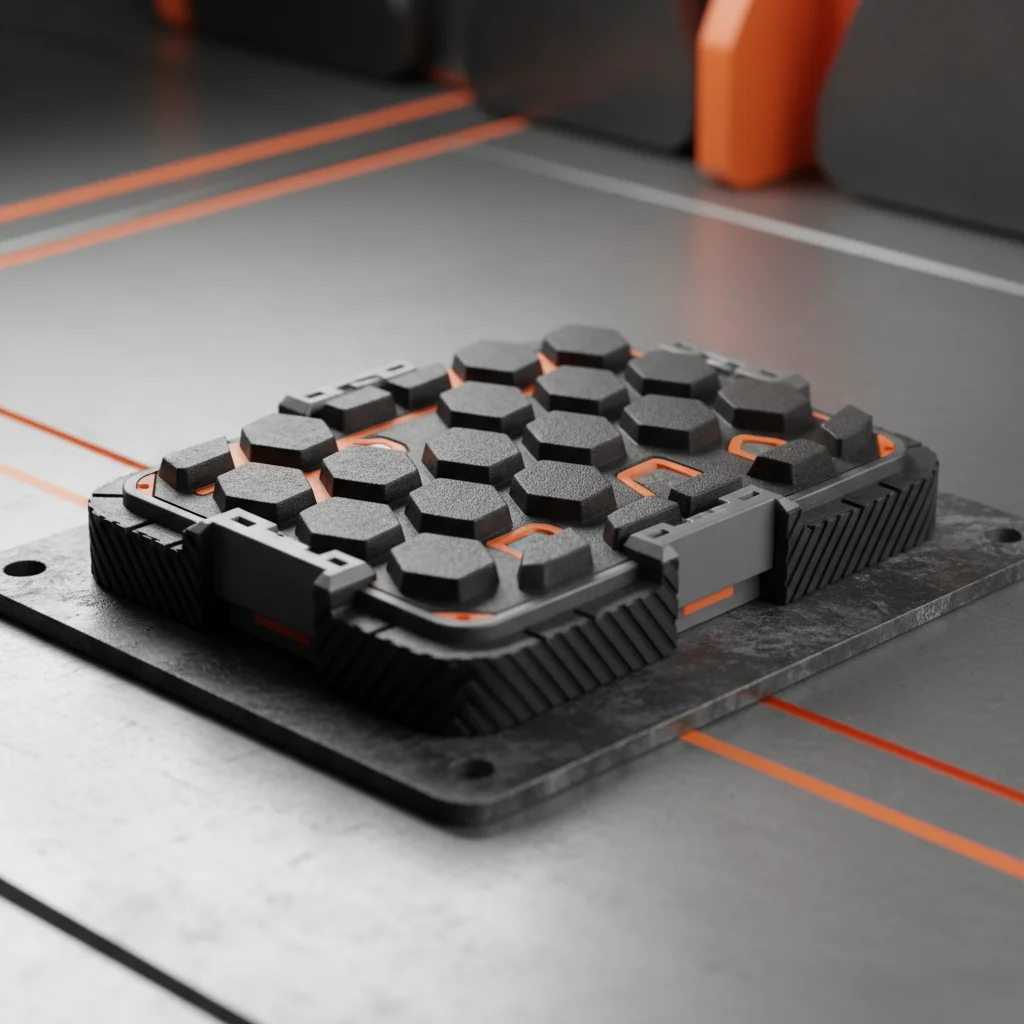
The modern landscape of high-power portable tools and electric vehicle components relies heavily on precision engineering to manage vibration and thermal energy. Central to this stability is the 40V battery pad, a specialized component designed to isolate sensitive lithium-ion cells from mechanical shocks and environmental stressors. By integrating advanced elastomeric materials, these pads ensure that high-voltage battery packs maintain structural integrity even under the most demanding operational conditions.
Across the globe, the transition toward electrification in gardening tools, industrial robotics, and specialty automotive parts has heightened the demand for superior dampening solutions. A high-quality 40V battery pad does more than just cushion; it manages the harmonic resonance that can lead to premature cell degradation and connection failure. As industries push for higher energy densities and faster discharge rates, the role of specialized sealing and vibration-damping rubber becomes a critical safety and performance requirement.
Understanding the technical nuances of the 40V battery pad allows engineers and procurement managers to optimize the lifespan of their energy storage systems. From reducing noise, vibration, and harshness (NVH) to preventing chemical leakage through precision sealing, these components represent the intersection of material science and electrical safety. This guide explores the industry context, material specifications, and future innovations surrounding these essential rubber components.
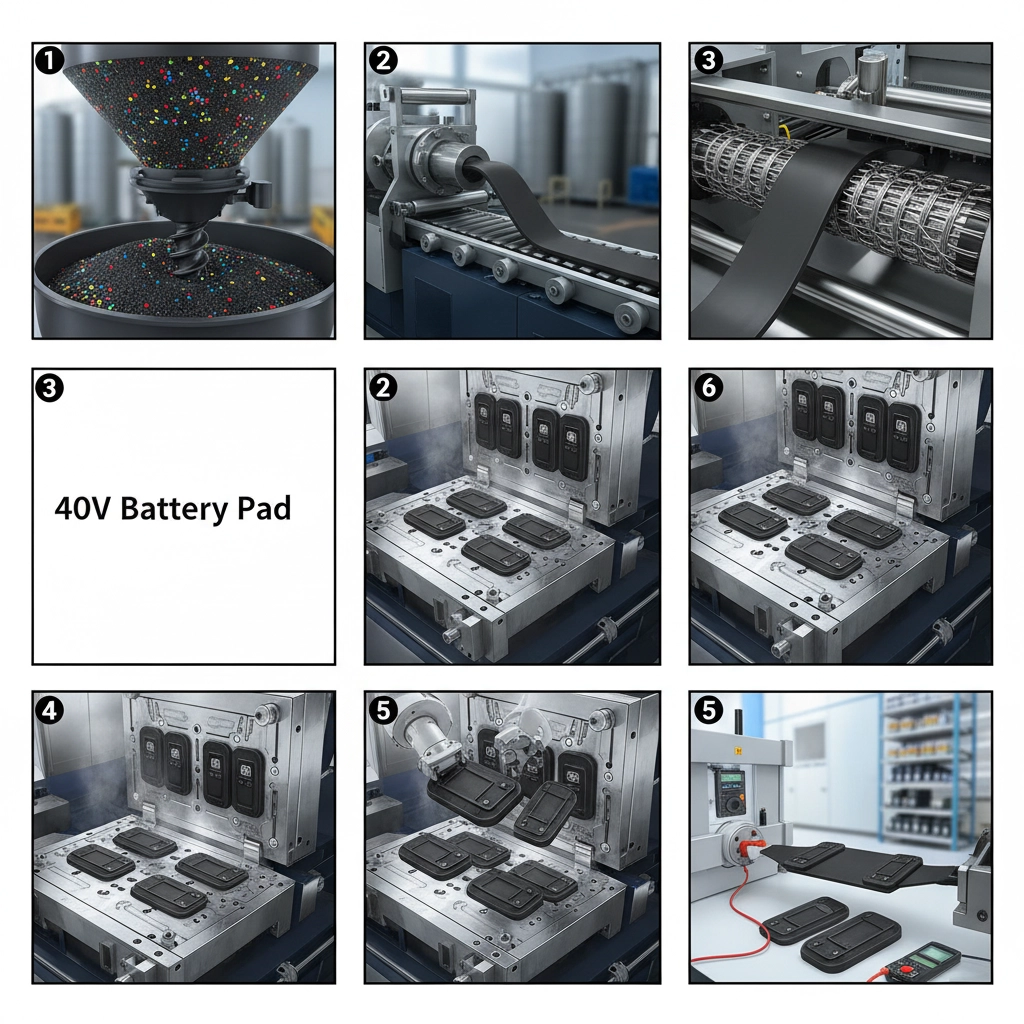
Global Industry Context of 40V Battery Pads
The global shift toward cordless electrification, accelerated by ISO standards for battery safety and environmental regulations, has placed an unprecedented spotlight on the internal architecture of power tools. The 40V battery pad has emerged as a vital solution to the growing challenge of mechanical fatigue. As voltage levels increase to 40V and beyond to provide professional-grade power, the associated weight and vibration levels increase, necessitating a more robust interface between the battery cells and the tool chassis.
Industries ranging from rail transit to robotic manufacturing are now implementing stricter NVH (Noise, Vibration, Harshness) protocols. Without a properly engineered 40V battery pad, high-frequency vibrations can cause micro-fractures in solder joints and degrade the chemical stability of the cells. This global demand for reliability has transformed a simple rubber component into a highly engineered piece of safety equipment.
Defining the 40V Battery Pad and Its Function
In simple technical terms, a 40V battery pad is a precision-molded elastomeric gasket or cushioning layer specifically calibrated for the weight and thermal output of 40V lithium-ion battery packs. It acts as a physical barrier that absorbs kinetic energy and prevents the direct transmission of shocks from the exterior casing to the delicate internal battery chemistry.
Beyond mere cushioning, these pads are often infused with specialty additives to provide electrical insulation and thermal conductivity. In the context of modern humanitarian and industrial needs—such as remote power tools used in disaster relief or heavy-duty robotic equipment—the 40V battery pad ensures that the equipment remains operational in uneven terrains and extreme temperatures.
The connection between these pads and industrial longevity is direct: by reducing the amplitude of vibrations, the pad prevents "cell shifting," which is a primary cause of internal short circuits in high-capacity packs. Consequently, the 40V battery pad is not just an accessory, but a fundamental component of the battery's safety management system.
Core Components and Material Factors
The effectiveness of a 40V battery pad is primarily determined by its material composition. High-grade EPDM (Ethylene Propylene Diene Monomer) or Silicone rubber are frequently used due to their exceptional resistance to heat, ozone, and weathering, ensuring that the pad does not harden or crack over years of use.
Durability and compression set are the two most critical factors. A premium 40V battery pad must maintain its original shape after thousands of compression cycles. If the material suffers from permanent deformation, the battery pack becomes loose, leading to increased vibration and potential electrical failure.
Furthermore, chemical compatibility is essential. Because these pads are in close proximity to electrolytes and plastic housings, the 40V battery pad must be chemically inert to prevent degradation caused by accidental leaks or the off-gassing of battery components during high-load charging cycles.
Performance Metrics and Comparison
To evaluate the quality of a 40V battery pad, engineers look at several key performance indicators (KPIs), including shore hardness, damping coefficient, and thermal resistance. A pad that is too soft will bottom out under the weight of a 40V pack, while one that is too hard will fail to absorb high-frequency vibrations.
The following analysis compares different material approaches used in the production of these pads. While traditional rubber offers cost-efficiency, advanced polymers provide superior longevity and stability, which is critical for high-end electric tools and automotive applications.
Performance Efficiency of 40V Battery Pad Materials
Global Applications and Use Cases
In real-world industrial settings, the 40V battery pad is utilized across a vast array of sectors. For instance, in the construction industry, high-torque 40V drills and saws are subject to extreme jarring forces. The pad ensures that the power source remains securely seated, preventing the battery from ejecting during heavy-duty use and protecting the cells from impact damage.
Beyond handheld tools, these pads are integrated into UAV (drone) battery compartments and underwater cleaning robots, where vibration dampening is critical for sensor accuracy and waterproof seal integrity. In remote industrial zones, such as mining or offshore drilling, the reliability of a 40V battery pad can mean the difference between a functioning tool and a costly system failure in a hard-to-reach environment.
Long-Term Value and Sustainability
Investing in a high-quality 40V battery pad yields significant long-term economic benefits. By extending the operational life of the battery pack, companies reduce the frequency of replacement cycles, which directly lowers the total cost of ownership (TCO) for their equipment fleets.
From a sustainability perspective, the use of durable rubber components reduces electronic waste. When a battery pack fails prematurely due to vibration damage, the entire unit—including the lithium cells—often ends up in a landfill. A robust 40V battery pad promotes a circular economy by maximizing the lifespan of the most energy-intensive part of the tool.
Furthermore, the safety implications cannot be overstated. By preventing cell movement and reducing the risk of internal shorts, these pads provide peace of mind to operators, ensuring that high-voltage energy is contained and managed safely, which fosters trust in the brand and the technology.
Future Trends and Technical Innovations
The future of the 40V battery pad lies in the integration of "smart materials." We are seeing a move toward piezoelectric polymers that can not only dampen vibration but also convert some of that kinetic energy back into electrical energy or provide real-time data on the structural health of the battery pack.
Digital transformation in manufacturing, specifically through 3D printing and additive manufacturing, is allowing for the creation of lattice-structured pads. These bio-mimetic designs optimize the strength-to-weight ratio, providing superior shock absorption in specific directions while reducing the overall material footprint of the 40V battery pad.
As green energy policies tighten, there is also a push toward bio-based elastomers. Future versions of the 40V battery pad will likely be made from biodegradable or fully recyclable synthetic rubbers, aligning industrial productivity with global environmental goals.
Technical Specifications and Comparison of 40V Battery Pad Variants
| Material Type |
Vibration Absorption |
Thermal Range |
Estimated Lifespan |
| Standard Nitrile |
Moderate |
-20°C to 80°C |
2-3 Years |
| Premium EPDM |
High |
-40°C to 120°C |
5-7 Years |
| High-Temp Silicone |
Excellent |
-60°C to 200°C |
8-10 Years |
| Polyurethane Foam |
Moderate |
-10°C to 60°C |
1-2 Years |
| Fluorocarbon (Viton) |
High |
-20°C to 250°C |
10+ Years |
| Hybrid Composite |
Ultra-High |
-50°C to 150°C |
7-9 Years |
FAQS
A 40V battery pad serves as a critical shock absorber. It prevents the heavy battery cells from rattling within the casing, which protects the internal electrical connections and prevents the lithium cells from suffering physical deformation during high-impact use. This leads to a longer battery life and safer operation.
No, not any rubber will suffice. A 40V battery pad requires materials with specific compression set resistance and thermal stability. Materials like EPDM or Silicone are preferred because they don't degrade when exposed to the heat generated by 40V fast-charging cycles or harsh outdoor environments.
For professional industrial use, it is recommended to inspect the battery pads every 12 months. If the pad shows signs of cracking, hardening, or permanent thinning (loss of elasticity), it should be replaced immediately to prevent vibration-induced damage to the battery cells.
A properly designed 40V battery pad is an insulator, meaning it does not conduct electricity. This is a safety feature that prevents short circuits by ensuring the battery cells are isolated from the conductive parts of the tool chassis.
While the material science is similar, the physical dimensions of a 40V battery pad are usually brand-specific to ensure a perfect airtight and vibration-proof fit. Custom molding is typically required to match the specific internal geometry of different battery housings.
While less critical than in industrial settings, it is still highly recommended. Even light-duty tools experience vibration; a high-quality pad ensures the battery lasts for its full rated number of cycles and prevents the "rattle" that can lead to connector wear over time.
Conclusion
In summary, the 40V battery pad is a cornerstone of modern energy storage safety and efficiency. By effectively managing vibration, resisting thermal degradation, and providing critical electrical insulation, these specialized rubber components protect the most expensive part of the cordless ecosystem—the battery pack. From the selection of high-grade EPDM to the implementation of smart lattice structures, the evolution of the battery pad directly reflects the broader industry trend toward reliability and sustainability.
As we look toward a future of higher voltages and more demanding industrial applications, the focus must remain on material innovation and precision engineering. We suggest that manufacturers and operators prioritize high-performance elastomeric solutions to minimize downtime and maximize safety. For those seeking the highest standards in specialized rubber dampening and sealing solutions, we invite you to explore our professional grade options. Visit our website: www.sunlitetek.com