

 Select Language
In the landscape of high-output manufacturing and heavy infrastructure,vibration is often treated as an unavoidable byproduct of power.However,to a structural or mechanical engineer,uncontrolled vibration is a"silent killer."It is the primary catalyst for micro-fractures in concrete foundations,the premature calibration drift of sensitive CNC instrumentation,and the accelerated wear of bearing assemblies.When a multi-million-dollar production line suffers an unexpected shutdown,the root cause is rarely a total engine failure;it is frequently the cumulative effect of harmonic resonance that was never properly mitigated at the floor level.
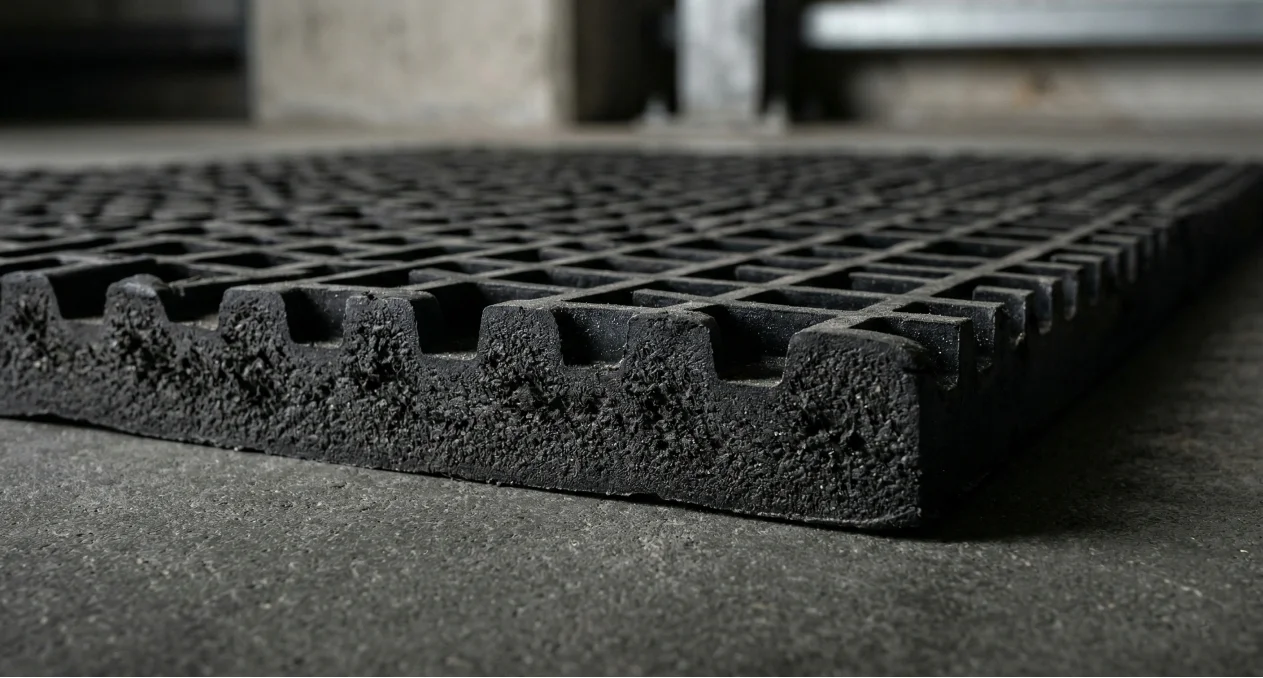
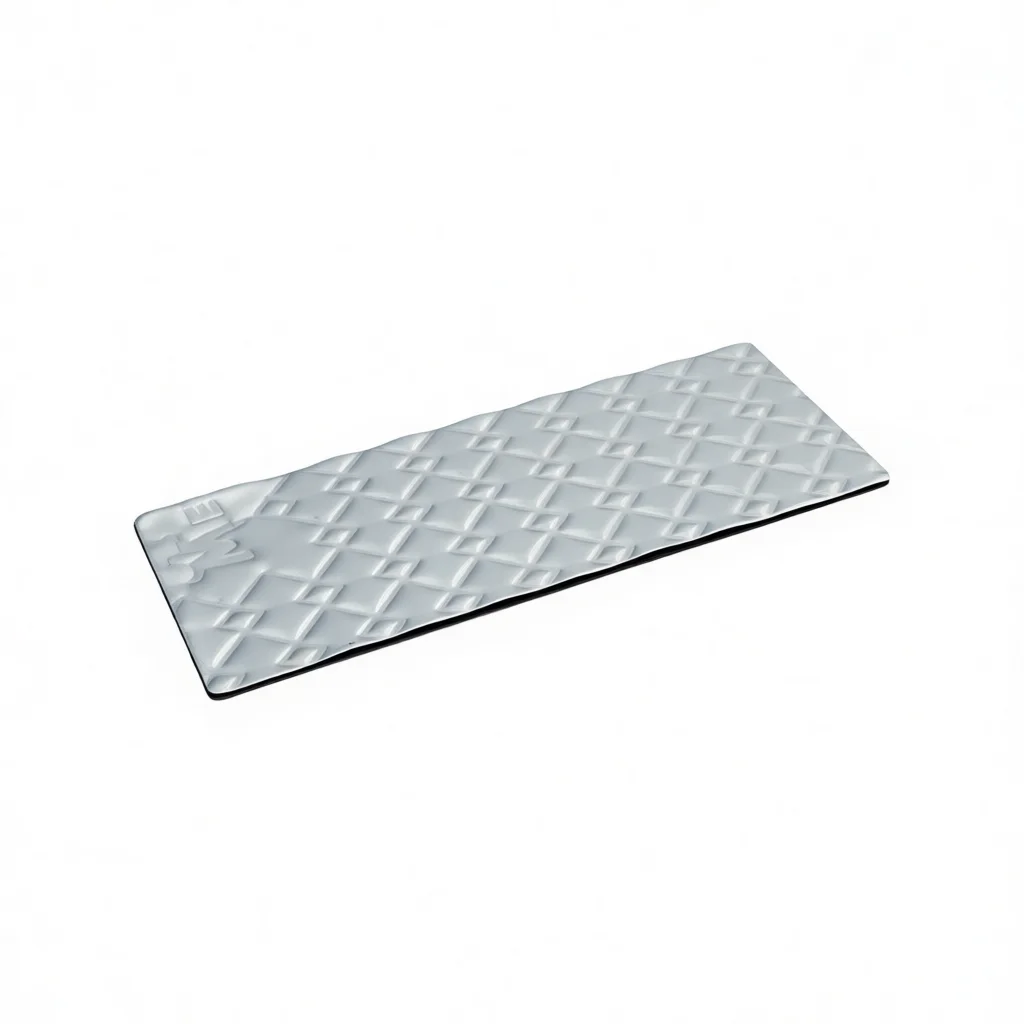
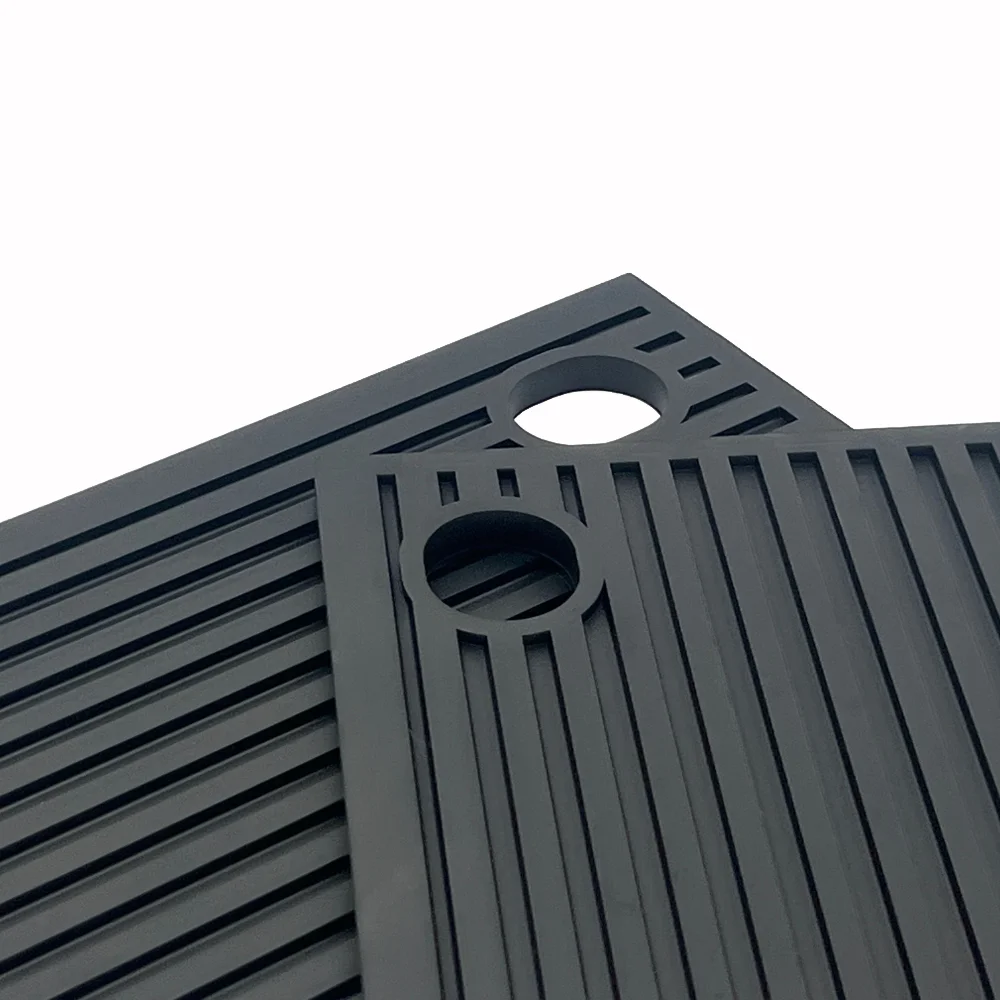
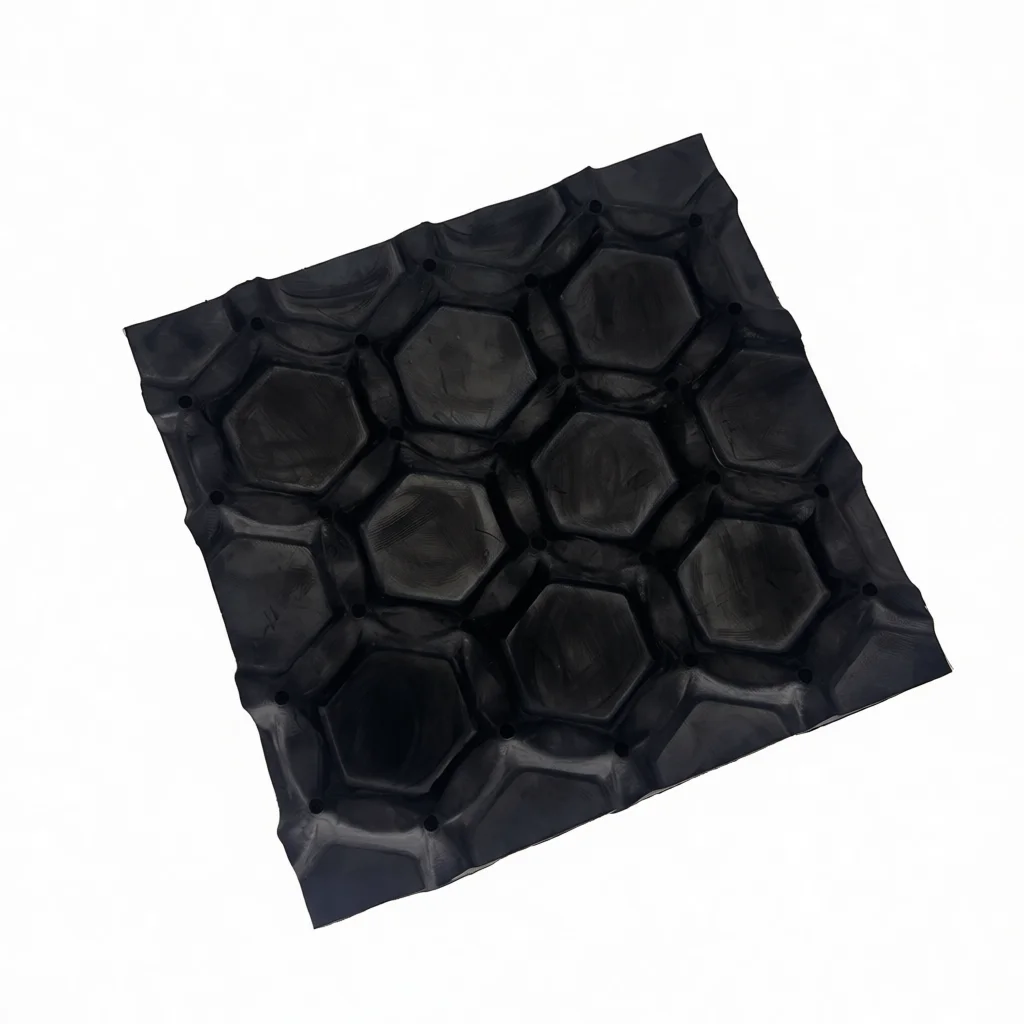
This is where the"Small Product,Big Impact"philosophy becomes a critical business metric.Vibration Damping Mats for Floors are often the last item on a procurement list,yet they represent the primary line of defense for a facility’s Total Cost of Ownership(TCO).At Guangdong Sunlite Science&Technology Co.,Ltd.,we position ourselves as more than a supplier of rubber components;we are an engineering partner dedicated to solving the complex physics of energy dissipation through advanced elastomer science.
Technical Breakdown:The Science of Elastomeric Hysteresis
The effectiveness of a vibration damping mat is determined by its ability to convert kinetic energy(vibration)into low-level heat—a process known as hysteresis.Unlike standard commercial-grade rubber or foam,which may collapse under sustained loads or"set"permanently over time,industrial-grade damping mats must maintain a specific dynamic stiffness and damping ratio under varying pressures.
Guangdong Sunlite utilizes high-density,precision-molded elastomers—primarily Nitrile(NBR)for oil-rich environments or high-grade EPDM for outdoor and HVAC applications—to ensure long-term structural integrity.These materials are engineered to resist"creep,"the tendency of solid materials to move slowly or deform permanently under the influence of persistent mechanical stresses.
Engineering Specification Comparison:Sunlite Industrial Elastomer vs.Standard Commercial Rubber
Performance Metric | Sunlite High-Density Industrial Mat | Standard Commercial Rubber/SBR |
Energy Dissipation(Damping Ratio) | High(0.15-0.25) | Low(<0.05) |
Load Bearing Capacity | Up to 50 kg/cm²(Customizable) | <10 kg/cm² |
Compression Set(ASTM D395) | <15%after 22h@70°C | >40%(Loss of elasticity) |
Chemical&Oil Resistance | Excellent(Formulation Dependent) | Poor(Swelling/Degradation) |
Environmental Stability | UV and Ozone Resistant | Prone to cracking and oxidation |
Real-World Applications:Solving Critical Industrial Challenges
For the engineering team at Guangdong Sunlite,the goal is to match the polymer formulation to the specific environmental stressors of the application.
1.HVAC and Rooftop Mechanical Systems
Rooftop units(RTUs)and large-scale chillers generate constant,low-frequency vibrations that can travel through a building’s steel skeleton,causing noise complaints and structural fatigue.By utilizing EPDM-based vibration damping mats,we provide a solution that is impervious to UV exposure,ozone,and extreme temperature fluctuations.Our mats decouple the machinery from the building structure,preventing the"speaker effect"where the floor slab amplifies mechanical noise.
2.Heavy CNC and Precision Machining Centers
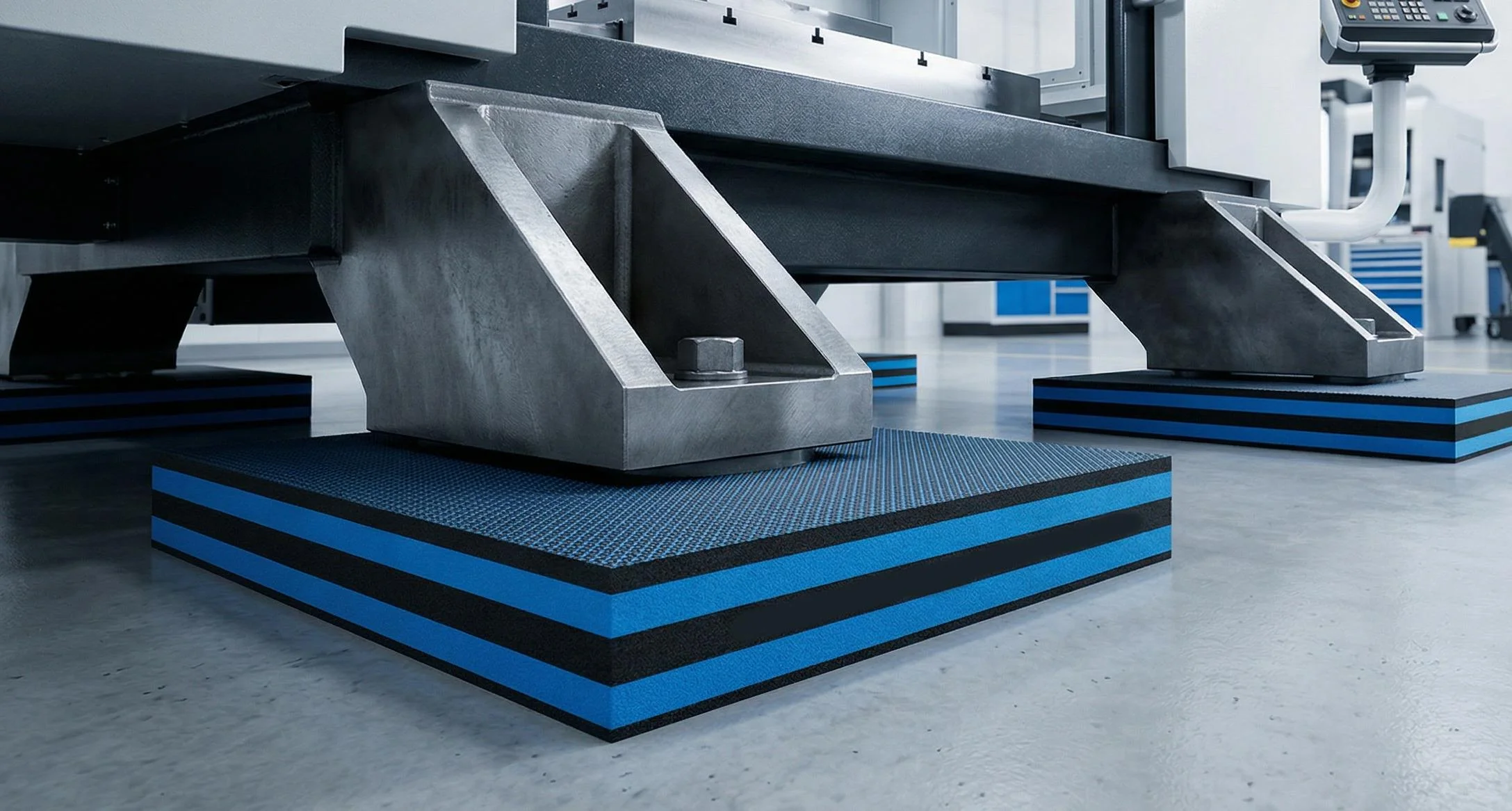
In the world of high-precision machining,even a vibration of a few microns can lead to surface finish defects and rejected parts.Heavy presses and CNC machines require damping mats with high dynamic stiffness to absorb the impact of rapid tool movements without allowing the machine to"sway."Our NBR-blended mats are particularly effective here,as they remain stable even when exposed to the cutting oils and coolants prevalent on the factory floor.
3.Data Centers and Power Generation
Large diesel generators and Uninterruptible Power Supply(UPS)systems produce massive amounts of kinetic energy.Vibration damping mats used in these environments must support immense static weight for decades without losing their damping properties.Guangdong Sunlite’s proprietary curing process ensures that our mats maintain their molecular cross-linking density,providing consistent protection for sensitive electronic infrastructure against ground-borne tremors.
TCO Analysis:Shifting Focus from Price to Value
A common pitfall in B2B procurement is selecting floor mats based on the lowest initial purchase price.However,a Total Cost of Ownership(TCO)analysis reveals that the purchase price of an industrial damping mat typically represents less than 5%of the total costs associated with its performance lifecycle.
When a low-quality mat fails—either by hardening,crumbling,or losing its shape—the resulting costs are astronomical:
Machine Downtime:The cost of stopping a production line to recalibrate equipment or replace worn bearings far exceeds the cost of a premium damping solution.
Structural Repair:Vibrations transmitted into concrete floors eventually cause spalling and cracking,necessitating expensive foundation remediation.
Employee Health and Safety:Prolonged exposure to vibration and noise leads to operator fatigue and long-term health issues,increasing insurance premiums and turnover.
Guangdong Sunlite’s high-performance mats are engineered for a 10 to 15-year service life in harsh environments.By drastically reducing the Mean Time Between Failures(MTBF)of your primary machinery and protecting your facility's structural integrity,our mats provide a return on investment(ROI)that pays for itself within the first year of operation.
FAQ Section for Featured Snippets
What is the best material for vibration damping mats in industrial oily environments?
Nitrile(NBR)or NBR-blended elastomers are the superior choice for environments exposed to oils,greases,and hydraulic fluids.Unlike standard rubber,NBR maintains its structural integrity and damping properties without swelling or softening when in contact with hydrocarbons.
How do I calculate the required thickness for a vibration damping floor mat?
Thickness is determined by the"forcing frequency"of the machine and the static load(weight)per square centimeter.Generally,thicker mats(25mm to 50mm)are required for low-frequency vibrations,while thinner,high-density mats are effective for high-frequency impact noise;consulting with an engineering partner like Guangdong Sunlite is recommended for precise calculations.
Can vibration damping mats be used outdoors for HVAC units?
Yes,but they must be formulated from UV-stable materials like EPDM.Standard rubber will oxidize and crack under sun exposure,losing its elasticity within months.EPDM-based damping mats from Guangdong Sunlite are specifically designed to withstand ozone,rain,and extreme temperature shifts without degradation.
Partner with the Engineering Experts at Guangdong Sunlite
Don't let vibration compromise your engineering precision or your facility's longevity.Whether you are designing a new manufacturing plant or retrofitting existing heavy machinery,the material science behind your floor protection matters.
Contact the engineering team at Guangdong Sunlite Science&Technology Co.,Ltd.today.Our specialists are ready to provide custom material formulations,detailed load-bearing analysis,and sample testing to ensure your facility is built on a foundation of reliability.
In the landscape of high-output manufacturing and heavy infrastructure,vibration is often treated as an unavoidable byproduct of power.