 Select Language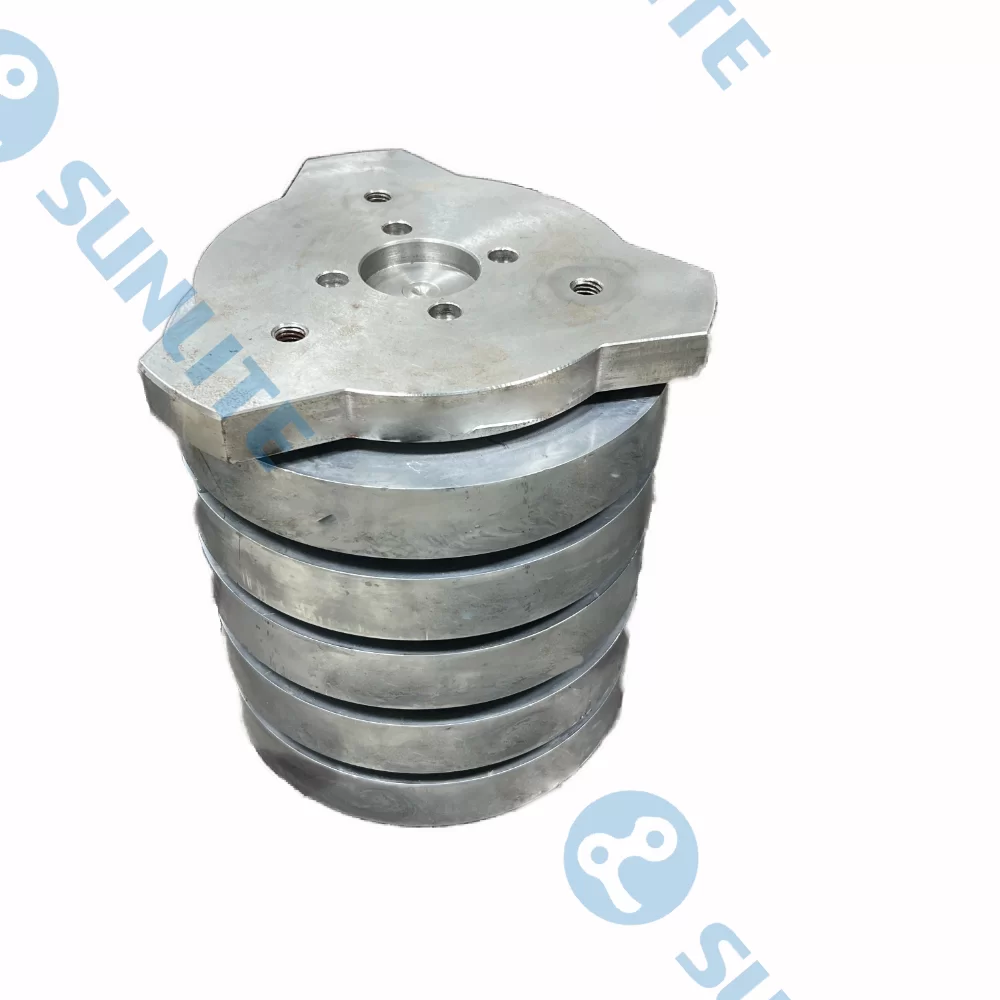
APPLICATION SCENARIOS
1. Railway track vibration isolation – reduces vibration transmission caused by train operation
2. Urban rail transit – enhances passenger ride comfort
3. High-speed railway lines – minimizes fatigue damage to track structures
4. Vibration control for track bridges and tunnels – safeguards nearby buildings and infrastructure
Product Description
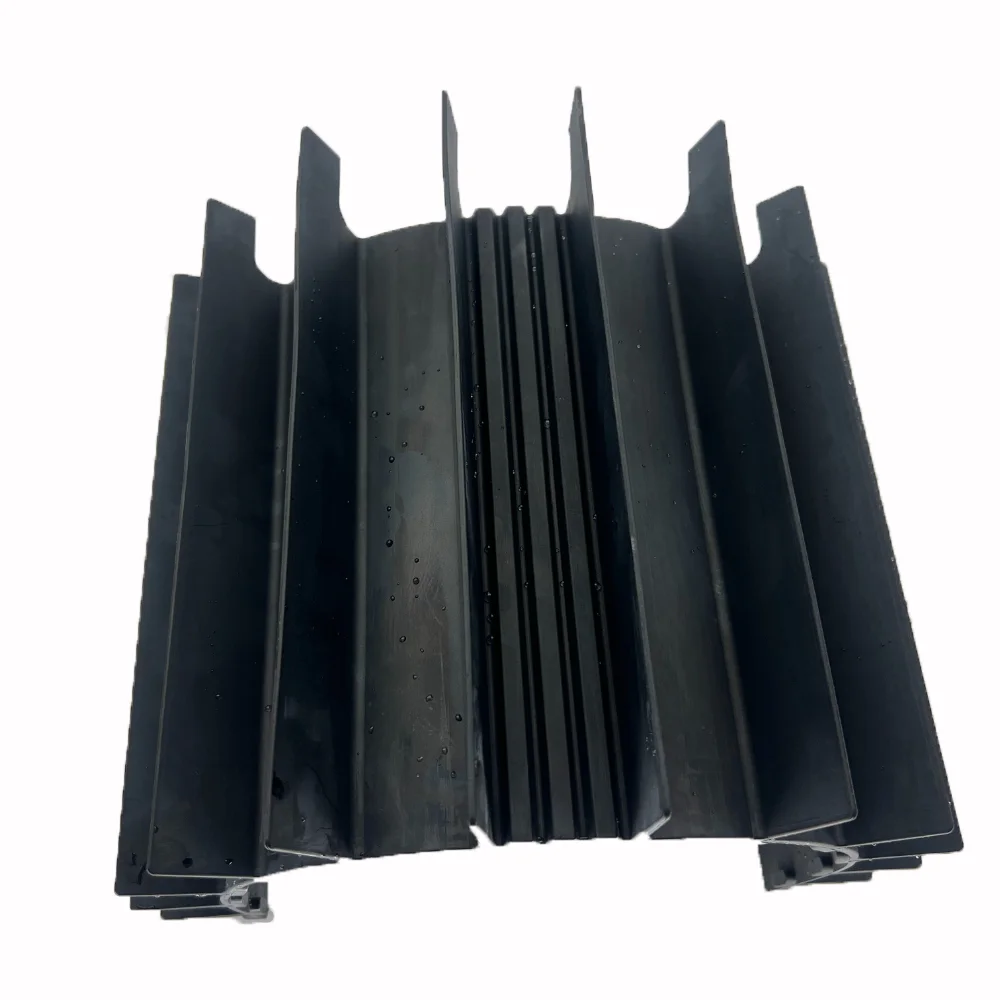
This isolator leverages the **local resonance mechanism of phononic crystals** to precisely control the propagation of elastic waves within rail structures. It achieves **>18dB insertion loss** across the 20–200Hz frequency band, delivering highly effective broadband vibration isolation. Compared to traditional steel-spring floating slab systems, it offers up to **50% improvement in vibration reduction** while completely eliminating spring breakage risks—providing a next-generation solution that combines superior performance with zero safety concerns for rail vibration mitigation projects.
PRODUCT FUNCTION
Broadband wave control:
Local resonance units expand the elastic wave bandgap range, specifically suppressing the 20-200Hz main vibration frequency band of tracks.
Metamaterial structure enables vibration isolation efficiency to exceed >18dB, with 40% improvement in high-frequency noise reduction performance.
Intrinsic safety design:
All-solid-state non-metallic resonators eliminate the risk of fatigue fracture of metal springs, reducing maintenance costs by 90%.
Modular pre-installed units support quick replacement, reducing downtime by 80%.
Enhanced environmental adaptability:
Bandgap stability >95% within the temperature range of -20℃~80℃, resisting freeze-thaw/thermal expansion effects.
Salt spray resistance rating >1000h (ISO 9227), suitable for coastal/tunnel humid environments.
Empowered by intelligent operation and maintenance:
Wireless monitoring of resonance unit status enables digital twin management of vibration suppression efficiency.
PERFORMANCE INDEX
Core technology: Phononic crystal local resonance structure
Vibration isolation performance: Insertion loss >18dB (EN 15461 test standard)
Effective frequency bandwidth: 20-200Hz elastic wave bandgap control
Mechanical lifespan: >30 years (100 million cycles of dynamic load)
Temperature range: -20℃~80℃ (bandgap frequency deviation ≤3%)
Load capacity: ≥300kN/m² vertical bearing capacity
APPLICATION AREA
Urban metro: Vibration-sensitive areas of tunnel section tracks (under hospitals, laboratories)
High-speed railway: Resonance risk prevention and control in bridge sections
Precision manufacturing: Ultra-quiet environment protection for chip factories/optical laboratories adjacent to tracks
Medical centers: Protection of equipment such as MRI against micro-vibration interference
Renovation projects: Safety upgrade and replacement of existing steel spring floating slab systems
The design of phononic crystal isolators leverages modularity to significantly enhance the efficiency and safety of railway maintenance operations. Unlike complex, traditional floating slab systems, these special vibration reduction parts offer an intrinsically safe and simplified maintenance model that reduces both downtime and associated costs.
The core maintenance advantage stems from the spring-free design and all-solid-state non-metallic resonators. Traditional systems rely on metal springs, which pose a risk of fatigue fracture and necessitate costly, complex inspections and replacements. By eliminating metal springs, the phononic crystal rail vibration isolator achieves an intrinsic safety design, ensuring high performance without the safety concerns of mechanical failure. This fundamental design choice alone reduces maintenance costs by 90%, as frequent inspections and the risk of catastrophic failure are eliminated.
Furthermore, the design incorporates modular pre-installed units that support quick replacement. This feature drastically simplifies the maintenance process. Instead of dismantling large, interconnected track components, maintenance crews can easily access and replace individual isolator units. This modularity not only makes troubleshooting easier but also reduces the time required for maintenance interventions, cutting downtime by 80%. This is critical for high-traffic environments like urban metro systems, where minimal service disruption is essential.
The isolator is also equipped for intelligent maintenance through wireless monitoring of resonance unit status. This capability facilitates digital twin management of vibration suppression efficiency. Maintenance teams can proactively monitor the performance of each unit, identifying potential issues before they lead to functional degradation. This predictive maintenance approach, combined with the quick, safe replacement process enabled by the modular, spring-free design, positions the phononic crystal isolator as a next-generation solution for efficient and cost-effective railway track vibration isolation.
Phononic crystal isolators play a transformative role in urban rail transit by significantly enhancing passenger ride comfort and mitigating the environmental impact of train operations. In densely populated urban environments, controlling vibration is not just about structural integrity but also about public well-being and protecting sensitive adjacent properties.
The key to enhancing passenger ride comfort is the isolator's precise control over elastic wave bandgap range. Urban rail transit generates high levels of vibration, particularly in tunnel sections. The phononic crystal rail vibration isolator uses local resonance technology to specifically suppress the 20-200Hz main vibration frequency band of tracks. By achieving an isolation efficiency exceeding 18dB insertion loss, the system drastically reduces the low-frequency, rumbling vibrations that are most acutely felt by passengers and cause structural shaking in nearby buildings. This targeted suppression of the most disruptive frequencies leads to a perceptibly quieter and smoother ride.
This effective vibration control for track bridges and tunnels is essential for safeguarding nearby buildings and infrastructure. In tunnel sections under vibration-sensitive areas (such as hospitals or laboratories), the isolator's ability to achieve a significant 40% improvement in high-frequency noise reduction performance ensures that micro-vibration interference is minimized. This protection extends to equipment like MRI machines or sensitive instruments used in precision manufacturing facilities adjacent to the rail lines.
Furthermore, the isolator’s enhanced environmental adaptability ensures consistent performance despite the challenging conditions of urban tunnels. The bandgap stability is maintained across the relevant temperature range, resisting freeze-thaw/thermal expansion effects. Its salt spray resistance rating ensures its durability in humid coastal/tunnel humid environments. By delivering high-performance, stable, and durable broadband wave control, the phononic crystal isolator allows urban rail transit to integrate seamlessly into the urban fabric with minimal vibration and noise pollution.
The phononic crystal isolator achieves highly effective broadband vibration control specifically targeting the 20-200Hz frequency band, which encompasses the majority of the disruptive elastic waves generated by train operations. This targeted frequency control is the central innovation of these special vibration reduction parts.
The foundational technology is the local resonance mechanism of phononic crystals. Unlike conventional mass-spring systems, which are effective only over narrow frequency bands, this metamaterial structure utilizes local resonators tuned to the specific frequencies of interest. These units create an elastic wave bandgap—a range of frequencies where wave propagation is forbidden. By expanding this bandgap to cover the 20-200Hz range, the isolator achieves precise and broadband wave control, effectively preventing the transmission of the main vibration frequencies generated by rolling stock and track interaction.
The efficacy of this control is demonstrated by the performance metrics. The isolator delivers an insertion loss exceeding 18dB, indicating a significant reduction in the amplitude of vibrational energy transmitted through the track structure. This level of attenuation is a 50% improvement in vibration reduction compared to traditional floating slab systems. This is particularly vital for high-speed railway lines, where high-frequency impacts can cause fatigue damage to track structures and reduce the overall lifespan of the rail components.
The stability of this frequency control is equally important. The phononic crystal isolator ensures bandgap stability within the specified operating temperature range. This means that the material properties and the resulting bandgap frequency do not shift significantly due to thermal variations, ensuring consistent vibration suppression regardless of the operating environment. The inherent spring-free design further contributes to stable performance by eliminating the mechanical wear and potential failure points of metal springs. This highly stable and efficient elastic wave control positions the isolator as a critical technology for enhancing the structural safety and operational quietness of modern rail infrastructure.