Select Language

In the high-stakes world of industrial robotics,electric vehicles,and heavy-duty power tools,the most critical failures often originate not from complex processors or primary power cells,but from the humble,overlooked interface components.Specifically,the battery pad.
Engineers often view the battery pad as a commodity item—a simple spacer intended to fill a void.However,this oversight is a costly one.A substandard battery pad is a"silent killer"of system reliability.It degrades,loses elasticity,and fails to protect the battery pack from the persistent vibrations,thermal fluctuations,and mechanical shocks of high-performance operation.
At Guangdong Sunlite Science&Technology Co.,Ltd.,we operate on the philosophy of"Small Product,Big Impact."We understand that your battery pack’s longevity,safety,and operational efficiency are tethered to the performance of its cushioning and positioning components.When you specify a customized battery pad from our engineering team,you are not buying a piece of rubber;you are investing in a critical structural safeguard designed for long-term TCO(Total Cost of Ownership)optimization.
Technical Breakdown:Engineering Superiority of High-Performance Elastomers
The fundamental problem with commodity battery pads—often made from low-grade EVA foams—is"compression set."Over time,the material loses its ability to return to its original shape.Once this happens,the battery cell becomes loose,vibrations amplify,and the risk of contact short circuits or mechanical failure increases exponentially.
Sunlite’s advanced battery pads,typically engineered from specially compounded EPDM(Ethylene Propylene Diene Monomer)integrated with halogen-free flame retardants,outperform traditional materials in every critical performance metric.

Comparative Performance:Sunlite EPDM vs.Traditional Foam/Rubber
Feature | Sunlite Specialized EPDM | Traditional EVA/Cheap Foam |
Compression Set | Low(Excellent Memory) | High(Permanent Deformation) |
Flame Retardancy | UL94 V0 Certified | Variable/Non-compliant |
Thermal Stability | High(Maintains elasticity at range) | Brittle at cold;Softens at heat |
Operating Life | Up to 8 Years | 1-2 Years(Before loosening) |
Chemical Resistance | Excellent(No leaching) | Poor(Risk of contamination) |
By utilizing a high-density,cellular EPDM matrix,our pads maintain constant pressure on the cell walls.This ensures the battery remains locked in position,regardless of the vibration frequency or thermal load exerted by the operating environment.
Real-World Applications:Where Precision Meets Performance
A Robot Battery Pad or a specialized pad for industrial power tools requires more than just softness;it requires structural intelligence.Our engineering team has deployed custom-molded pads across various sectors where failure is not an option:
1.Robotics and Autonomous Systems
In mobile robots and UAVs(Unmanned Aerial Vehicles),batteries are subjected to continuous,high-frequency vibrations from motors and rapid acceleration.Our customized battery pads act as a vibration-damping buffer.This prevents the"rattle"that leads to wire fatigue,soldering cracks,and intermittent power loss.By providing precise positioning,we ensure the robot’s center of gravity remains constant,crucial for stability in high-precision maneuvers.
2.High-Capacity Power Tool Packs
Power tools undergo extreme mechanical shock—think of a hammer drill or an impact driver.A generic pad will fail under these G-forces.Sunlite’s pads provide a thermal buffer and shock absorption layer that prevents the internal cells from striking the hard plastic housing during high-impact use.This"floating suspension"design significantly extends the cycle life of the battery pack,protecting the user's investment.

3.Energy Storage Modules
For stationary energy storage,the primary concerns are flame retardancy and thermal management.Our halogen-free,flame-retardant EPDM formulation meets stringent safety standards(including UL94 V0).It acts as a safety barrier,isolating cells and ensuring that if a thermal event were to occur,the risk of propagation is significantly minimized.
The TCO Perspective:Why"Cheap"Costs You More
When evaluating the cost of rubber components,procurement teams often fall into the trap of analyzing the unit price alone.This is a false economy.The Total Cost of Ownership(TCO)for a battery pad must include:
Replacement Costs:If a pad fails after one year,the cost of disassembly,labor,and downtime outweighs the initial purchase price of the pad by a factor of 10x or more.
Warranty Claims:A failed battery pad leads to premature battery failure.In a commercial or industrial context,this triggers warranty claims and damages brand reputation.
Operational Downtime:In a robotics or manufacturing line,a battery failure stops production.The cost of this downtime is immeasurable compared to the cost of a high-quality,durable elastomer.
Guangdong Sunlite’s engineering solutions are designed to last for the duration of the equipment’s service life.When you choose a Sunlite customized battery pad,you are effectively eliminating the maintenance interval for that component,thereby lowering your TCO and increasing the reliability of your final product.
Frequently Asked Technical Questions
1.Why is UL94 V0 certification important for a battery pad?
UL94 V0 is the highest standard for flame retardancy in plastics and rubber.For battery packs,which carry significant electrical energy,an EPDM pad with V0 certification prevents the material from becoming a fuel source in the event of a short circuit or thermal runaway,significantly enhancing system safety.
2.How do I determine the right hardness(Durometer)for my battery pad?
The required hardness depends on the battery pack's weight,the intensity of vibrations,and the available clearance.Generally,a softer durometer(e.g.,30-50 Shore A)is better for high-vibration isolation,while a harder compound is necessary for rigid positioning.Our team performs compression load deflection(CLD)testing to recommend the optimal durometer for your specific application.
3.Can your battery pads be customized for complex geometries?
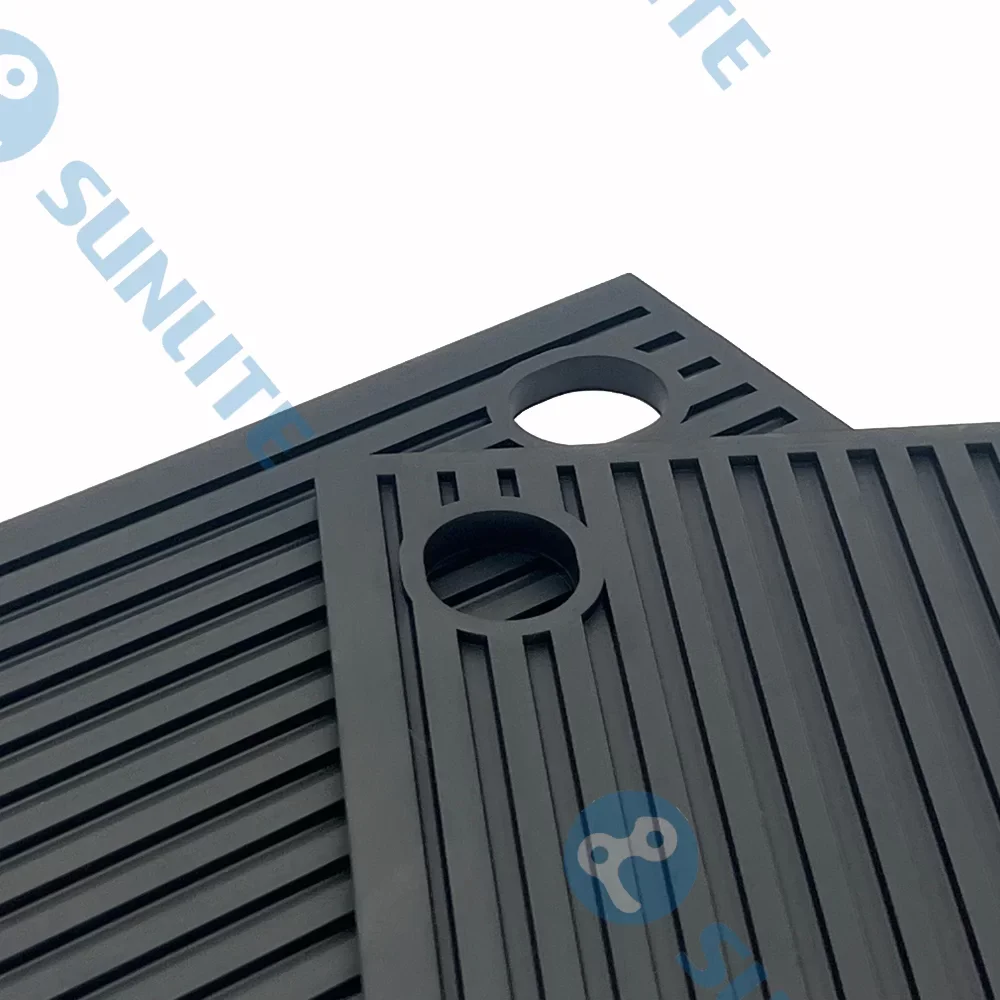
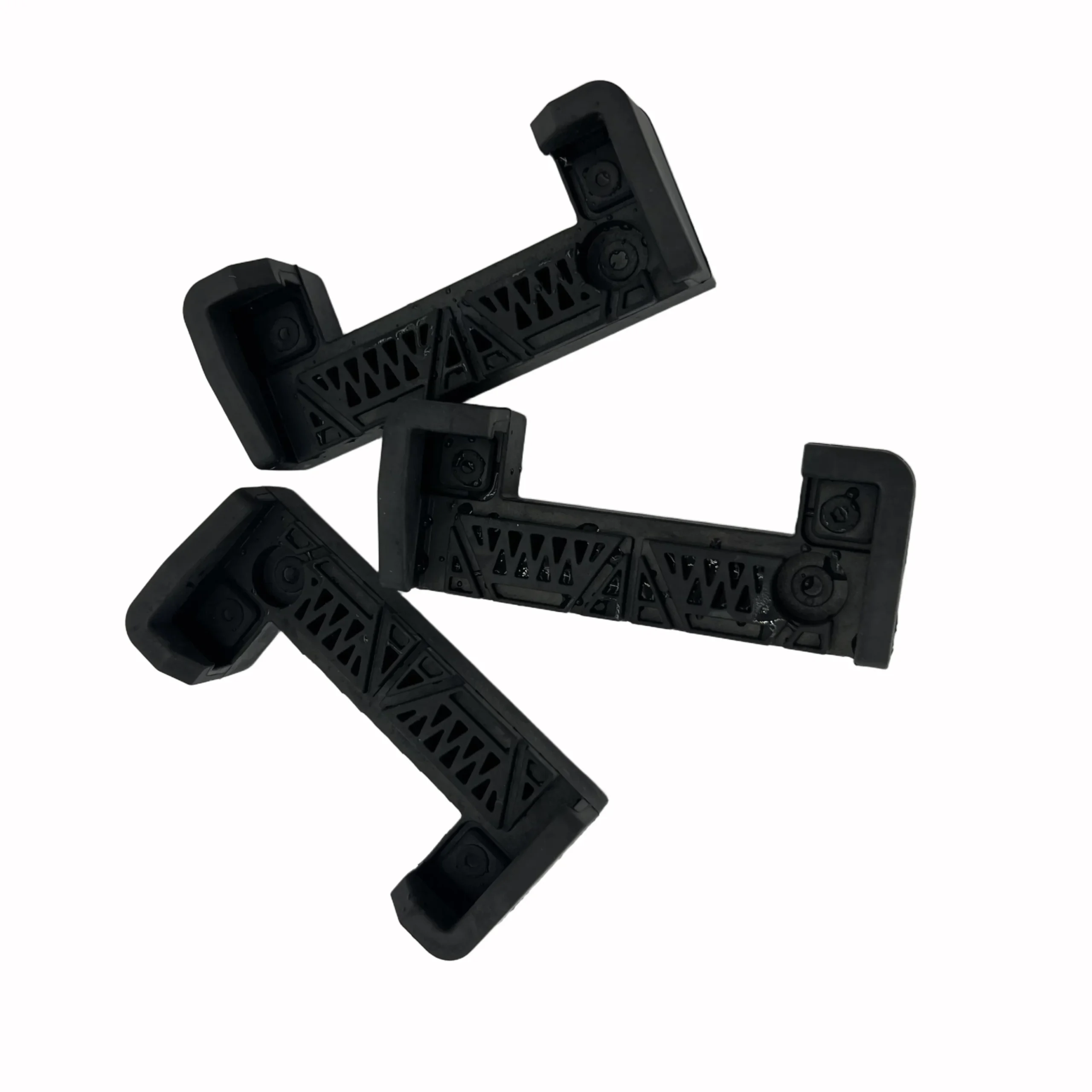
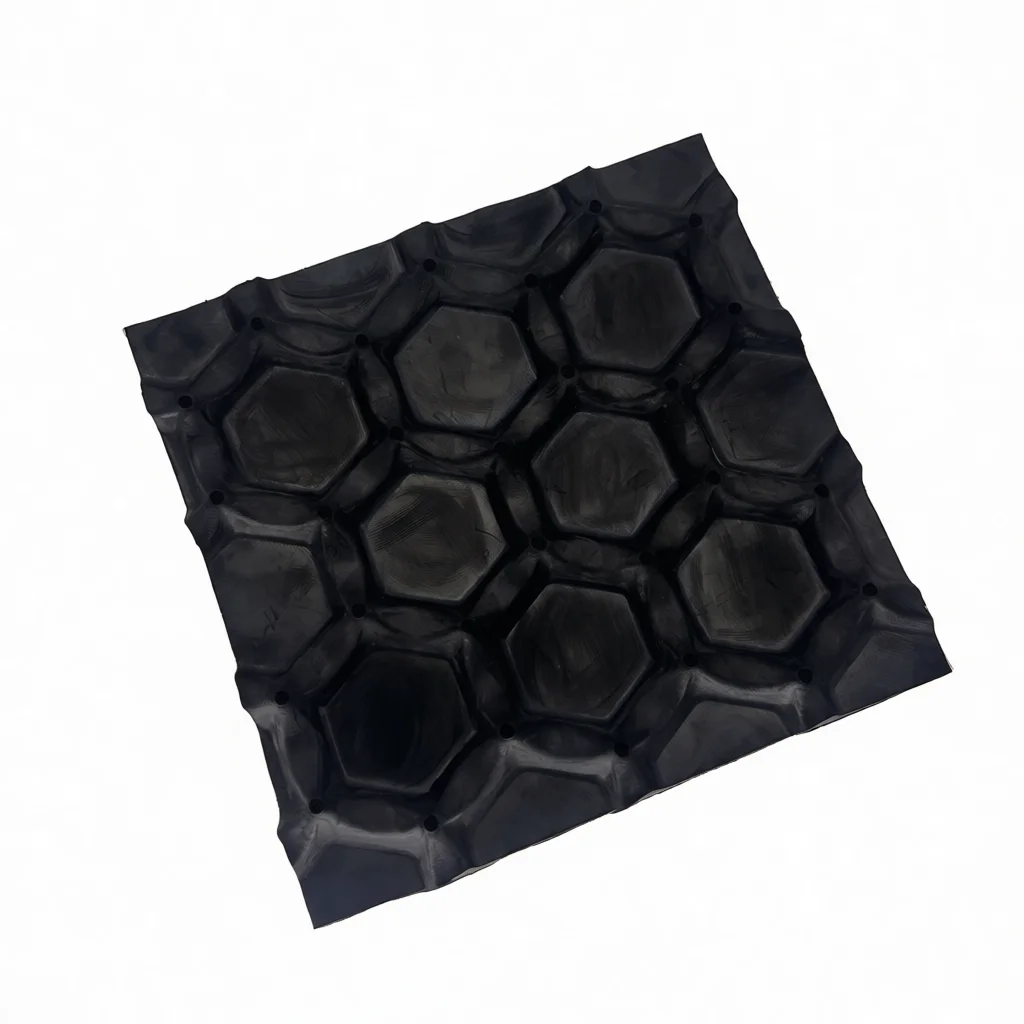
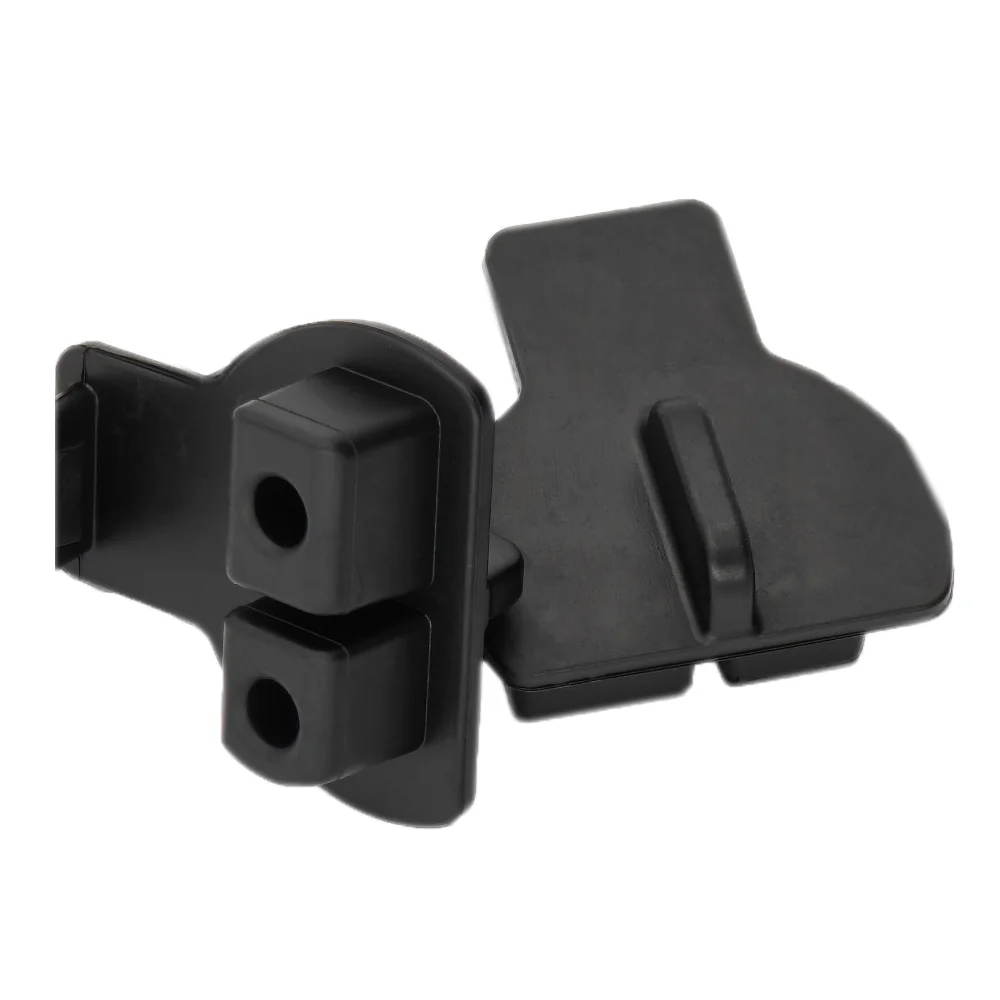
Yes.Unlike standard die-cut sheets,our manufacturing center utilizes advanced molding technologies to produce battery pads with complex 3D geometries,undercuts,and integrated ribbing.This allows for a"press-fit"installation that secures the battery more effectively than flat gaskets ever could.
Partner with Guangdong Sunlite for Engineering Excellence
Your battery system is only as reliable as its weakest interface.Don't let a low-quality spacer jeopardize your technology.
At Guangdong Sunlite Science&Technology Co.,Ltd.,we don't just supply rubber parts;we provide engineered solutions.Whether you need a vibration-dampening Robot Battery Pad(Robot Battery Pad) or a thermally stable insulator for a new energy storage module,our engineering team is ready to assist.
Ready to enhance the reliability of your battery systems?
Contact our engineering team today for material selection,prototype testing,and custom molding inquiries.Let us help you ensure that your product stands up to the demands of the real world.

In the high-stakes world of industrial robotics,electric vehicles,and heavy-duty power tools,the most critical failures often originate not from complex processors or primary power cells,but from the humble,overlooked interface components.Specifically,the battery pad.