

 Select Language
— A Solid Step Toward Intelligent Manufacturing
In the production of rubber products, vulcanization is the key process that determines final performance. Traditional vulcanization workshops face multiple challenges, including high-temperature environments, heavy reliance on manual labor, efficiency bottlenecks, and fluctuations in product quality. The adoption of robotic automation systems is driving the rubber manufacturing industry toward intelligent, unmanned, and high-precision production, significantly enhancing productivity and consistency.
Sunlite Technology has independently developed a fully automated system integrating feeding, material distribution, and robotic handling. Featuring top-brand domestic robotic arms from INOVANCE, the system improves equipment stability and overcomes long-standing industry pain points. By achieving end-to-end automation from raw material loading to post-processing, it delivers remarkable improvements in both efficiency and quality.
I. Core System Functions
1. Intelligent Feeding & Precise Positioning
Automated distributors perform fast and accurate material spreading using array-based technology.
Robotic arms, guided by sensors, grasp preformed rubber blanks from the distributor.
High-precision servo control ensures millimeter-level placement of blanks into mold cavities, preventing skew or damage caused by manual operations.
2. Stable Handling in High-Temperature Environments
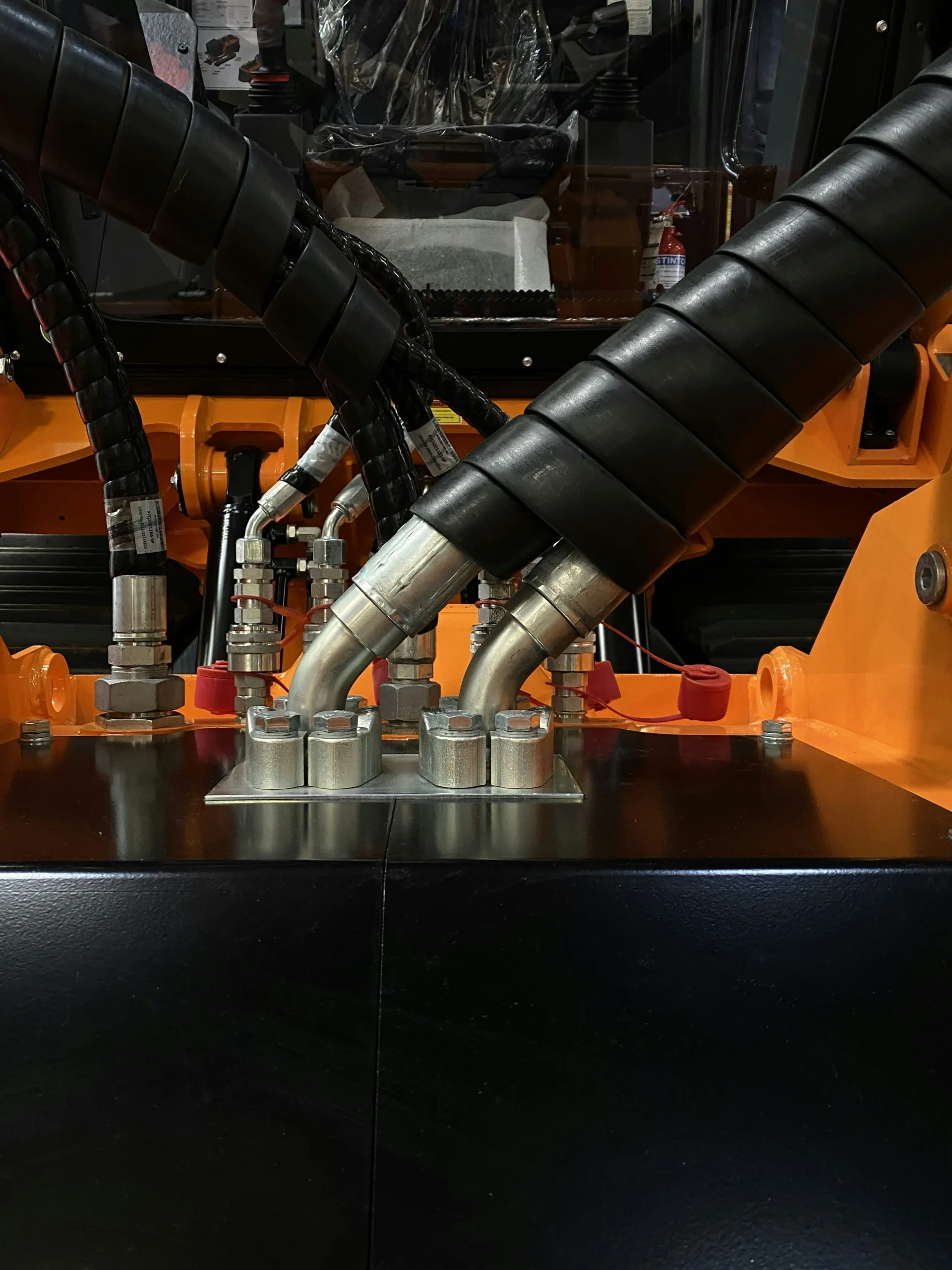
High-temperature-resistant robotic arms (IP67 protection, >180°C tolerance) automatically remove vulcanized products.
Adaptive grippers provide flexible handling of irregular shapes without causing surface damage.
3. Integrated Post-Processing
Robotic arms automatically spray release agents and clean residual rubber from molds, ensuring consistent quality for the next cycle.
Vision systems perform real-time inspection of missing material and distribution accuracy.
4. End-to-End Logistics Integration
Seamless connection with upstream (mixing/preforming machines) and downstream (packaging/inspection lines).
Through AGV/RGV transport, the system enables unmanned workflows from rubber blank supply → vulcanization → semi-finished product transfer.
II. Key Technical Advantages
High-Temperature-Resistant Robotic Structure
Special alloy body with thermal shielding design, stable under long-term high-temperature and humid conditions.
Service life exceeding 100,000 operating hours.
Multi-Axis Coordinated Motion Control
6-axis articulated robots with ±0.1mm repeat positioning accuracy, capable of complex trajectory operations.
Flexible End-Effectors
Modular gripper library for quick switching between suction cups, clamps, or needle arrays.
Supports multi-spec product mixed-line production.
Machine Vision Inspection
3D vision system for blank posture positioning.
AI-powered defect recognition to supplement human visual inspection.
Digital Twin Management
Real-time monitoring of robot status, production data, and fault alarms.
Fully integrated with MES systems for seamless process control.
III. Core Benefits
Production Efficiency
Workshop output improved by 15–20% per shift.
Equipment utilization exceeds 90%.
Product Quality
Yield rate improved to 98%+, eliminating human-induced variability.
Production Cost
Labor requirements reduced by 60–70%, lowering training costs and workplace injury risks.
Conclusion
Robotic automation in rubber vulcanization is not just an equipment upgrade, but a reconstruction of the entire manufacturing value chain. By freeing workers from hazardous high-temperature environments and replacing manual operations with standardized, unmanned, and data-driven processes, it drives the rubber industry toward high-end intelligent manufacturing. This transformation provides strong support for product quality, delivery efficiency, and sustainable development.
In the production of rubber products, vulcanization is the key process that determines final performance.