Select Language
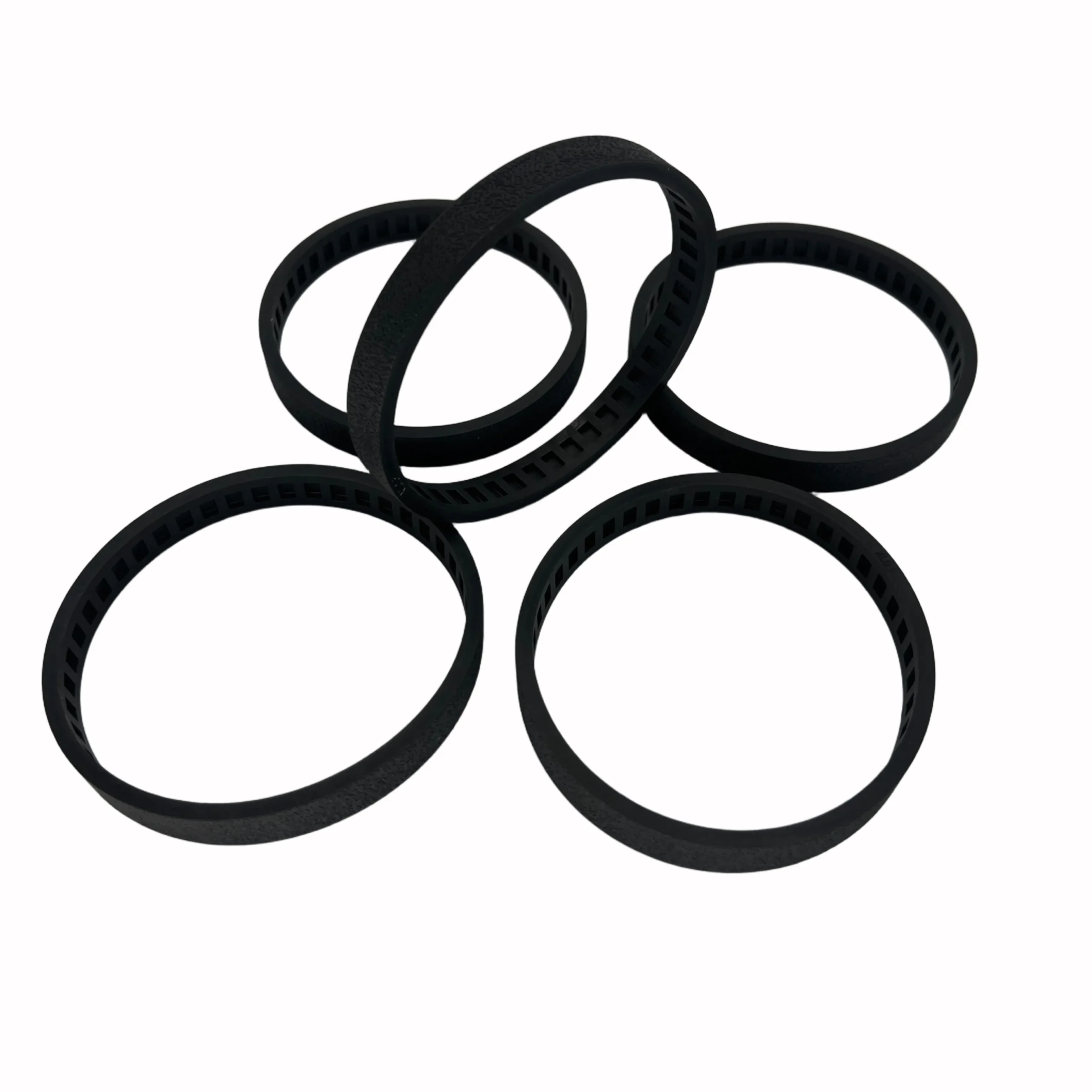
In the rapidly advancing fields of subsea engineering,hazardous environment inspection,and nuclear facility maintenance,catastrophic operational failures rarely stem from massive structural collapses.Instead,the root cause of lost equipment,crippled inspection timelines,and corrupted data acquisition often lies in a single,frequently overlooked component:the elastomeric robot track.When an underwater Remotely Operated Vehicle(ROV)slips on a biofouled pipeline or becomes permanently trapped in toxic sludge,the financial penalty is immense.For robotics engineers and procurement managers,viewing heavy-duty traction components as generic commodities is a high-risk gamble.
At Guangdong Sunlite Science&Technology Co.,Ltd.,we approach elastomer engineering with a strict"Small Product,Big Impact"philosophy.A properly specified track does far more than provide basic mobility;it acts as the primary mechanical interface between a multimillion-dollar robotic system and a hostile environment.By integrating advanced NBR(Nitrile)materials and precision manufacturing tolerances,our heavy-duty tracks guarantee uninterrupted operations,safeguarding both the structural integrity of the robot and the accuracy of its mission.
Technical Breakdown:The Engineering Superiority of NBR Formulations
While traditional rubber materials might suffice for controlled,dry-land environments,they rapidly degrade when submerged in corrosive chemicals,chlorinated water,or highly saline deep-sea environments.Guangdong Sunlite Science&Technology Co.,Ltd.continuously engineers its elastomeric tracks against the most punishing industry standards,focusing heavily on chemical stability,dimensional retention,and structural resilience.
Our heavy-duty tracks are formulated using premium NBR(Nitrile Rubber),providing exceptional resistance to oxidation,chlorine,and hazardous acids frequently encountered in maintenance waters and sediment zones.Traditional rubber compounds quickly swell,harden,or disintegrate under these conditions,leading to immediate traction loss.Furthermore,our tracks integrate powerful UV,ozone,and temperature cycling resistance,ensuring that dimensional stability is maintained across rapid thermal changes—from deep-sea exploration to warm industrial pools.

Below is an engineering comparison demonstrating why advanced NBR formulations outclass standard commercial alternatives:
Performance Metric | Guangdong Sunlite NBR Track | Traditional Commercial Rubber | Engineering Impact |
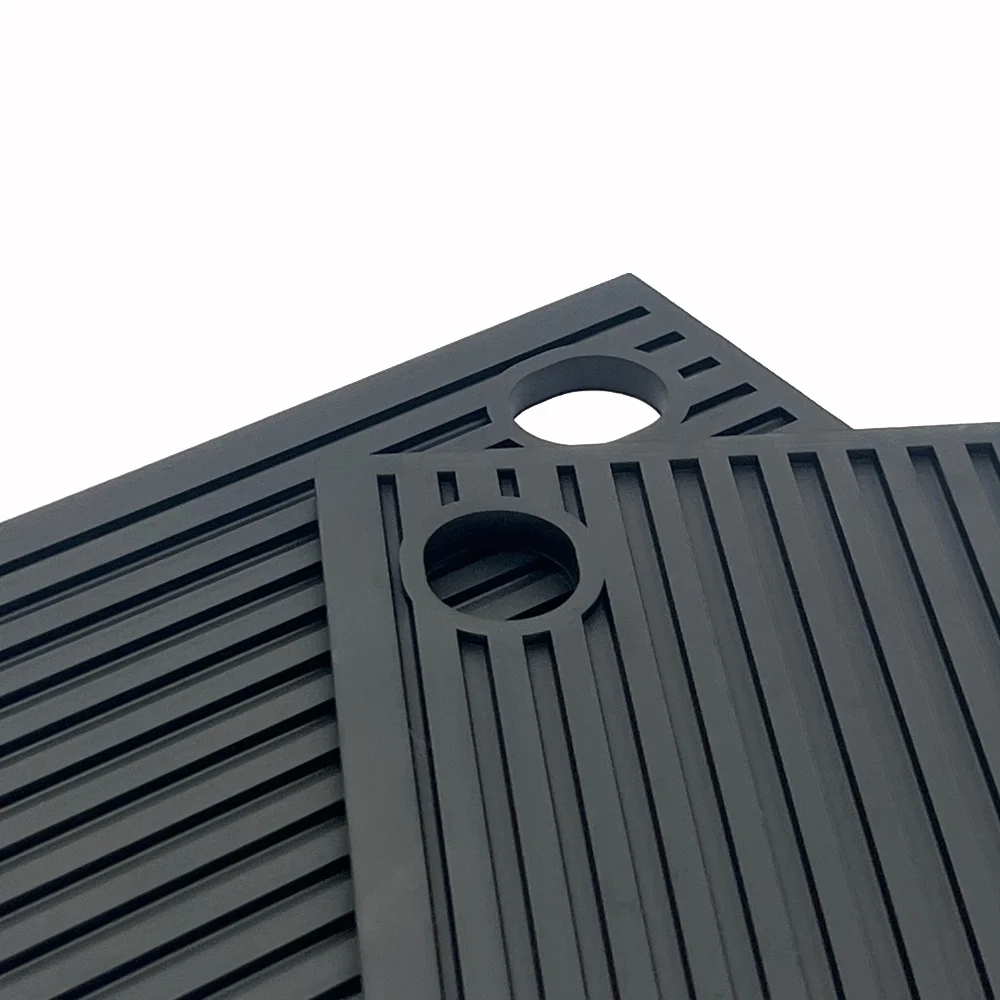
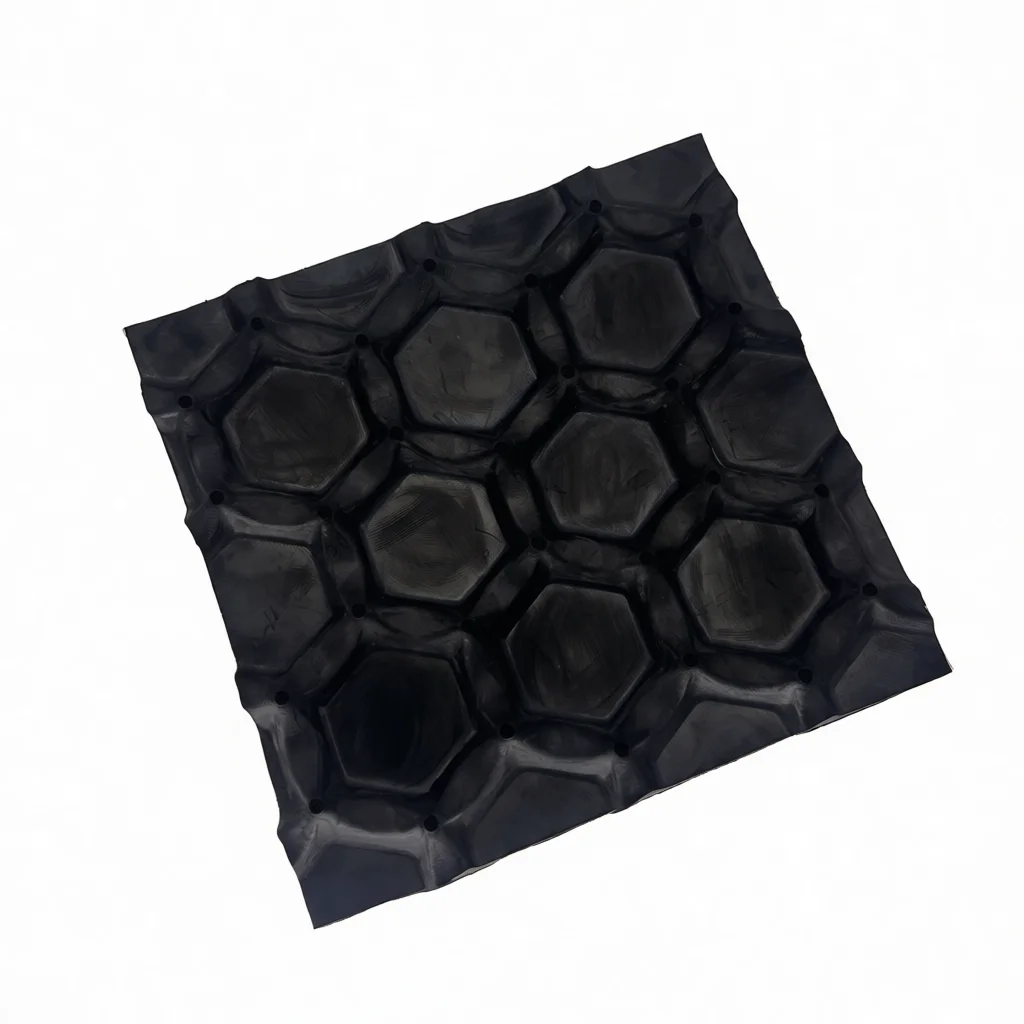
Surface Traction&Adhesion | High-friction,engineered tread pattern | Standard or smooth tread profile | Ensures stable vertical wall climbing and prevents slippage on slick,biofouled pipelines. |
Chemical&Corrosion Resistance | Excellent(Resists chlorine,salts,sulfides,acids) | Poor(Rapid degradation,swelling,and hardening) | Prevents the track material from disintegrating in polluted sediment layers or chlorinated pools. |
Environmental Aging Resistance | High UV,ozone,and temperature cycling resilience | Susceptible to cracking and brittleness upon retrieval/storage | Extends operational life and guarantees flexibility during deployment from atmospheric to submerged conditions. |
Substrate Adaptation | High sheer strength for low-density sludge/sediment | Sinks or stalls in viscous environments | Distributes weight efficiently,preventing heavy-duty inspection robots from getting stuck. |
Real-World Applications:Where Locomotion Failure Is Not an Option
Engineered for highly demanding deployments,our precision-molded elastomer tracks provide critical mobility for sophisticated inspection robots operating in high-risk zones.
Submarine Pipeline and Cable Inspection
Submarine environments demand precise,sustained movement along curved,slippery surfaces.Pipelines and communication cables are typically covered in dense biofouling,requiring a track design with robust adhesion.Our NBR tracks securely grip these smooth surfaces,ensuring the submersible inspection robot maintains a fixed orientation and speed.Any slippage compromises the high-resolution sensor data.Additionally,the material's anti-corrosion properties neutralize galvanic corrosion threats posed by prolonged contact with submerged metal structures.
Sediment and Sludge Zone Operations
Hazardous sludge and sediment zones are characterized by low visibility,soft substrates,and concentrated chemical contamination.Navigating these environments requires a heavy-duty track engineered to distribute the robot's weight while maximizing contact area.Our specialized tread patterns provide the sheer strength necessary to push through viscous,low-density substrates without sinking.Crucially,the NBR base protects the track from the aggressive acids and alkalis highly concentrated in polluted sediment layers.
Underwater Structure and Confined Space Maintenance
For robots tasked with pool wall climbing or nuclear facility inspection,maintaining consistent surface contact is non-negotiable.Underwater surfaces—whether tiled pool walls,smooth concrete,or metal tanks—are inherently slick.The specific tread geometry of a Guangdong Sunlite track maximizes grip to allow stable vertical movement,while the ozone and radiation-resistant properties ensure the elastomer survives in highly demanding,high-radiation environments without catastrophic material breakdown.
TCO(Total Cost of Ownership)Analysis:Elevating Long-Term Value
A premium heavy-duty track may require a slightly higher initial investment than a standard rubber belt,but analyzing the Total Cost of Ownership(TCO)reveals its true value.When an inferior track fails,the financial impact is never limited to the cost of replacing the rubber itself.
The true expense includes the catastrophic loss of high-value robotics stranded in deep water or toxic sludge,severe delays in critical infrastructure inspections,and the exorbitant labor costs required for emergency retrieval operations.A compromised track can easily result in hundreds of thousands of dollars in lost hardware and operational downtime.
Guangdong Sunlite Science&Technology Co.,Ltd.acts as your dedicated engineering partner to eliminate these hidden costs.By deploying our highly resilient,chemically stable NBR tracks,operators drastically reduce maintenance intervals and replacement frequencies.This proactive,data-driven approach to component sourcing ensures your robotic fleets remain mobile,maximizing ROI and optimizing your Total Cost of Ownership under the most punishing industrial conditions.

Frequently Asked Questions About Heavy-Duty Robot Tracks
Why is NBR the preferred material for an underwater robot track?
NBR(Nitrile Rubber)provides superior chemical stability,offering excellent resistance to chlorine,organic acids,and saltwater corrosion.This ensures the track retains its structural flexibility and friction properties without swelling or hardening in hazardous aquatic environments.
How do specialized tracks prevent slippage on biofouled pipelines?
Our tracks utilize precision-engineered tread patterns combined with a high-friction elastomer formulation.This maximizes surface adhesion on slick,curved,or fouled surfaces,ensuring the robot maintains the stable velocity required for accurate sensor data acquisition.
Can these rubber tracks withstand exposure to UV and ozone during storage?
Yes.Guangdong Sunlite tracks are formulated with advanced UV and ozone resistance.This prevents the elastomer from cracking,degrading,or becoming brittle during atmospheric exposure,deployment,or long-term storage between underwater missions.
Partner with Engineering Excellence
Whether you are designing advanced ROVs for deep-sea pipeline inspection or autonomous crawlers for hazardous sludge removal,your systems demand uncompromising mobility.Do not let an inferior elastomeric component ground your entire engineering project.Contact the expert engineering team at Guangdong Sunlite Science&Technology Co.,Ltd.today for custom track solutions,specialized material selection guidance,or to request precision sample testing tailored to your specific application requirements.

In the rapidly advancing fields of subsea engineering,hazardous environment inspection,and nuclear facility maintenance,catastrophic operational failures rarely stem from massive structural collapses.