

 Select Language
The evolution of domestic robotics has transitioned from simple navigational novelties to high-performance mechanical cleaners. At the heart of this transformation lies a complex interaction of physics, specifically the science of friction and material grip. When we discuss the efficiency of an autonomous vacuum, the conversation often centers on suction power or laser mapping, yet the physical interface between the machine and the floor—the robot roller brush—is the primary determinant of actual debris recovery. To achieve a deep clean that goes beyond surface-level dust, engineers must meticulously balance the coefficient of friction, bristle density, and the elastomeric properties of the brush assembly. This delicate equilibrium ensures that the device can agitate carpet fibers and seal against hard floors without causing abrasive damage or excessive battery drain.
Understanding the mechanics of a robot roller brush requires looking at the microscopic battle occurring during every rotation. Friction is not merely a resistance to motion; in the context of cleaning, it is the force that allows a brush to "grab" hair, dander, and grit. If the friction is too low, the brush simply glides over the debris; if it is too high, the motor may stall or the floor finish may suffer. By optimizing the surface area and the structural rigidity of the brush, manufacturers can ensure that every pass maximizes the mechanical displacement of dirt, moving it from the floor into the high-velocity air stream of the vacuum intake.
Material Innovation In The Robot Rolling Brush Assembly
The transition from traditional nylon-only designs to hybrid structures has revolutionized the capabilities of the modern robot rolling brush. In the early days of robotic vacuuming, brushes were often simplistic, relying on stiff bristles that worked well on carpets but struggled with the fine dust found on hardwood or tile. Today, a sophisticated robot rolling brush often incorporates a mix of carbon fiber filaments and soft nylon. This combination addresses two distinct needs: the carbon fiber provides the anti-static properties necessary to release fine dust from hard surfaces, while the nylon bristles offer the flicking action required to lift larger particles.
The geometry of the robot rolling brush also plays a pivotal role in friction optimization. Spiral or "V" shaped patterns are now standard because they direct debris toward the center of the suction inlet, reducing the friction-induced scatter that often plagues straight-bristle designs. This architectural choice ensures that the energy consumed by the motor is used efficiently to move dirt rather than just fighting against the resistance of the floor. By varying the length and thickness of these bristles, designers can create a graduated friction profile that adapts to different floor types in real-time.
Enhancing Surface Contact With The Specialized Roller Brush For Robot Efficiency
The efficiency of any cleaning system is directly proportional to its ability to maintain constant contact with a variable surface. A high-quality roller brush for robot applications must be able to "float" within its housing. This floating mechanism allows the brush to adjust to the unevenness of grout lines or the transition from hard floors to rugs. When the roller brush for robot maintains an optimal seal with the ground, it creates a localized high-pressure zone. This pressure increases the effective friction on the debris, making it much easier for the vacuum to overcome the gravitational and adhesive forces holding dust to the floor.
Furthermore, the maintenance of the roller brush for robot is a significant factor in long-term friction optimization. As hair and fibers wrap around the core, the effective diameter of the brush increases, which alters the speed of rotation and the friction against the floor. Modern designs have countered this by introducing tangle-free structures and integrated cutting blades within the brush housing. These innovations ensure that the friction characteristics remains consistent over months of use, preventing the performance degradation that was once common in older robotic models.
The Durability And Grip Of The Rubber Roller Brush Robot Interface
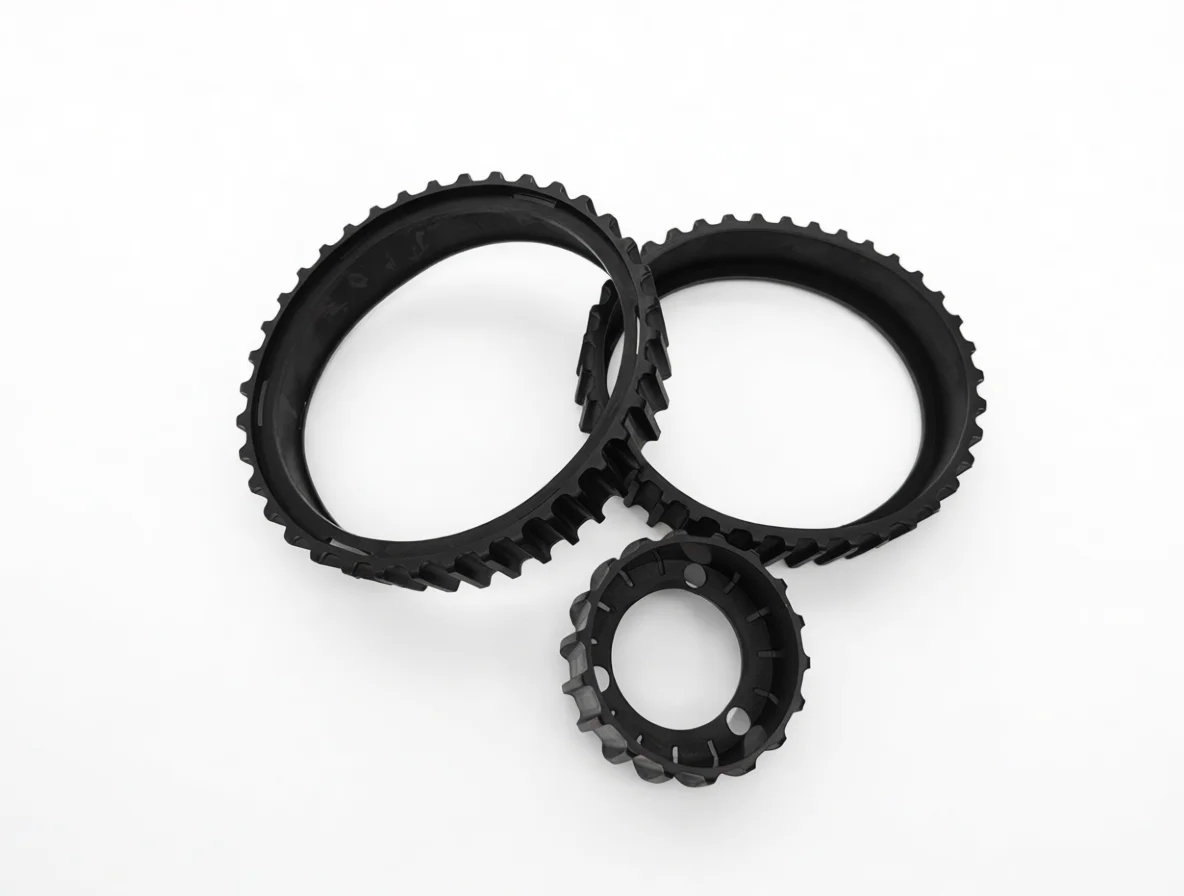
For homes with mostly hard flooring, the rubber roller brush robot configuration has become a preferred alternative to traditional bristles. These rubberized extractors rely on a different set of physical principles. Instead of flicking debris, a rubber roller brush robot uses flexible fins to create a squeegee-like effect. This increases the contact patch with the floor, significantly boosting the friction against fine dust and liquid spills. The rubber material is naturally more adhesive than nylon, allowing it to "peel" stubborn dirt from the surface rather than just scratching at it.
The structural design of the rubber roller brush robot often involves a dual-extractor system where two rollers spin in opposite directions. This counter-rotation creates a high-friction "pinch point" that can crush larger debris and pull it upward. Because rubber is inherently more resilient than hair-like bristles, these rollers are less prone to permanent deformation. The elasticity of the rubber allows the fins to deflect when they hit a solid object and then snap back into place, providing a consistent mechanical strike that is vital for dislodging embedded particulates in high-traffic areas.
Why The NBR Robot Roller Brush Is The Gold Standard For Longevity
When we delve deeper into the chemistry of these components, the NBR robot roller brush stands out as a pinnacle of material science. Nitrile Butadiene Rubber (NBR) is a synthetic rubber copolymer that is prized for its exceptional resistance to oils, chemicals, and abrasion. In the context of a vacuum, an NBR robot roller brush is uniquely equipped to handle the diverse range of contaminants found in a typical kitchen or entryway. Unlike natural rubber, which can degrade and become "gummy" when exposed to household floor cleaners or kitchen grease, NBR maintains its structural integrity and its specific coefficient of friction over a much longer period.
The use of an NBR robot roller brush also provides a noise-reduction benefit. The vibration-dampening qualities of Nitrile rubber mean that the high-speed impact of the brush against the floor is muffled, leading to a quieter cleaning cycle. More importantly, the wear resistance of the NBR robot roller brush means that the edges of the cleaning fins remain sharp. As soon as a cleaning fin rounds off due to wear, it loses its ability to create the concentrated friction needed to scrape up dried-on mud or sticky spills. By utilizing NBR, manufacturers ensure that the "scraping" efficiency remains high, providing a deep clean that persists through hundreds of hours of operation.
The evolution of domestic robotics has transitioned from simple navigational novelties to high-performance mechanical cleaners.