Select Language
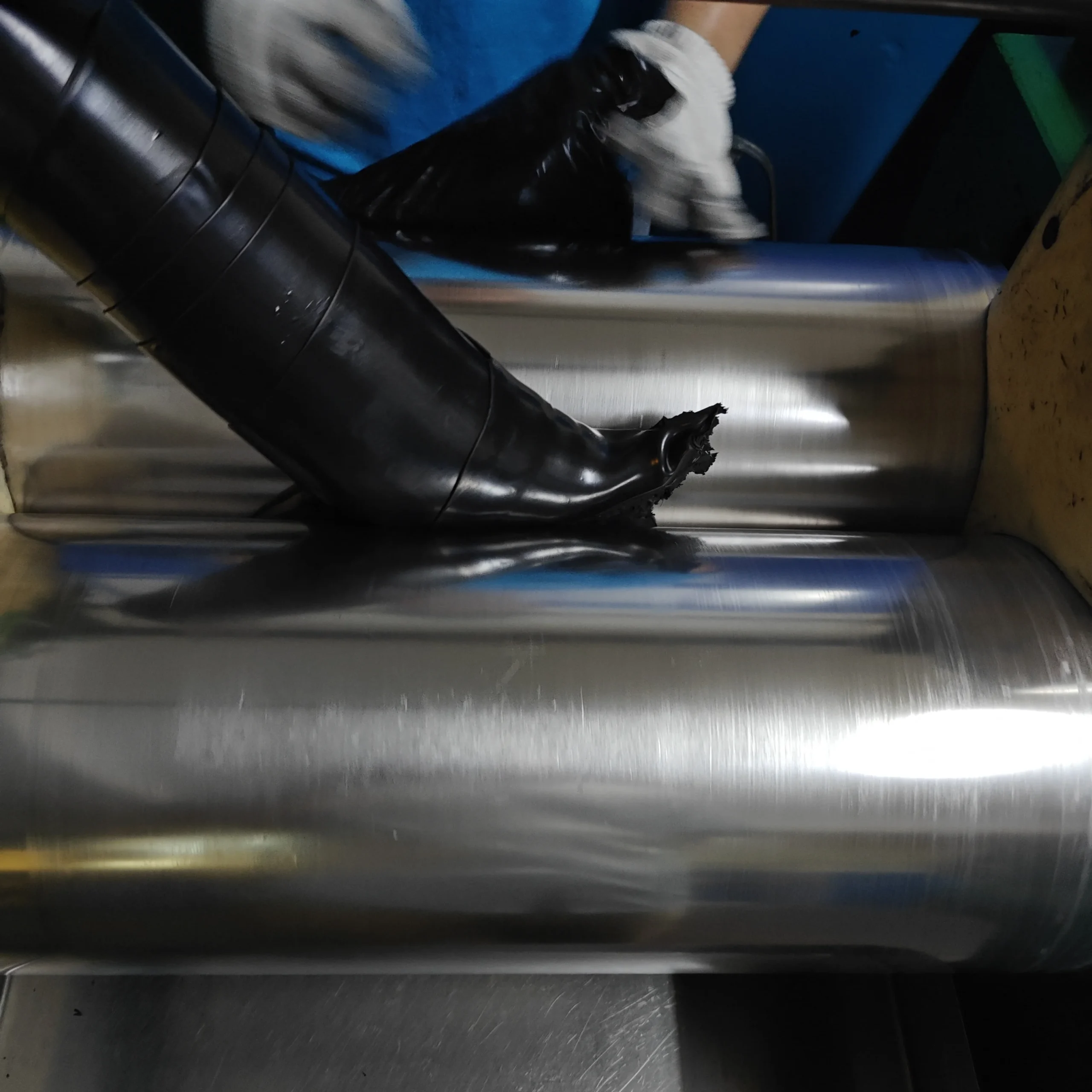
The processes of rubber mastication and mixing are the core stages in rubber processing, directly influencing the final product quality.
1. Mastication
Raw rubber must undergo mastication to achieve suitable plasticity. For molded products, the desired plasticity is approximately 0.25–0.35, while calendering and extrusion processes require around 0.4–0.6. Insufficient plasticity causes processing difficulties, whereas excessive mastication can reduce product performance.
Generally, rubber with a Mooney viscosity above 80—such as natural rubber (NR) or hard nitrile rubber (NBR)—requires mastication. The process should be conducted at low temperatures (below 50 °C for NR, around 40 °C for NBR) with proper roll gap and time control to prevent overheating. After mastication, the rubber compound should have a smooth surface and be rested for 8 hours before use.
2. Mixing
The quality of mixing determines the performance of the final rubber product. The key is to ensure uniform dispersion of compounding agents, strict adherence to the ingredient addition sequence, accurate weighing, and proper control of the compound batch volume.
Common issues such as poor dispersion, blooming, scorching, and hardness variation are often caused by improper operation or inadequate process control.
3. Open Mill Operation Essentials
After the raw rubber is wrapped around the rolls for mastication, the following additives are incorporated sequentially: antioxidants, accelerators, zinc oxide, carbon black, and softeners (added alternately). Finally, add the curing agent (vulcanizing agent).
After mixing, perform sheeting and thin passing (with a roll gap of 0.1–0.5 mm) to ensure uniform dispersion, then cool and sheet off the compound.
4. Conclusion
High-quality rubber products depend on both scientific compound formulation and standardized process operation. Only through the close integration of technology and craftsmanship can the rubber manufacturing industry achieve high-quality development.
The processes of rubber mastication and mixing are the core stages in rubber processing, directly influencing the final product quality.