

 Select Language
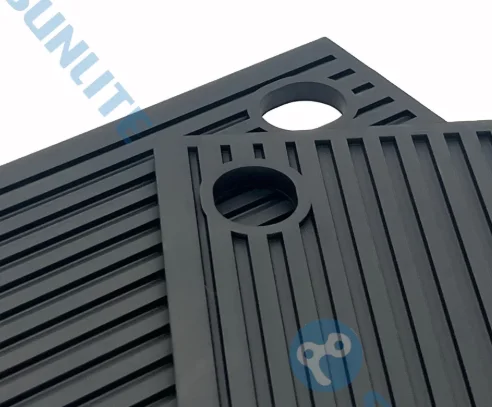
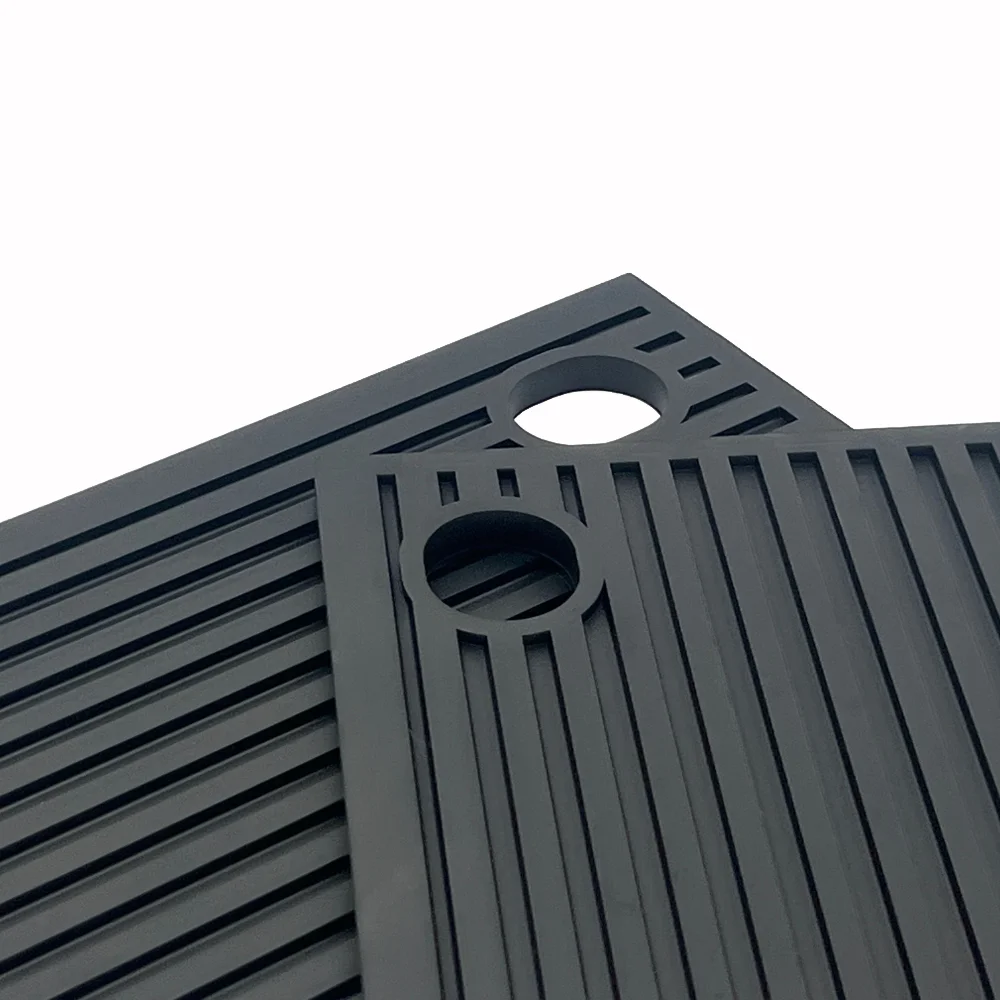
Except for a few types of synthetic rubber, most synthetic rubber products, like natural rubber, are flammable or combustible materials. In industries such as new energy, battery systems, and electronic equipment, higher flame-retardant requirements are imposed on rubber components, especially for products such as Battery Pads and Halogen-Free Flame-Retardant Vibration Dampers.
At present, the main technical approaches for improving the flame retardancy of rubber products include:
Adding flame retardants or flame-retardant fillers
Blending modification with flame-retardant materials
Introducing flame-retardant functional groups during polymerization
Increasing the crosslink density of rubber products
The following sections provide a brief classification and explanation of rubber flame-retardant technologies.

1. Flame-Retardant Technologies for Hydrocarbon Rubbers
1.1 Characteristics of Hydrocarbon Rubbers
Hydrocarbon rubbers mainly include:
NR (Natural Rubber)
SBR (Styrene-Butadiene Rubber)
BR (Butadiene Rubber)
IIR (Butyl Rubber)
EPR / EPDM (Ethylene Propylene Rubber)
Although NBR (Nitrile Rubber) is not a typical hydrocarbon rubber, its flame-retardant treatment methods are similar and are usually discussed together in engineering applications.
Main characteristics of hydrocarbon rubbers include:
Limiting Oxygen Index (LOI): approx. 19–21
Thermal decomposition temperature: 200–500°C
Poor flame retardancy and heat resistance
Generation of large amounts of flammable gases during combustion
Therefore, when used in Battery Pads, industrial damping pads, or general vibration isolation components, flame-retardant modification is essential.
1.2 Common Flame-Retardant Methods for Hydrocarbon Rubbers
(1) Blending with Flame-Retardant Polymers
By blending hydrocarbon rubbers with flame-retardant polymers such as:
Polyvinyl Chloride (PVC)
Chlorinated Polyethylene (CPE)
Chlorosulfonated Polyethylene (CSM)
Ethylene-Vinyl Acetate (EVA)
the flame retardancy can be improved to a certain extent. During blending, special attention must be paid to:
Material compatibility
Co-crosslinking system design
This method is commonly used for structural Battery Pads or non-high-elasticity damping components.
(2) Addition of Flame Retardants (Primary Approach)
The addition of flame retardants is the most important method for enhancing flame retardancy in hydrocarbon rubbers and can be further improved through synergistic systems.
Organic halogen-based flame retardants (traditional solutions):
Hexachlorocyclopentadiene derivatives
Decabromodiphenyl ether
Chlorinated paraffin
Inorganic synergistic flame retardants:
Antimony trioxide (Sb₂O₃) (commonly used)
Zinc borate
Aluminum hydroxide
Ammonium chloride
⚠ Important Notes:
Halogen-based flame retardants must not contain free halogens, otherwise they may:
Corrode processing equipment and molds
Reduce electrical insulation performance
Negatively affect aging resistance
In the new energy and electronics industries, Halogen-Free Flame-Retardant Vibration Dampers have become the mainstream, leading to a strong preference for halogen-free flame-retardant systems.
(3) Addition of Flame-Retardant Inorganic Fillers
Commonly used fillers include:
Calcium carbonate
Kaolin clay
Talc
Precipitated silica
Aluminum hydroxide
This method improves flame retardancy by:
Reducing the proportion of combustible organic material
Utilizing the endothermic decomposition effect of fillers
For example:
Calcium carbonate and aluminum hydroxide absorb significant heat during decomposition
However, attention must be paid to the fact that:
Excessive filler loading reduces mechanical properties
Not suitable for high-elasticity or high-damping vibration isolation components
(4) Increasing Rubber Crosslink Density
Studies have shown that:
Higher crosslink density → Higher oxygen index → Improved flame retardancy
This mechanism is likely related to the increase in thermal decomposition temperature.
This approach has been successfully applied in EPDM rubber systems and is suitable for:
Battery Pads used in medium-to-high temperature environments
Structural flame-retardant vibration damping rubber components
2. Flame-Retardant Characteristics of Halogenated Rubbers
Halogenated rubbers inherently contain halogen elements and typically exhibit:
Oxygen index: 28–45
FPM (Fluororubber) oxygen index exceeding 65
Higher halogen content → better flame retardancy
Self-extinguishing behavior after flame removal
As a result, flame-retardant treatment of halogenated rubbers is relatively easy, often requiring only minor reinforcement with flame retardants.
⚠ However, due to environmental regulations (such as RoHS and REACH) and trends in the new energy industry, halogen-free solutions are increasingly favored. This is a key reason for the widespread adoption of Halogen-Free Flame-Retardant Vibration Dampers.
3. Flame-Retardant Technologies for Heterochain Rubbers
The most representative heterochain rubber is:
Dimethyl Silicone Rubber (VMQ)
Its key characteristics include:
Oxygen index of approximately 25
Thermal decomposition temperature up to 400–600°C
Excellent high-temperature stability
Flame-retardant mechanisms of silicone rubber mainly involve:
Increasing thermal decomposition temperature
Increasing the amount of residual char after decomposition
Reducing the generation rate of flammable gases
As a result, silicone rubber is widely used in:
High-temperature Battery Pads
High-end halogen-free flame-retardant damping components
Protective buffering components for electronic and new energy equipment
Conclusion
The flame-retardant design of rubber products must be comprehensively considered based on rubber type, application environment, and regulatory requirements.
For applications such as:
Battery Pads
Halogen-Free Flame-Retardant Vibration Dampers
it is recommended to prioritize:
Halogen-free flame-retardant systems
Proper crosslink density design
Balanced solutions between flame-retardant fillers and mechanical performance

Except for a few types of synthetic rubber, most synthetic rubber products, like natural rubber, are flammable or combustible materials.