

 Select Language
You know, when you're in this industry long enough, you start to see certain trends not just emerge, but really solidify. For years, we've battled vibration and noise in vehicles – a constant quest for that serene, quiet cabin. But lately, there's a new, absolutely critical player in the game: safety, specifically fire safety. And frankly, it's making everyone rethink their materials.
This isn't just about putting out a fire, it's about preventing it from ever getting started and, if it does, ensuring materials don't contribute to its spread or toxic fumes. That's where flame retardant anti-vibration solutions, particularly the halogen-free variety, really shine. We're talking about a significant leap forward in vehicle safety and passenger comfort, all wrapped up in one clever package.
The Quiet Revolution: Beyond Just Damping
Historically, vibration damping was a simple enough concept: add mass, absorb energy. But the modern automotive landscape, especially with the rise of electric vehicles (EVs), has added layers of complexity. Suddenly, you're not just fighting engine noise; you're dealing with battery thermal management, high-voltage wiring, and a heightened focus on overall cabin safety. That's why materials like the halogen-free flame-retardant vibration damper have become indispensable.
These aren't just your standard damping pads. Oh no. They’re engineered to mitigate structural vibration, yes, but also to bring serious fire resistance to the table. And critically, they do so without the environmental and health concerns associated with traditional halogenated flame retardants. It’s a win-win, really.
Behind the Scenes: How It Works
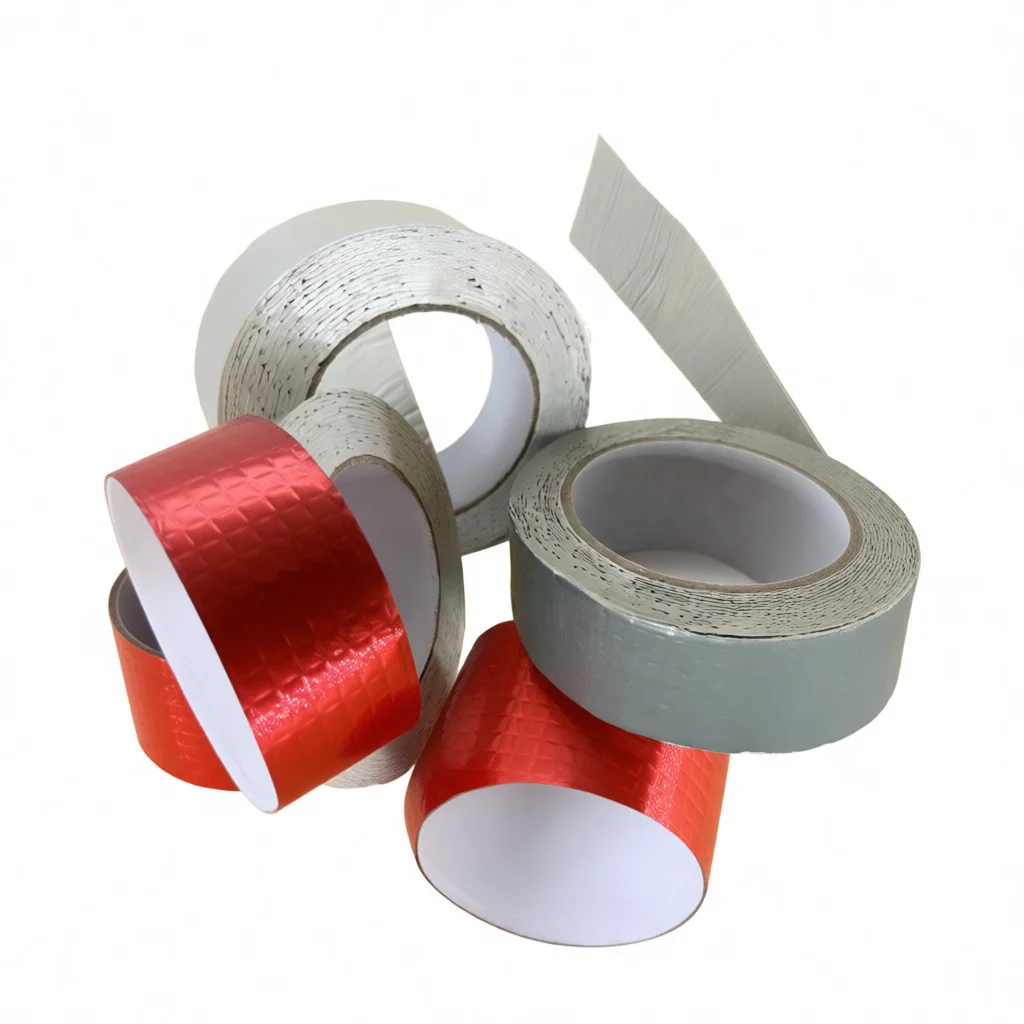
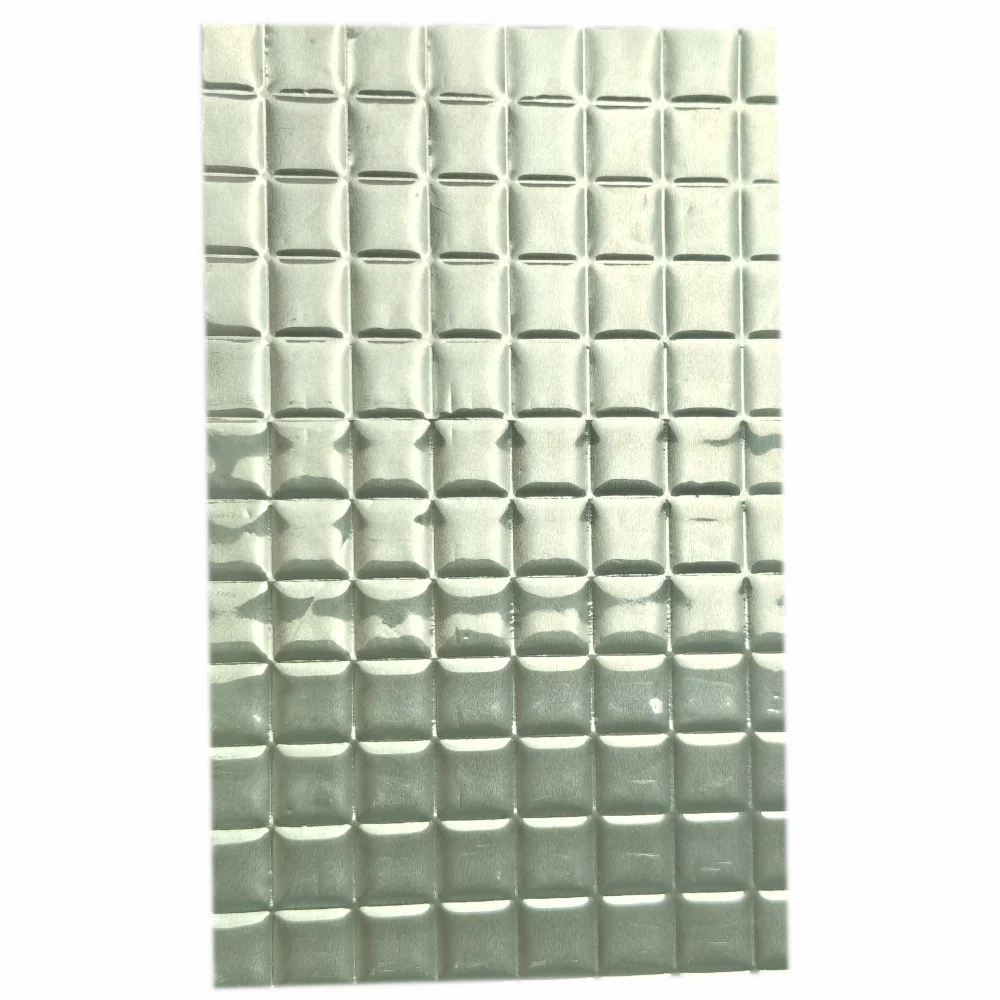
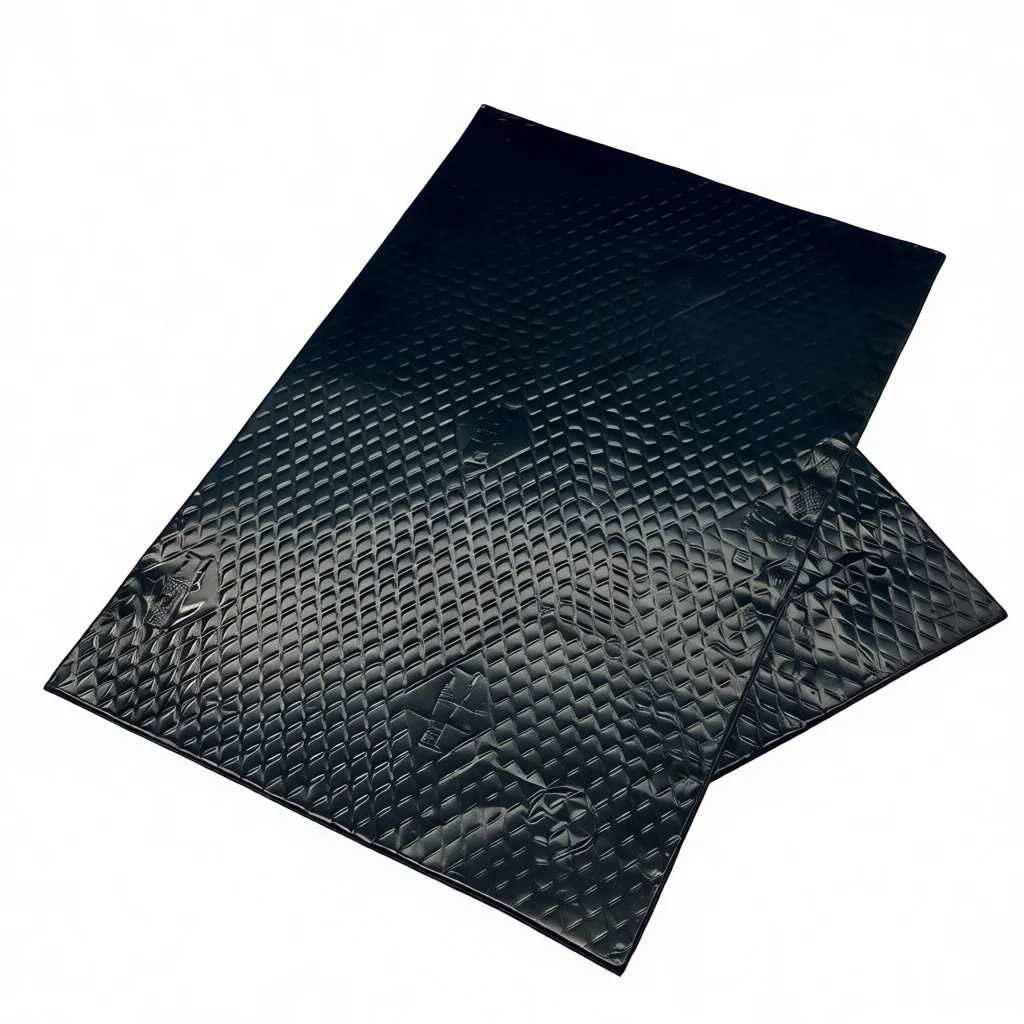
Let's get a bit technical for a moment, because the science behind these pads is fascinating. At its core, you often find a viscoelastic material like butyl rubber. This particular product, for example, combines a high-performance butyl rubber base with an aluminum foil composite layer. This isn't arbitrary; the butyl provides exceptional damping through its internal energy dissipation mechanism, essentially converting vibrational energy into heat, while the aluminum foil adds structural integrity and helps reflect heat.
The flame retardancy is achieved by incorporating non-halogenated additives directly into the butyl formulation. This sophisticated process ensures that the material can withstand high temperatures and, crucially, self-extinguish when a flame source is removed. It's not just about stopping a fire, it's about slowing its progression and reducing smoke and toxic gas emission, which, to be honest, is just as vital for occupant escape time.
Key Performance Indicators & Specs
When evaluating these products, you need to look beyond marketing fluff. Real-world performance comes down to measurable indices. Here’s a quick glance at what a premium non-halogen fire-resistant damping pad typically offers:
Product Specification: Halogen-Free Flame-Retardant Damper | |
Parameter | Details |
Material Structure | Butyl rubber base + aluminum foil composite |
Composite Loss Factor | ≥0.2 (indicates high damping efficiency) |
Density Range | 1.0–2.3 g/cm³ (adjustable for specific needs) |
Flame Retardant Performance | UL94 V0, EN45455 R2 (rigorous safety standards) |
Operating Temperature | -40℃ to +80℃ (broad operational range) |
Construction Temperature | 10℃ to 40℃ (optimal for installation) |
Aging Performance | Excellent after ≈72 hours thermal aging (long-term stability) |
Adhesion Performance | Strong, no edge warping or bulging (critical for durability) |
Surprisingly, the ease of application is also a big deal. With release paper on the back, these pads can be flexibly cut and directly attached without special tools, fitting various curved surfaces. That saves time and money on the production line, which, I guess, is always a plus.

Where Are We Seeing These Used?
The application scenarios are incredibly diverse, from the obvious to the surprisingly critical. Think about it:
· Around electrical wiring in the vehicle cabin: Absolutely crucial for preventing ignition by accidental fire sources.
· Battery compartments and power distribution modules of EVs: Here, it's not just sound, it's about containing potential thermal events.
· Inside instrument panels: Reducing vibration noise while guaranteeing fire resistance.
· Roof and side trim panels: Balancing the need for lightweight materials with fire resistance and quietness.
· Doors, chassis, trunks, wheel arches, firewalls: Standard NVH applications where fire safety is now a non-negotiable bonus.
Many customers, especially in the new energy vehicle sector, have told me that these materials are truly game-changers, offering a comprehensive solution for NVH and safety that wasn't previously available.
Navigating the Vendor Landscape & Customization
The market for these specialized damping materials is growing, which is good, but it also means more choices. How do you pick? Well, it’s not just about price. Vendor reputation, R&D capabilities, and their ability to offer customization are key. After all, a bus manufacturer's needs will differ vastly from a luxury sedan's.
Vendor Comparison: Halogen-Free Flame Retardant Dampers | |||
Aspect | Premium/Specialized Supplier | Standard OEM Supplier | Budget Option |
Certifications | UL94 V0, EN45455 R2, ISO/TS | Often UL94 V0 only | Basic CE, minimal fire certs |
Customization | High (density, thickness, shape, backing) | Moderate (standard sizes, some thickness options) | Limited (off-the-shelf) |
R&D Support | Full engineering partnership, testing | Basic technical data sheets | Minimal to none |
Pricing | Higher (reflects performance/support) | Mid-range | Lower |
Typical Use Case | Luxury EVs, high-speed rail, aerospace | Mass-market passenger vehicles, trucks | Aftermarket, less critical applications |
A good vendor offers significant customization services, allowing adjustment of density, thickness, and even the formulation of the butyl rubber to meet specific vehicle body structures and NVH requirements. They understand that a one-size-fits-all approach just doesn't cut it in complex engineering.
Case Study Snippet: The Urban EV Project
We recently saw a scenario where a manufacturer of compact urban EVs faced a dual challenge: stringent noise regulations for city driving and newly introduced fire safety standards for battery enclosure components. Traditional damping materials either met one criterion or the other, but not both efficiently or without halogens. By implementing a customized halogen-free flame-retardant vibration damper for their battery module housing and floor pan, they achieved significant reductions in road noise (improving their NVH score by a noticeable margin) and, crucially, passed the updated fire containment tests with flying colors. It was a clear demonstration of how integrated solutions solve multifaceted problems.
In summary, the push for safer, quieter, and more sustainable vehicles isn't slowing down. Materials like the non-halogen fire-resistant damping pad are at the forefront of this evolution, offering robust performance in both vibration control and critical fire safety. It’s an exciting time to be in materials science, that’s for sure!
Authoritative References
1. Underwriters Laboratories (UL) Standard UL94, "Tests for Flammability of Plastic Materials for Parts in Devices and Appliances."
2. European Standard EN 45545-2:2020, "Railway applications - Fire protection on railway vehicles - Part 2: Requirements for fire behaviour of materials and components."
3. Vehicle NVH (Noise, Vibration, and Harshness) Engineering Principles, Society of Automotive Engineers (SAE) International.
You know, when you're in this industry long enough, you start to see certain trends not just emerge, but really solidify.