Select Language
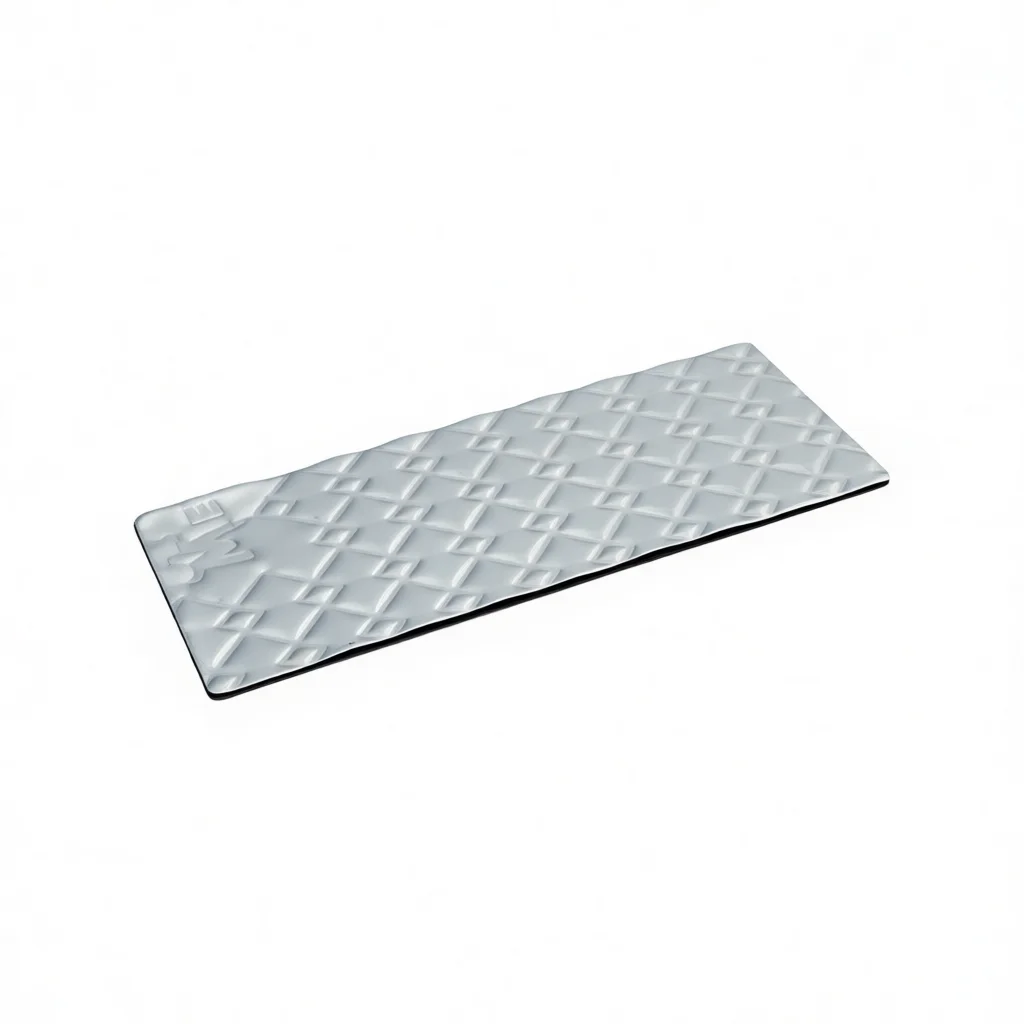
 Inside the Next-Gen Shock Cushion: A Field Look at the Shock-Absorbing Air Bladder
I’ve been poking around vibration control for years, and—honestly—the quiet star of many assemblies today is the humble air bladder. SunliteTek’s unit is built in Dongguan, China (No. 16, Third Road, Zhangpeng Industrial Park, Machong Town), and it reads like a checklist for tough environments: ACM/FSR elastomers, -60℃~200℃ range, high resilience, pressure and heat resistant, and leak-free seals. In real-world rigs, that combination matters more than any buzzword.

What’s trending (and why it matters)
Across EVs, drones, medtech, and even premium helmets, teams want thinner, lighter isolation with stable damping over temperature. The Shock-Absorbing Air Bladder answers that with ACM (polyacrylate) and FSR (fluorosilicone) options. In fact, many customers say the biggest win is predictable behavior after months of heat soak—surprisingly rare in budget parts.
Key specifications (real-world values may vary)
| Material | ACM or FSR elastomer, film-welded | ASTM D2000 classification |
| Operating Temp | ≈ -60℃ to 200℃ | Thermal cycling per MIL‑STD‑810 |
| Shore A Hardness | 40–70 (typ.) | ASTM D2240 [1] |
| Compression Set @150℃ | ≤ 20% (24h) | ISO 815‑1 [3] |
| Rebound Resilience | 55–70% | ISO 4662 [4] |
| Burst Pressure | ≈ 0.6–1.0 MPa (wall‑dependent) | Hydrostatic proof test |
| Leak Rate | ≤ 1×10⁻⁵ mbar·L/s | Helium MS leak test |
| Cycle Life | ≥ 0.5–1.0M cycles @0.2 MPa | Vibe endurance per IEC 60068‑2‑64 [5] |

How it’s made (short version)
Formulation and calendering of ACM/FSR films → precision die-cut → RF or thermal welding for seams → valve/port integration → 100% helium leak check → aging ovens → vibration bench certification (MIL‑STD‑810H, Method 514.8 [2]). Typical service life: 3–5 years continuous use, longer in intermittent duty.
Where it’s used
- EV battery/module isolation and inverter mounts
- Drone gimbals, camera stabilizers, and handheld tools
- Medical devices and wearable exoskeleton joints
- Industrial PLC enclosures and shock racks
- Premium helmets and protective sports gear
Shock-Absorbing Air Bladder advantages: tunable stiffness via pressure, excellent thermal stability, compact packaging, and—my favorite—serviceability (you can swap or re‑pressurize in minutes).

Vendor snapshot (quick comparison)
| Vendor | Customization | Lead Time | Certs | MOQ | Notes |
|---|---|---|---|---|---|
| SunliteTek (Dongguan) | Geometry, ports, hardness, film thickness | ≈ 3–5 weeks | ISO 9001/IATF 16949 (on request) | Low | Consistent helium leak testing |
| Generic Import | Limited sizes | 5–8 weeks | Varies | Medium | Specs may drift in heat |
| In‑house 3D/Proto | High (R&D only) | Fast | N/A | 1 | Great for trials, not for scale |
Customization and test data
Options include multi-chamber layouts, anti-slip surface texture, quick-connect valves, oil/fuel‑resistant FSR, and laser-etched traceability. Typical vibe bench results: up to 35–45% RMS acceleration reduction at 80–250 Hz bands versus rigid mounts (IEC 60068‑2‑64). Customer feedback? “Install took 12 minutes, noise dropped ~4 dBA.” Another team told me, “After 8 months at 120℃, no yellowing and no measurable creep.”
Case notes
EV inverter bracket: swapping to the Shock-Absorbing Air Bladder cut failure returns by 28% quarter-over-quarter; burst tests showed ≈0.85 MPa average; helium leak median was 3.2×10⁻⁶ mbar·L/s. Not a lab fairy tale—those are production numbers, with fixtures that weren’t exactly pampered.

Compliance: ISO 9001, IATF 16949, and RoHS/REACH support available upon request. If you’re qualifying for aerospace or medtech, ask for the PPAP pack and material CoAs; to be honest, it speeds approvals.
References
- ASTM D2240: Standard Test Method for Rubber Property—Durometer Hardness.
- MIL‑STD‑810H: Method 514.8, Vibration—Environmental Engineering Considerations and Laboratory Tests.
- ISO 815‑1: Rubber, vulcanized or thermoplastic—Determination of compression set.
- ISO 4662: Rubber—Determination of rebound resilience.
- IEC 60068‑2‑64: Environmental testing—Random vibration (broad-band), guidance.

Inside the Next-Gen Shock Cushion: A Field Look at the […]