

 Select Language
People commonly refer to red, yellow, and blue dyes as the three primary colors. When the three primary colors are mixed in equal proportions, they produce black. Mixing one primary color with another yields secondary colors: red + yellow = orange, red + blue = purple, and blue + yellow = green. Any secondary color mixed with its corresponding primary color results in black, while mixing secondary colors produces tertiary colors. This is the most fundamental principle of color matching.
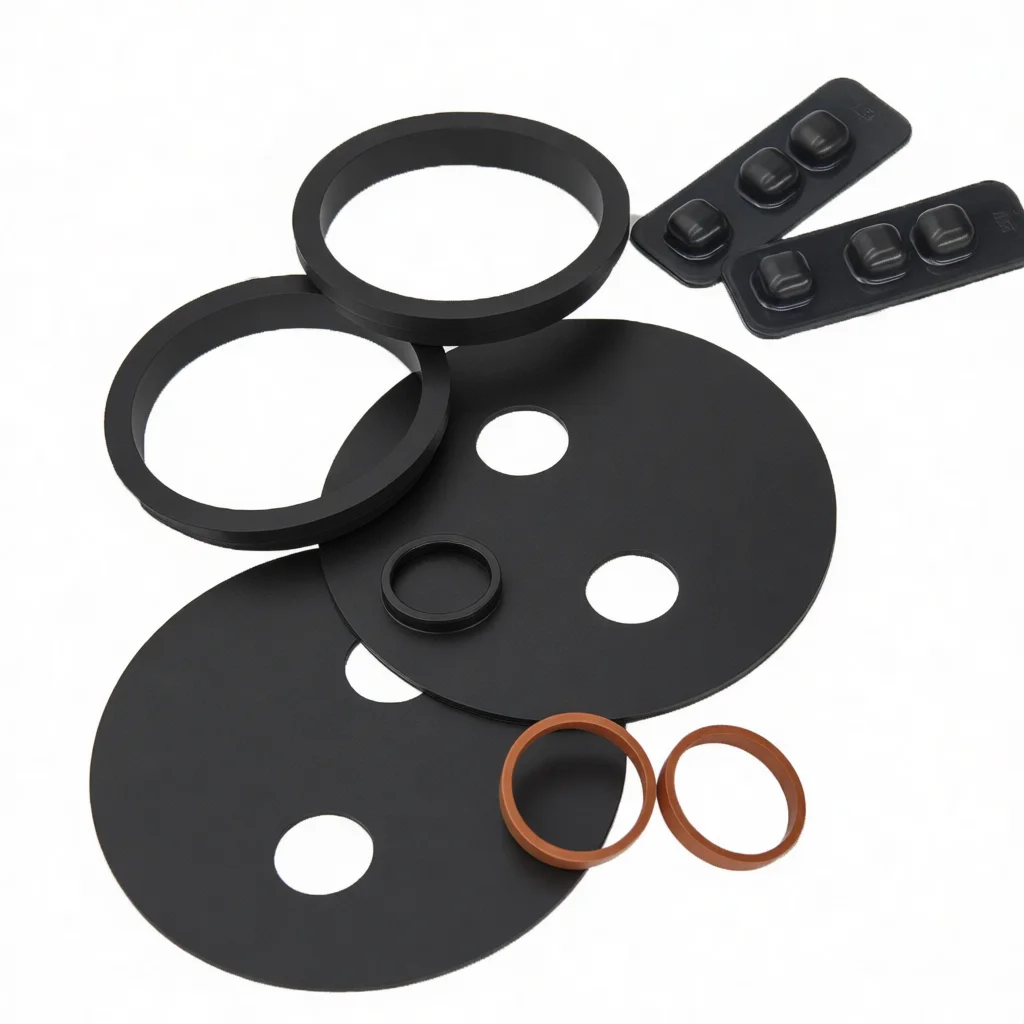
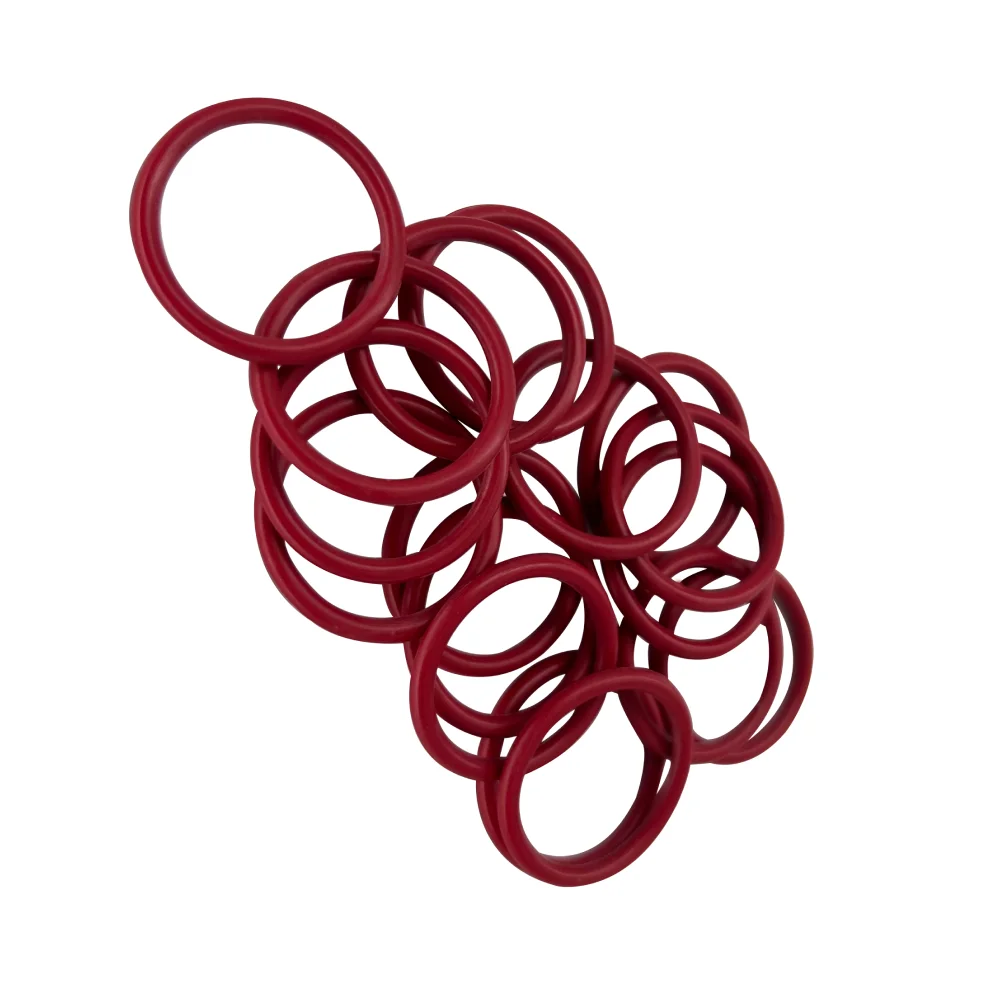
For color matching in rubber products, such as common O-rings, sealing rings, transparent rubber strips, and colored rubber decorative parts, a comprehensive balance must be maintained among hue, chromaticity, transparency, and aging resistance. In mass production, color stability directly affects appearance consistency and final product quality. Therefore, understanding the key factors of color matching is essential.
1. Influence of Dye Manufacturers
Differences in raw materials and processing methods among manufacturers cause variations in dye tinting strength and color tone. Even different batches from the same manufacturer may show deviations. Therefore, when coloring rubber products (e.g., colored O-rings), it is recommended to use dyes from the same manufacturer and batch number. Prior to mass production, small samples should be compared with previous materials to ensure identical color tone.
2. Influence of Color Tone (Color Light)
No dye has a perfectly pure color tone. Thus, when performing color matching for rubber, it is necessary not only to master the primary color mixing principles but also to identify the directional bias of color tone. For example:
A red with a blue undertone + a blue with a green undertone cannot produce pure purple.
A yellow with a red undertone + a red with a yellow undertone can produce pure orange.
In actual production—whether for transparent silicone O-rings or colored NBR/EPDM O-rings—color tone stability is a critical indicator. For example:
Orange → more red than yellow
Green → more blue than yellow
Purple → more blue than red
Common combinations include:
(red-tone) blue + (yellow-tone) red = pure purple
(yellow-tone) blue + (blue-tone) yellow = pure green
(red-tone) yellow + (yellow-tone) red = pure orange
3. Application of Complementary Color Neutralization
Complementary color neutralization is commonly used for fine color adjustments.
For example:
If a blue has a red undertone, adding a small amount of green can reduce the red undertone.
However, for transparent or translucent materials (e.g., transparent silicone O-rings, TPU shoe soles), this method must be used with caution, as it may affect transparency.
Common neutralization examples:
(yellow-tone) blue + trace purple = (red-tone) blue
(red-tone) blue + trace green = (yellow-tone) blue
(blue-tone) red + trace orange = (yellow-tone) red
Note: Neutralization involves micro-adjustments. Excessive use will reduce brightness and saturation. Therefore, when manufacturing colored O-rings or other color-sensitive products, proportions must be strictly controlled.
4. Differences Between Opaque and Transparent Materials
The above methods work very well for opaque, dark-colored rubber compounds.
But for transparent or semi-transparent materials, such as transparent silicone O-rings or transparent TPU, colorants or supplementary dyes must be used carefully, or transparency will be compromised.
5. Difference Between Pigments and Masterbatch
Although the methods described above are intended for pigments (powders), most modern rubber products—including colored silicone O-rings, automotive sealing rings, and rubber gaskets—now use color masterbatch for coloring. Masterbatch offers better stability, no dusting, and superior dispersion. However, when suitable masterbatch is unavailable, the above color matching and tonal adjustment principles remain highly effective.
People commonly refer to red, yellow, and blue dyes as the three primary colors.